Repairs · Lavender
Garage Door Manual Lock Repair in Lavender
Someone slid the inside lock across before bed, and in the morning someone else pressed the remote.
In plain words
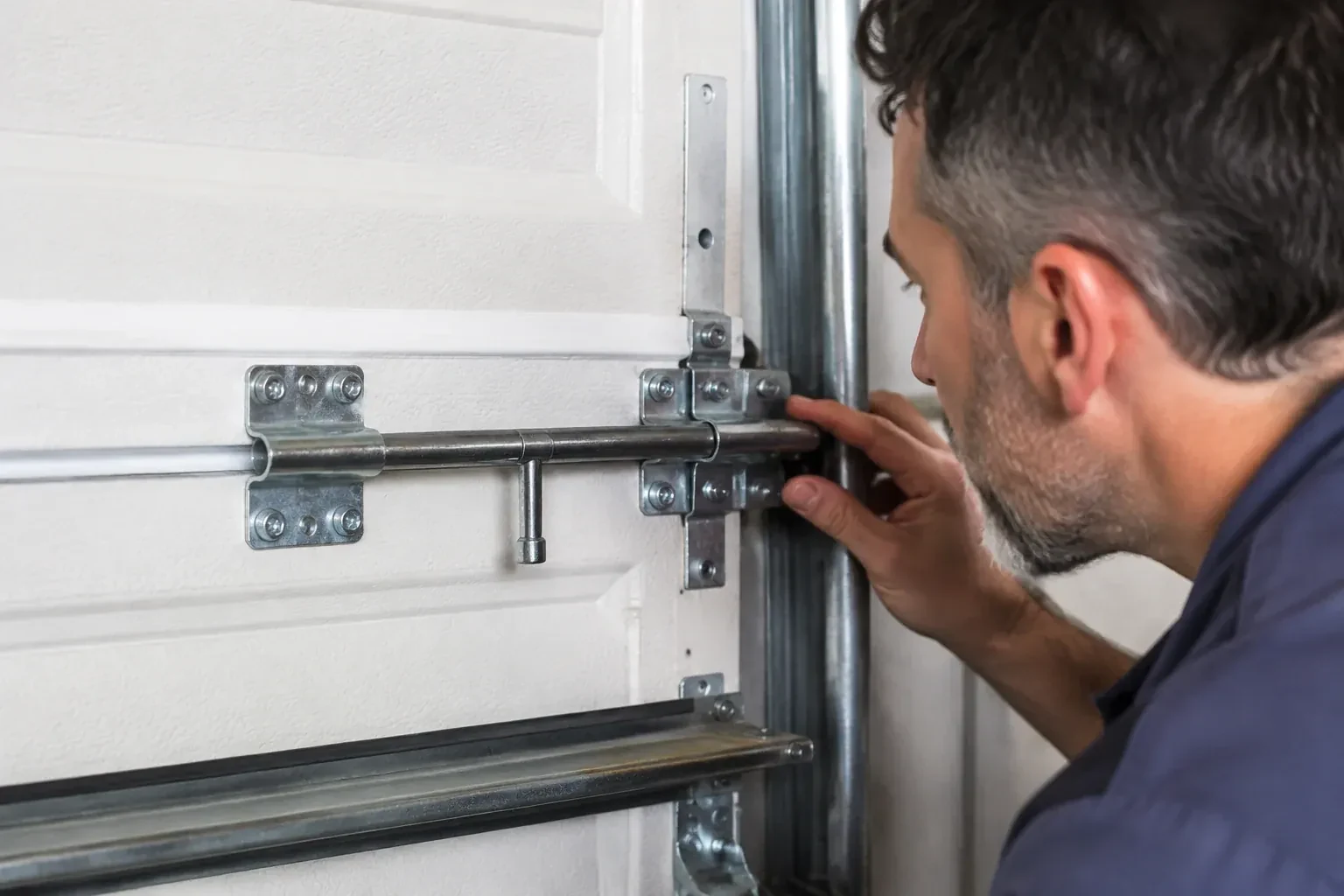
When an automatic opener is on the door, the manual lock and the motor have to be kept from meeting. Opener makers ask for the lock to be disabled or removed when the machine is installed, and the door industry's own guidance says the same, because a motor pulling against an engaged bar bends the bar, loosens the lock and strains the opener. Lock repair on a powered door therefore includes a decision: keep the lock removed or disabled and rely on the opener's own lock-out feature, or fit a manufacturer-approved interlock if the household wants the lock available when the power is off.
How the visit goesThe power is out in a storm, you pulled the red cord and lowered the door by hand, and now you want to lock it. The slide bolt on the inside edge is welded in place by years of rust and refuses to budge.
Garage Door Manual Lock Repair
How the visit goes
How the lock is fixed to the door
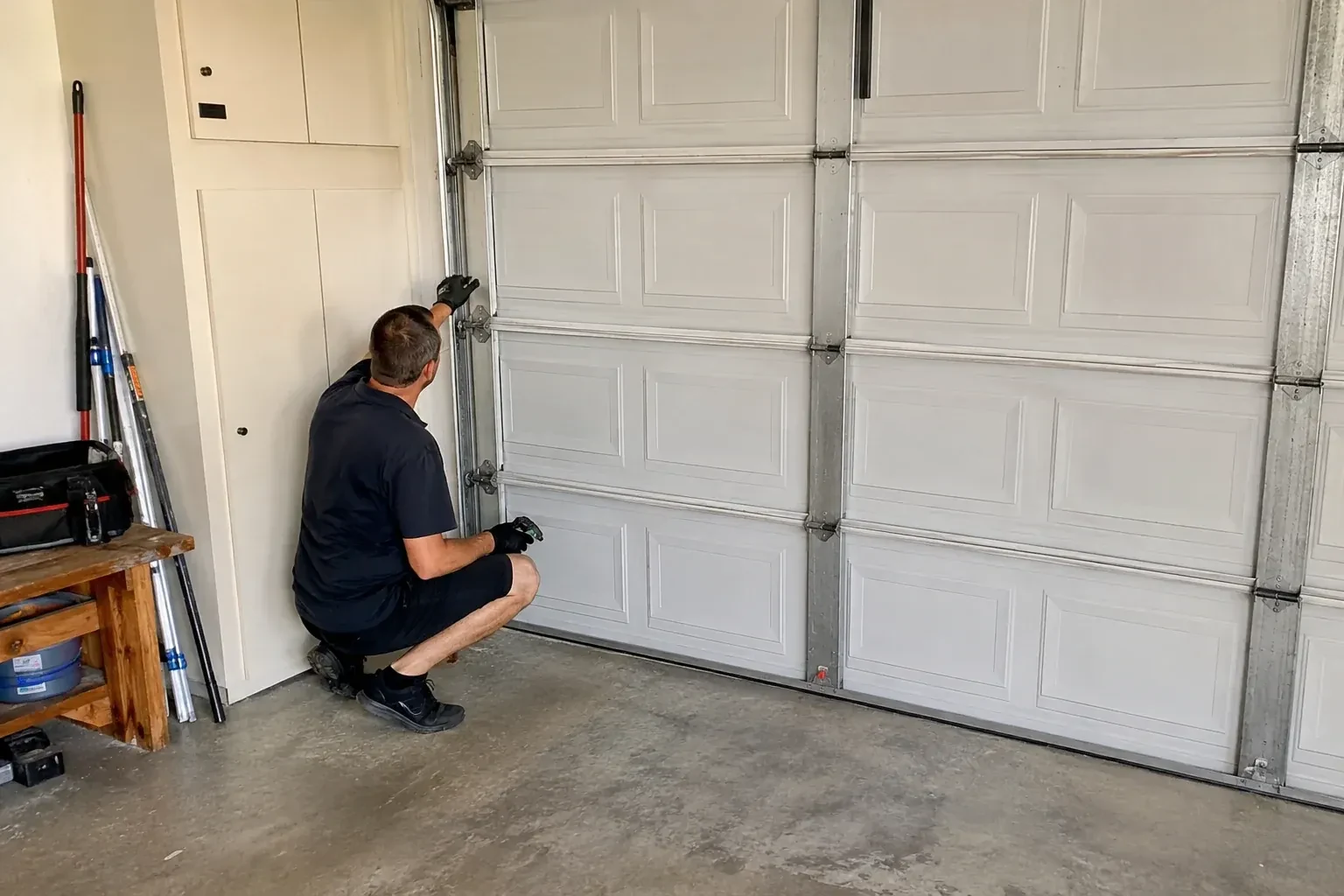
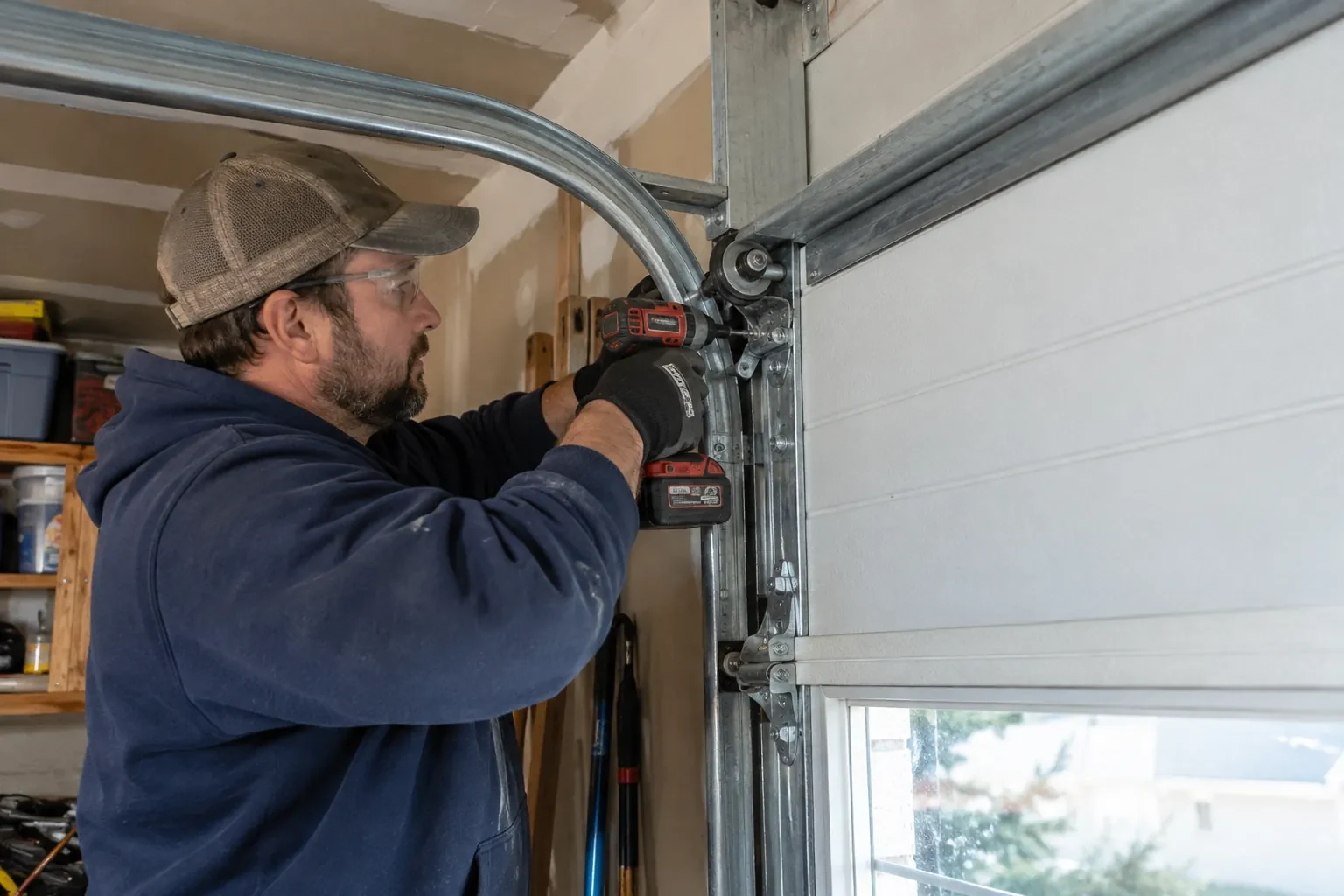
The lock lives on the door section, and the section has to hold it. On a steel door the technician checks whether the screws through the thin skin have pulled and left oval holes, whether the handle base is cracked, and whether the section around the cutout has creased. On a wooden door the check is for softness and rot around the handle and along the stile where the bar guides are screwed, and for a handle that spins in an oversized hole. Insulated doors are measured for thickness so the replacement spindle and through-bolts reach. This tells the technician whether ordinary screws will hold again or whether carriage bolts and backing plates are needed for a lasting fix.
Settling how the lock and the opener will live together
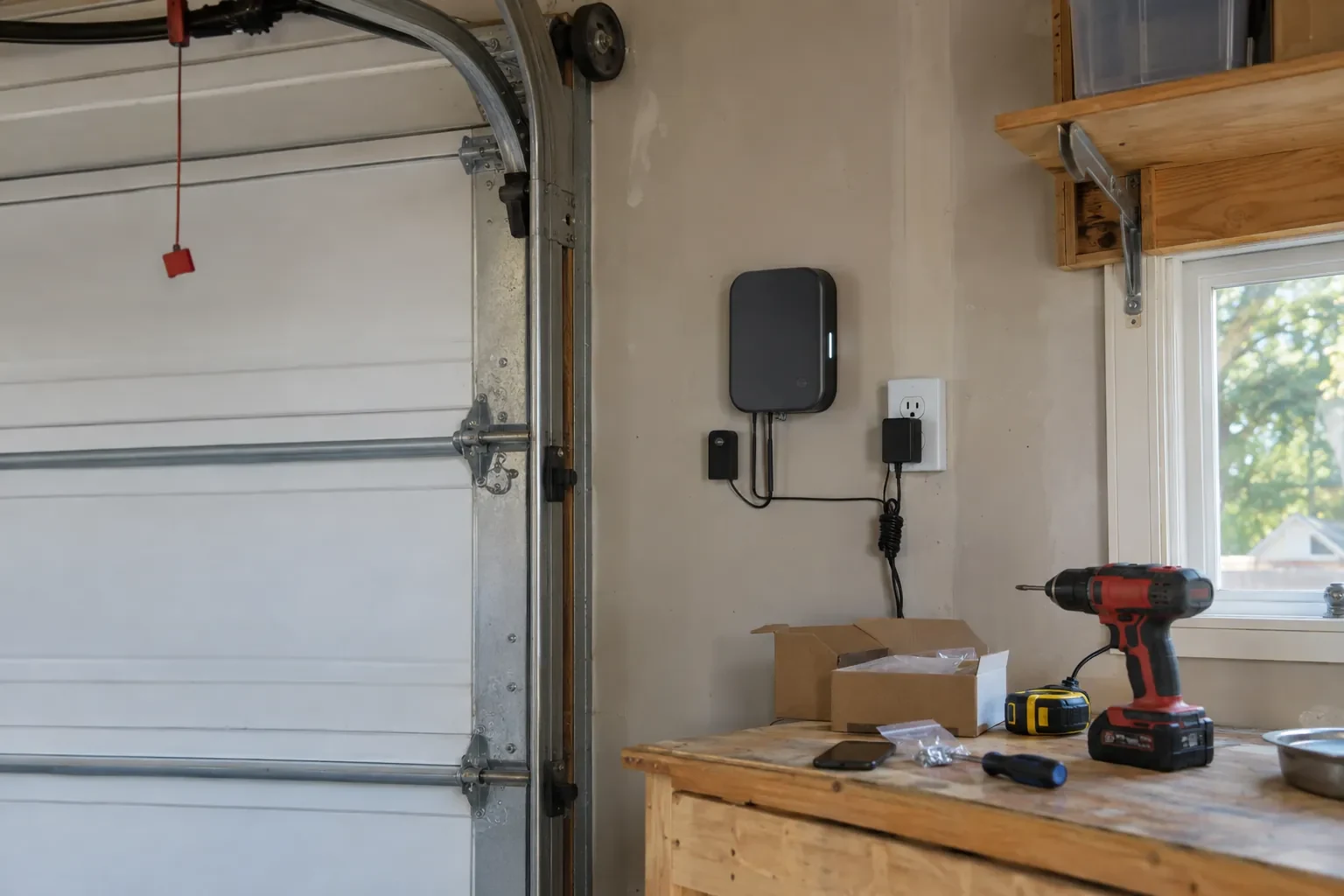
With the lock working, the opener is brought back into the picture. As opener makers direct, the bars are removed or fixed back so they can never reach the track, and the opener's own lock-out feature on the wall console is demonstrated as the way to secure a parked door. If the household wants a lock available for outages, that calls for a manufacturer-approved interlock rather than a label alone, and the technician explains what that would involve. Some openers also accept an add-on automatic deadbolt. The opener is reconnected and run through full cycles.
A lock with a clean throw and a clear release
The finished lock feels definite. The slide bolt or handle moves with light effort, stops with a click as the bar seats in the track, and comes back just as readily. With the door shut and locked, a push from outside meets solid resistance at both sides rather than a wobble on one. Released, both bars sit back behind the track edge so the door rises with nothing to catch. The outside handle turns without rocking and the key goes in and out without a wiggle. Before leaving, the technician has you operate the lock yourself from inside and out, so the action is familiar and any stiffness is dealt with while the tools are still on the floor.
Garage Door Manual Lock Repair
In the van
Key blanks and rekeying pins
Inside slide bolt or snap latch
Opener lock-out reminder label
Keyed T-handle lock set
Lock bar guides
Garage Door Manual Lock Repair
What affects the quote
Age and pattern of the lock
Older handles and mechanisms may need a matching-pattern replacement so the existing cutout and bars line up. Sourcing or adapting parts for an uncommon lock shows in the quote.
Adjust, repair or replace
A guide reset or a cylinder rekey is a small job; a new mechanism or a complete handle set with bars is a larger one. The inspection settles which is needed before anything is quoted.
Corrosion and seized hardware
Screws rusted solid, a cylinder seized in its handle or bars welded into their guides take time to free or cut out, and corroded parts are replaced rather than reused.
What to have ready
- Is it one door or two, and are there other garage doors on the property?
- Is there an automatic opener on this door?
- Does the key go in and turn, or is it stiff or spinning freely?
Garage Door Manual Lock Repair: questions
QuestionsThe handle turns but the bars stay put. What has broken?
Something in the short chain between the handle and the bars. The square spindle may have twisted or sheared, the set screw holding the inside knob may have let it spin free, the cam inside the centre body may have worn round, or the return spring may have snapped. The inside cover comes off to see which, and the failed part or the whole mechanism is replaced to suit.
Do I need a manual lock at all if I have an opener?
Many households do without one. With the trolley engaged, an opener holds the door shut, and most wall consoles include a lock-out button that disables every remote while you are away. A manual lock earns its place for power outages, for a detached garage without an opener, and for anyone who likes a physical bar in the track. The technician can set the door up either way.
How long does a manual lock repair usually take?
An adjustment to a slide bolt or a guide is a short job, while a full T-handle replacement with new bars, a rekey and a door alignment fills a longer visit. Most calls sit somewhere between, and the technician gives you a realistic sense of the time once the door has been looked at, rather than guessing from the phone.
Related services
- Garage Door Tune-UpOn windy nights the door rattles in its frame, there is a line of daylight along one side, and the bottom seal has gone hard and flat.
- Off-Track Garage Door ResetOne side of the door hangs a hand's width lower than the other.
- Garage Door Panel ReplacementThe top section has developed a bend where the opener arm pulls on it.