Springs · Lavender
Garage Door Balance Adjustment in Lavender
Someone replaced the springs a while back and the door has bounced at the top ever since.
In plain words
What you get back is a door that lifts with light, even effort and a written note of how it was set. It holds still at knee height, at waist height and fully open, closes onto the floor gently along its whole length, and rises without twisting. The opener sounds relaxed because it is steering rather than lifting, and it reverses cleanly when the safety tests are run. The technician tells you how many turns the springs carry, whether any parts are nearing the end of their life, and how to repeat the hand test yourself each season so you notice any drift early.
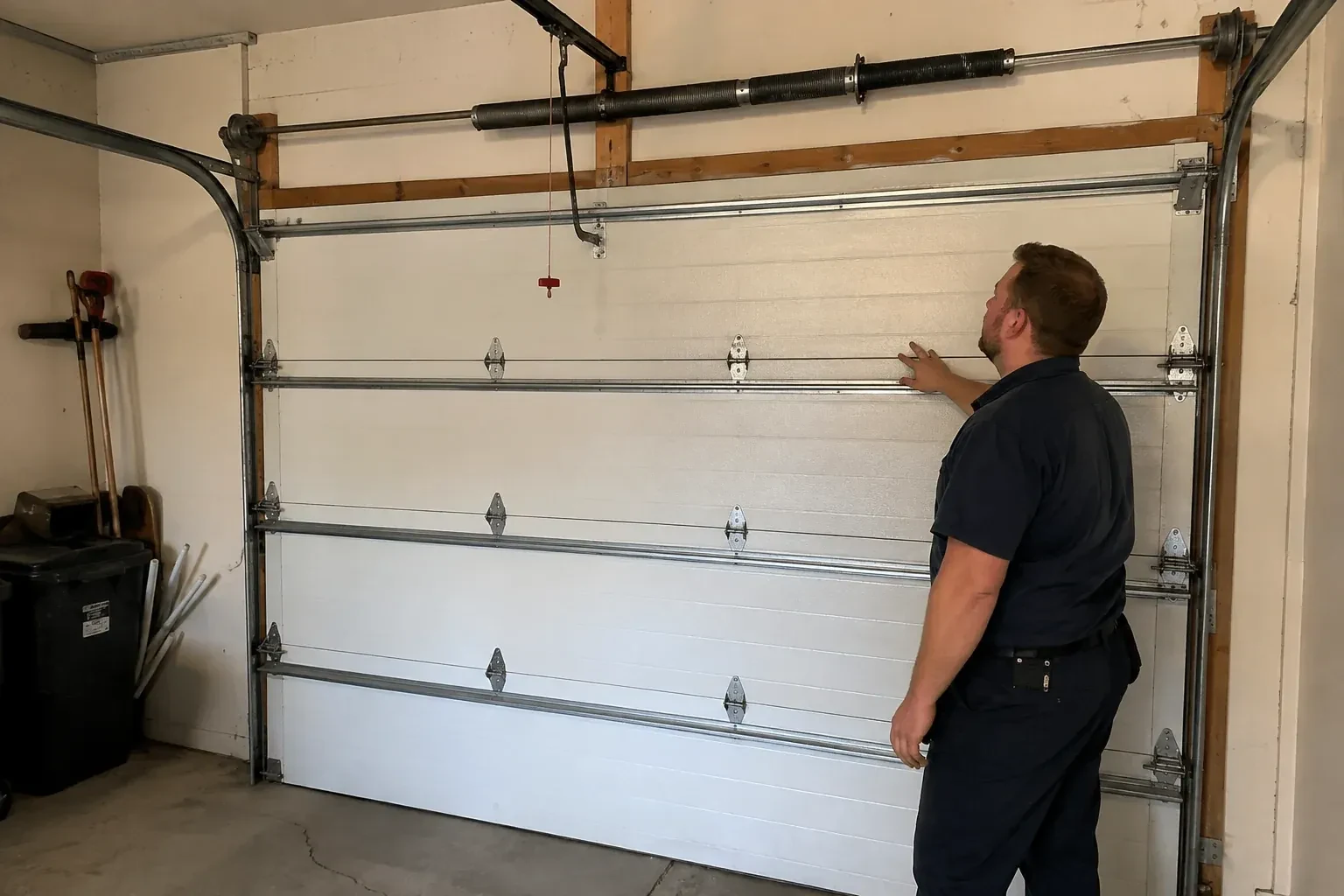
How the visit goesReleased from the opener, the door will not hold anywhere. Lift it to hip height, take your hands away, and it sinks back to the concrete, gathering speed on the way down. Two years ago it used to hover exactly where you left it.
Garage Door Balance Adjustment
How the visit goes
Cables, drums and whether the door sits level
A door that is out of level is usually a cable story rather than a spring story. The technician checks that each cable wraps its drum in a single neat layer with the same number of wraps on both sides, that the drum set screws are tight on the shaft, and that neither cable is frayed or rusting at the bottom bracket. A tape across the bottom of the door in the closed position shows whether one corner sits high. If it does, the cables are reset on the drums so the door is level before spring tension is judged, because a crooked door binds in its track and feels heavy regardless of how the springs are wound.
Adding or releasing quarter turns on a torsion spring
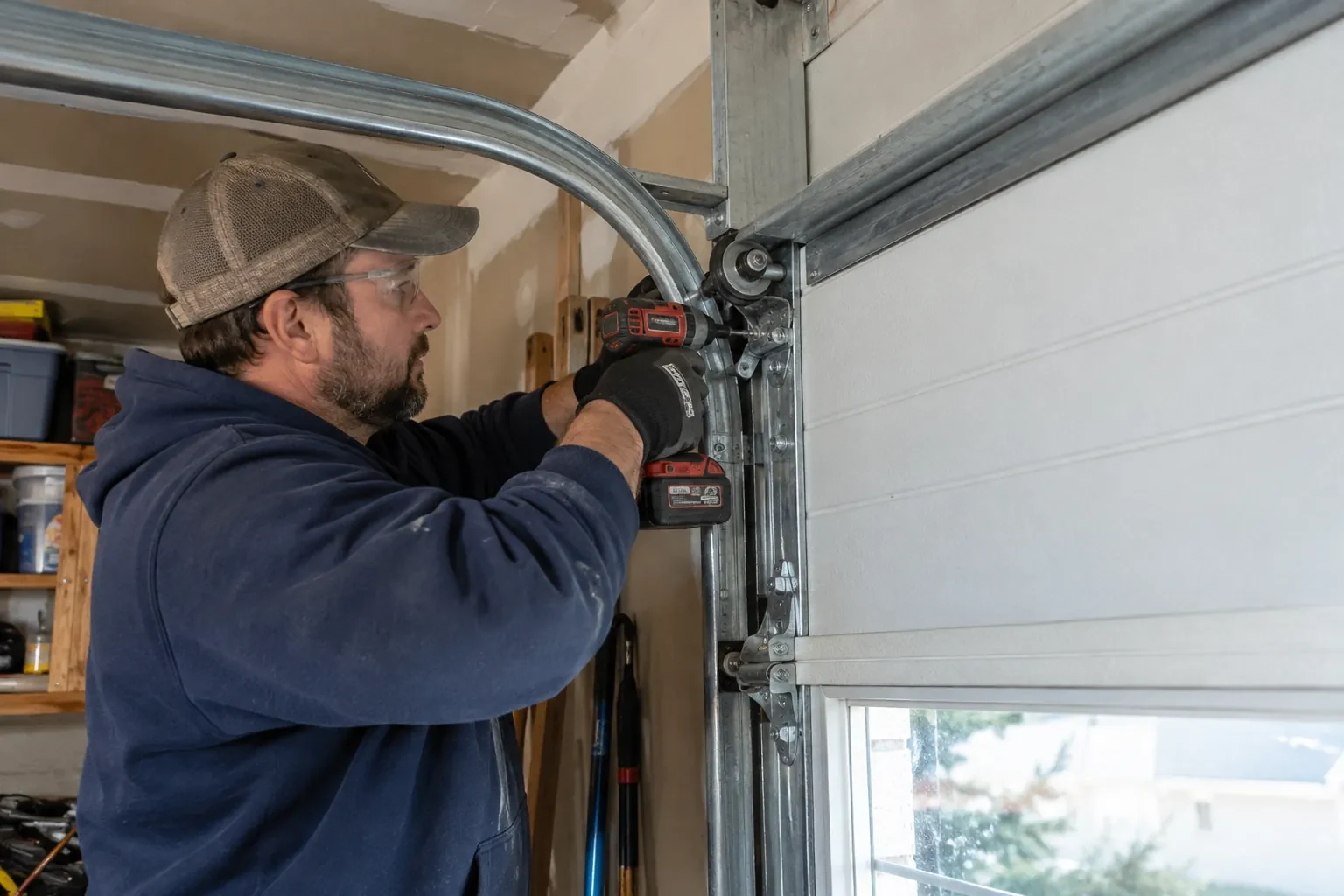
With one winding bar seated firmly in the winding cone and a second ready, the technician loosens the cone's set screws and either adds tension by levering the bar upward or releases it by letting the bar down, always a quarter turn at a time, always with a bar in the cone. After each quarter turn the set screws are tightened onto the shaft, the clamp is removed and the door is lifted by hand to test. A door that sank now holds a little higher; a door that climbed now settles. On a two-spring door the same change is made to both springs so they share the load equally.
Lubrication that keeps the adjustment true
A balanced door stays balanced longer when the parts that move on every cycle are kept easy. Twice a year, spray a lubricant made for garage doors along the torsion spring, onto each hinge pin, the roller stems and bearings, and the bottom bracket pins, then run the door a few times. Wipe the tracks clean but leave them dry, since a coated track collects grit and lets rollers slide. Avoid heavy grease. Friction is part of what the hand test measures, so a door that is well lubricated reads true, and the springs are not asked to overcome drag that a moment's maintenance would remove.
Garage Door Balance Adjustment
In the van
Winding cone set screws
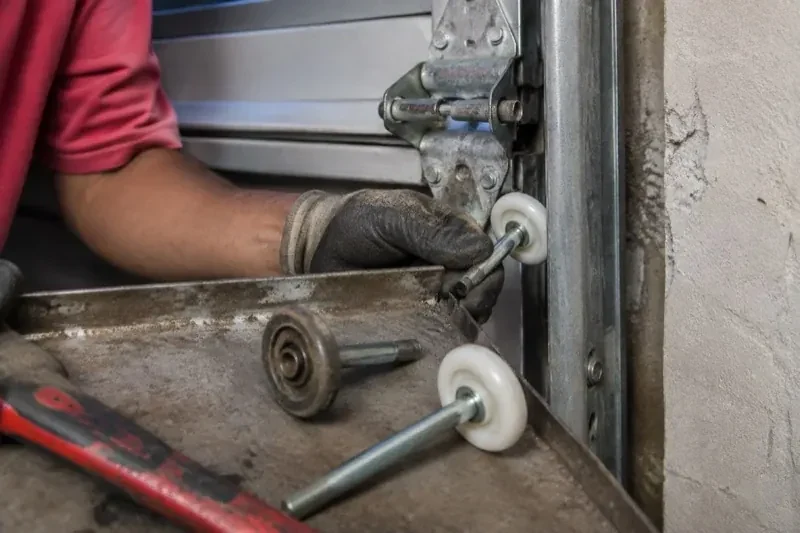
Replacement hinges
Nylon or steel rollers
Lift cables
Torsion springs, matched pair
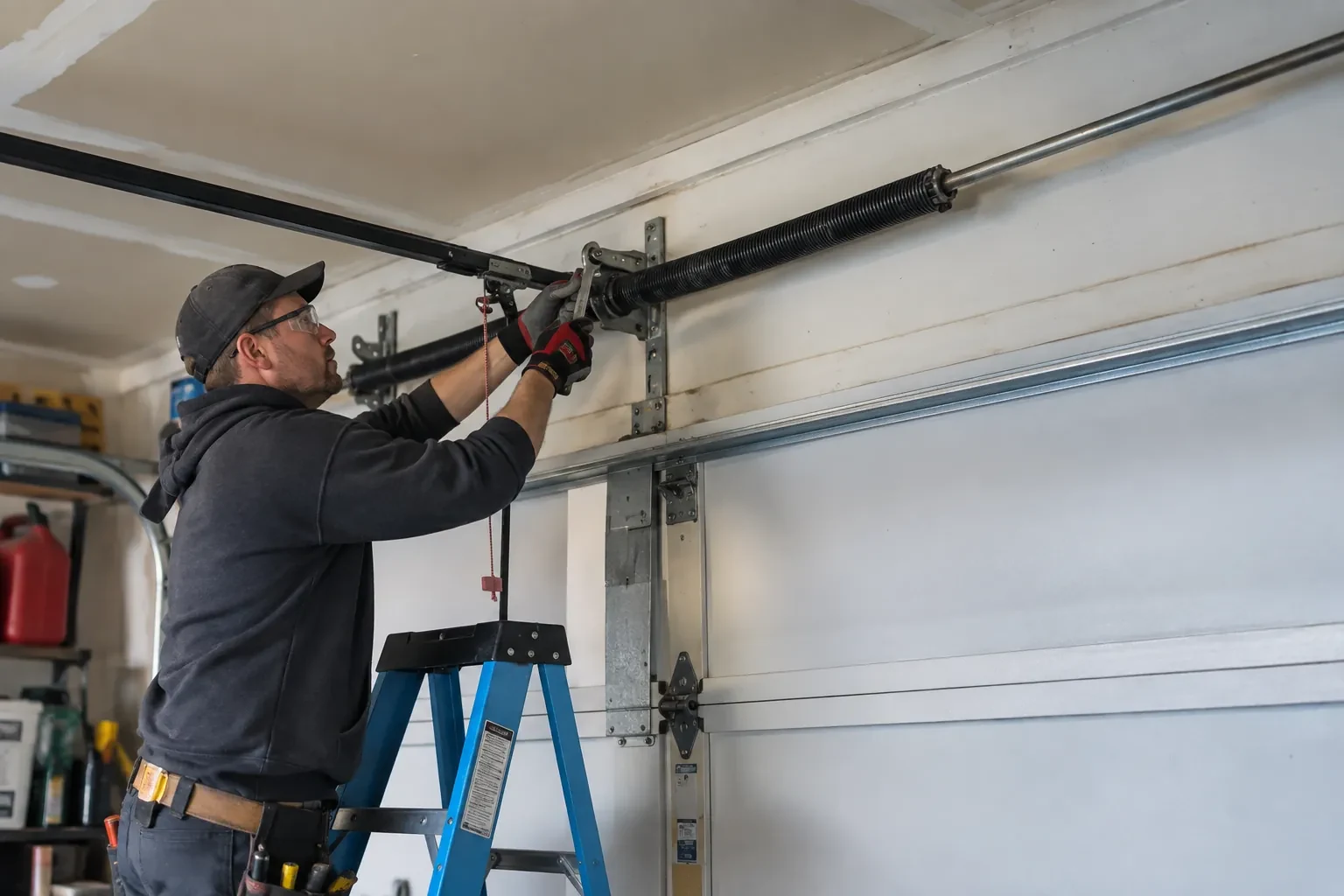
Garage Door Balance Adjustment
What affects the quote
Weight added to the door
Insulation kits, windows or replacement sections may have taken the door beyond what its springs can carry. Weighing the door and specifying new springs to suit is quoted separately from a simple adjustment.
Cold-weather visits
In a cold snap, a frozen bottom seal or stiff hardware has to be freed and warmed before balance can be judged honestly, and a winter call is quoted with that in mind.
Commercial or oversized doors
Doors wider or heavier than a standard residential opening use heavier springs, sometimes several on one shaft, and take longer to wind and test, which the quote reflects.
What to have ready
- When you release the door and lift it by hand, does it drift up, sink, or stay put?
- Does the door sit level when closed, or is one corner higher?
- Do you have the door or opener manual, or a label with the model?
Garage Door Balance Adjustment: questions
QuestionsHow should I prepare the garage for the visit?
Move the car out if you can and clear the floor near the door and beneath the spring shaft, since the technician will be on a ladder there with winding bars. Take down anything hanging from the tracks or stored on top of the horizontal rails. Leave the door where it is, make sure the wall button and the opener are reachable, and have any spring or opener paperwork handy.
I added insulation panels to my door. Does that affect balance?
Yes, and it is one of the most common reasons a door starts to sink. Springs are matched to the door's weight, and insulation kits, replacement sections, windows or a heavier seal add weight the original springs were not sized for. A technician can weigh the door and either add tension to suit it or, if the added weight is beyond what the springs can carry, specify new ones.
What does it mean for a garage door to be balanced?
It means the springs carry nearly all of the door's weight, so the door itself feels close to weightless. Balanced, it will stay put at any partly open position when moved by hand, stay fully open on its own, and close without slamming. The opener then only has to guide the door rather than lift it, which is how it was designed to work.
Related services
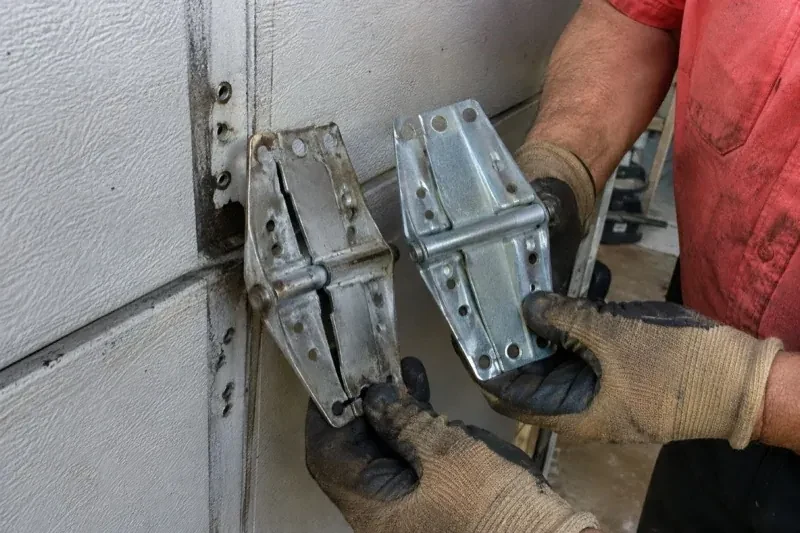
- Garage Door Hinge ReplacementPressing a hand against one of the middle hinges makes it rock on the panel.
- Garage Door Track Repair or ReplacementBacking out this morning, the mirror caught the track beside the door.
- Garage Door Cable ReplacementYour older door has springs along the tracks, and one cable has slipped off its pulley and dangles slack.