Openers · New Tecumseth
Garage Door Opener Diagnosis and Repair
You press the remote from the driveway and hear the motor hum overhead, a steady drone with no movement behind it.
In plain words
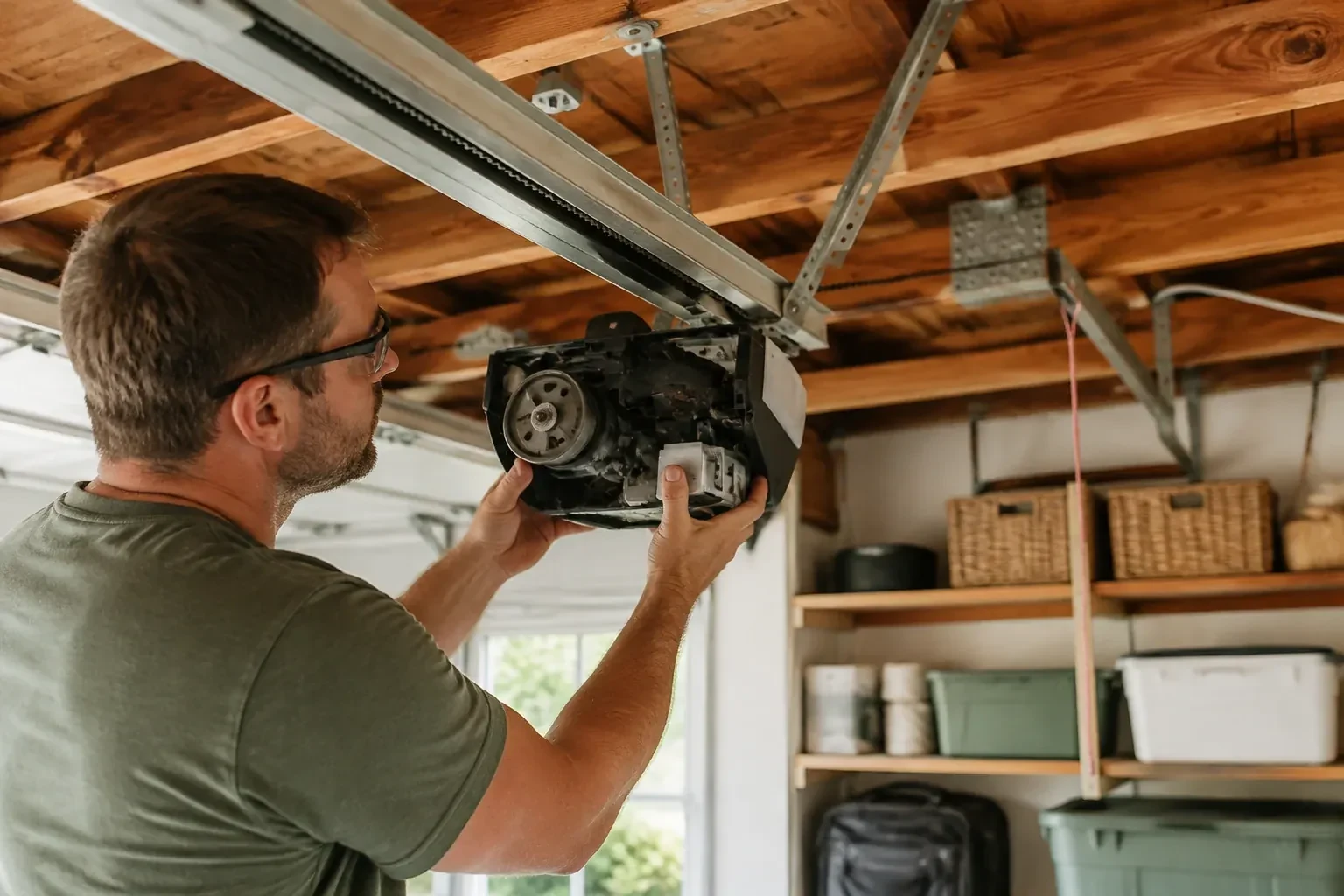
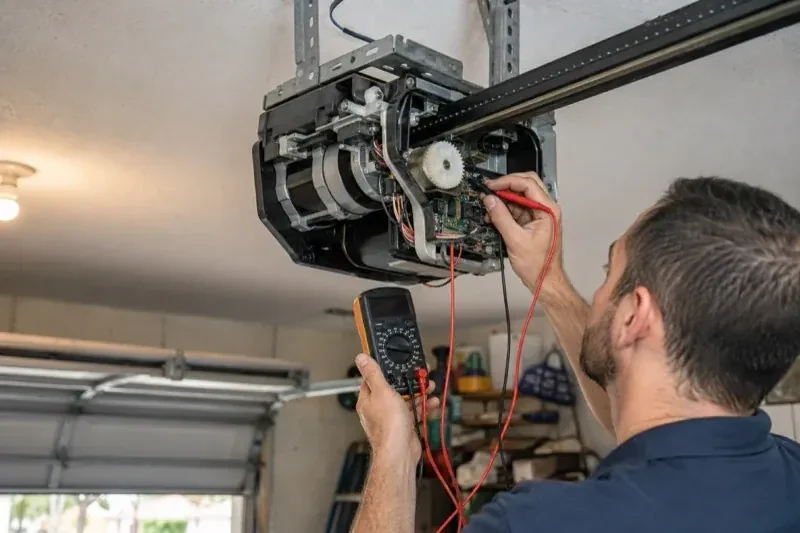
Most openers built in the last fifteen years report their own trouble. When something is wrong the head unit blinks its lights in a count, an up arrow and a down arrow flashing in a pattern, or a status light repeating a number. Each pattern has a meaning on the maker's chart for that model: a sensor circuit open, no motor movement detected, too much force needed to close. The technician reads the pattern, checks it against the model, and confirms it with a hands-on test rather than trusting the light alone. Older units without codes are diagnosed by ear, by meter and by hand.
How the visit goesFor a few days there was a grinding sound whenever the door started moving. Now the motor spins freely and the door stays exactly where it is. On the hood of the car there is a scatter of white plastic shavings that fell from the unit above.
Garage Door Opener Diagnosis and Repair
How the visit goes
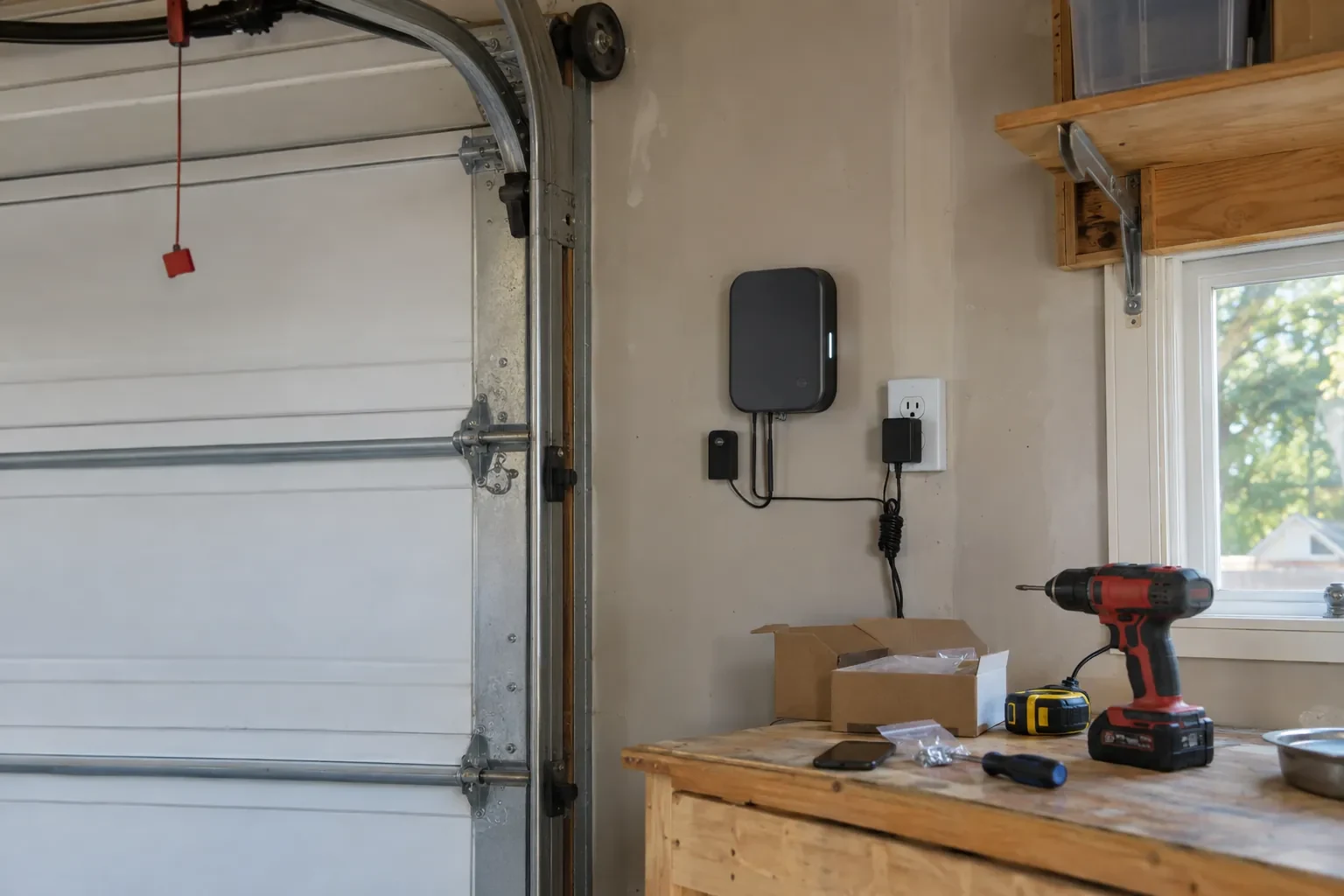
One control at a time
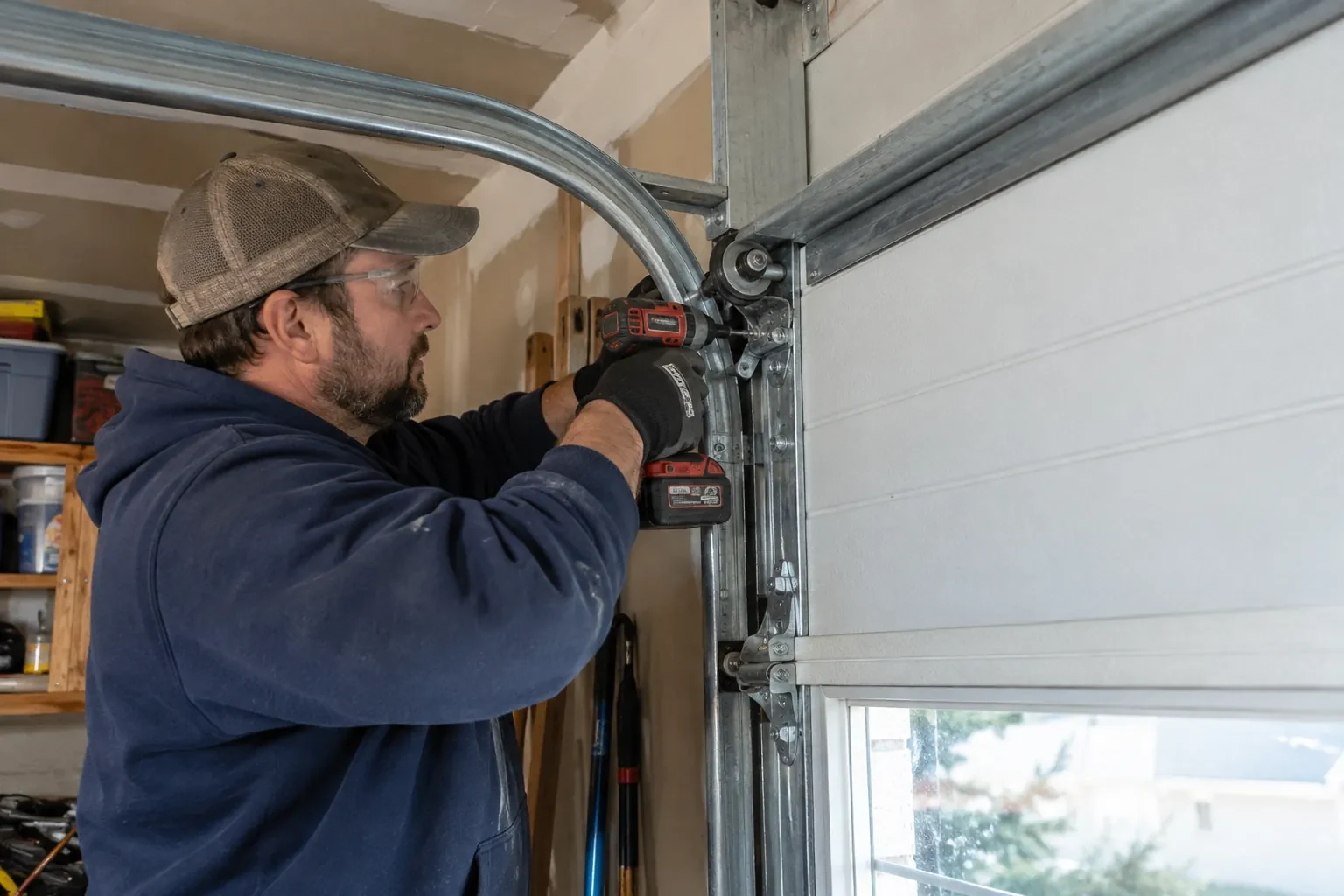
Each way of telling the door to move is tried on its own: the wall control, every remote, the outside keypad and, if fitted, the phone app. The pattern of what works tells a story. If the wall button works and nothing wireless does, the receiver, the remote batteries or a lock setting is suspect. If a remote works only up close, range and interference are the topic. If nothing at all works but the unit's light responds, the fault is downstream of the controls. The technician also checks the wall control's own indicator, which on most models blinks continuously when lock mode has been switched on by accident.
Sensor alignment and replacement
Photo eyes are brought back into service by fixing what actually broke. A bent bracket is straightened and re-secured so the two lenses face each other at the same height; dirty or frosted lenses are cleaned; a receiving eye blinded by low winter sun gets a shade, or the pair is swapped side to side. Wire that has been stapled through, chewed or pulled from its terminals is re-run with fresh bell wire, clipped clear of the track. When a sensor's electronics have failed, the pair is replaced together with units made for that opener, then the beam test is repeated to prove the circuit closes and the door reverses.
A door that answers every control
Before the technician leaves, the door is run from each control you own: the wall console, each remote, the keypad and any phone connection. You watch it open fully, close to a gentle seal and stop in the right places. The opener light and indicator are explained so you know what normal looks like, and any code that appeared during the diagnosis is shown cleared. You also see the reversal tests done in front of you, so you know the door will back off a 2x4 and stop for a beam interruption. Watching the system pass gives you confidence that the repair addressed the real cause.
Garage Door Opener Diagnosis and Repair
In the van
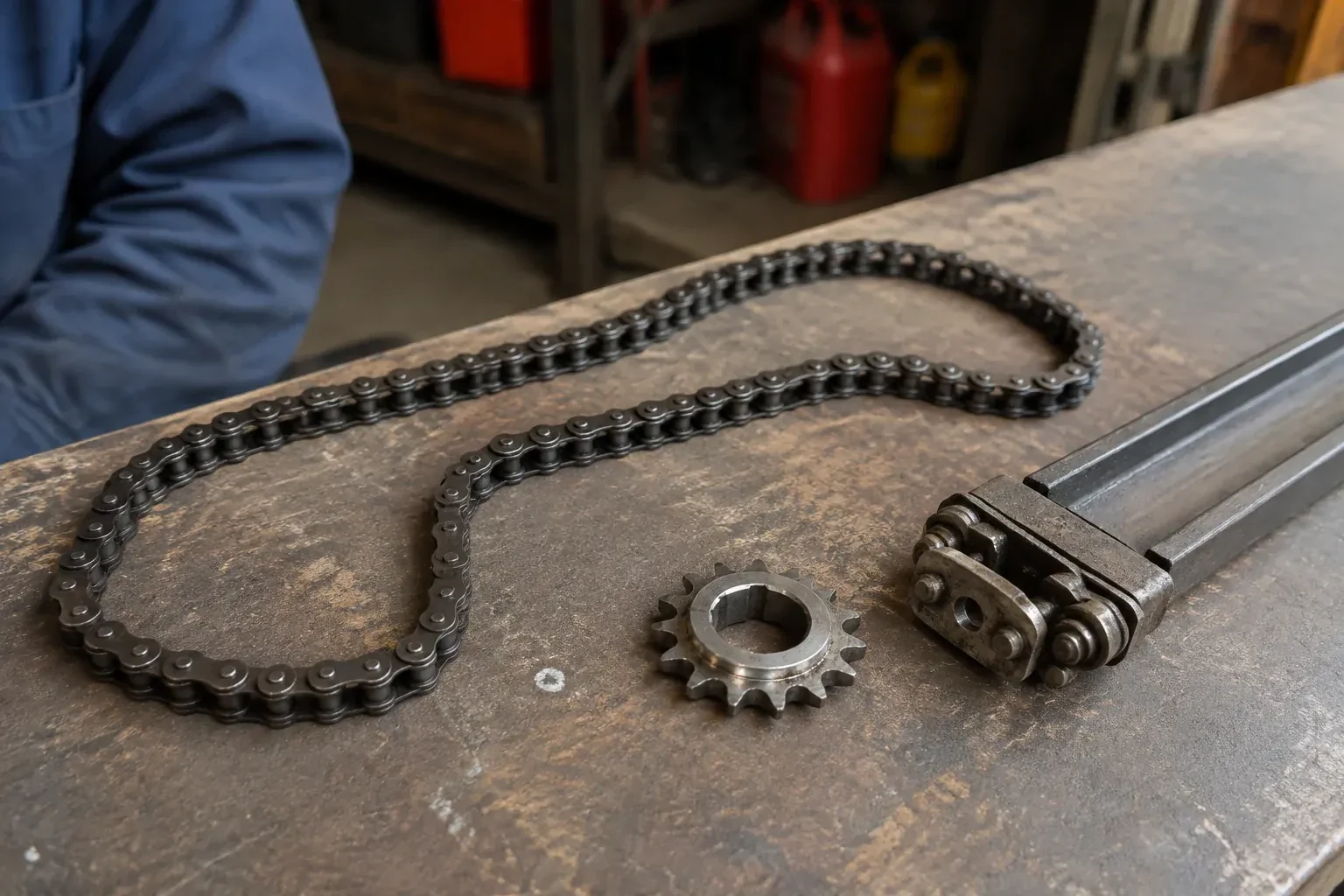
Trolley and carriage
Photo-eye sensor pair
Bell wire and clips
Transformer and board fuse
Garage door lubricant
Garage Door Opener Diagnosis and Repair
What affects the quote
Which component failed
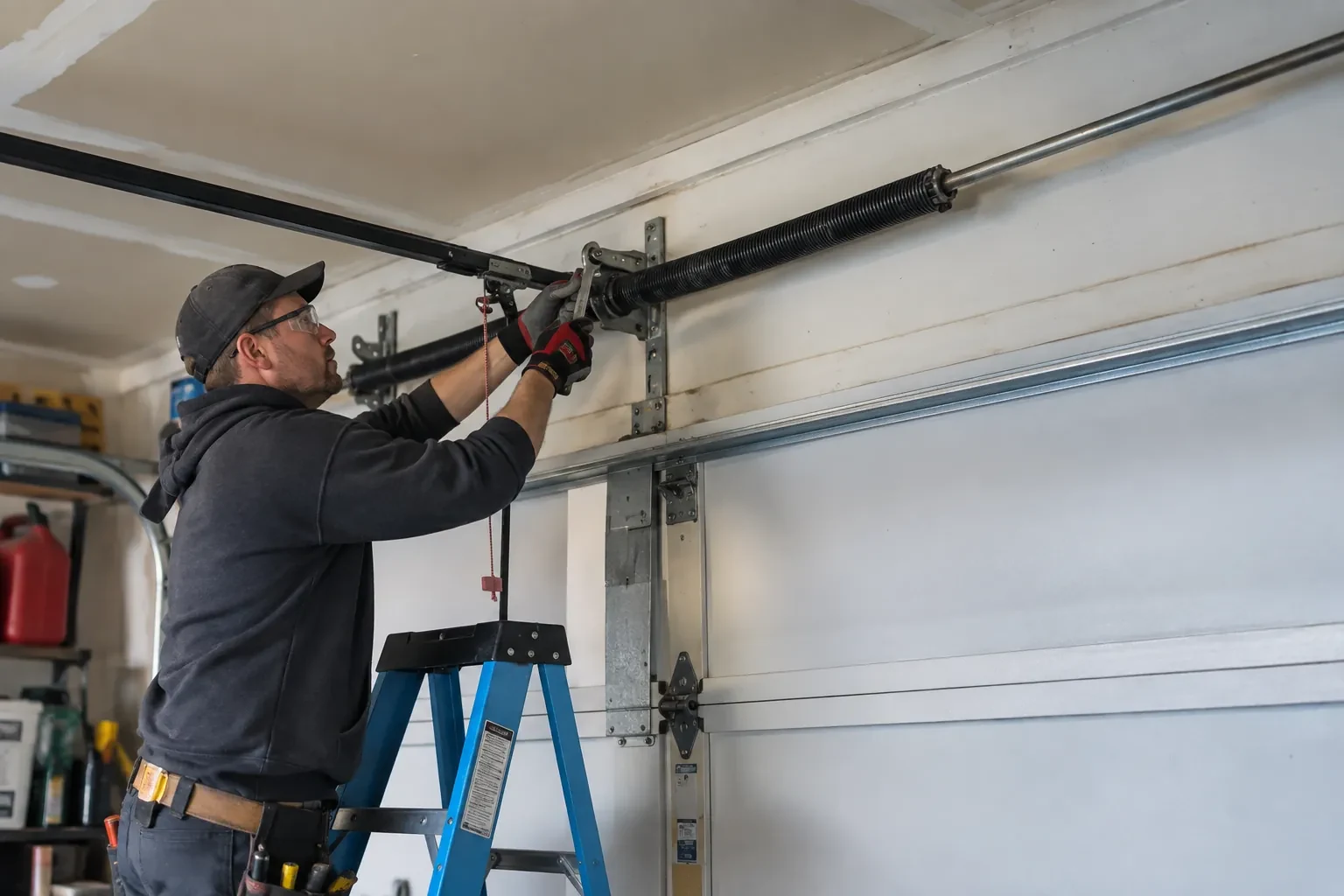
A capacitor, a sensor pair or a re-engaged trolley sits at one end of the range; a logic board or a motor sits at the other. The diagnosis names the part before the quote is settled.
Ceiling height and access
A standard-height garage puts the head unit in easy ladder reach. High ceilings, high-lift tracks, storage lofts or a car that cannot be moved add setup time and sometimes a taller ladder.
Sensor realignment versus replacement
Straightening a bracket and cleaning a lens is a small task. Replacing the sensor pair and running new wire along the wall and ceiling is a larger one, and the quote names which applies.
What to have ready
- Can you see a gap in a spring above the door, or a loose cable?
- Is the door quieter or noisier than it used to be, and where is the sound coming from?
- Has anyone pulled the red emergency release cord recently?
Garage Door Opener Diagnosis and Repair: questions
QuestionsWhy does my door go back up when I try to close it?
The opener believes something is in the way. Either the photo-eye beam near the floor was broken, misaligned or blocked, or the door met more resistance than its force setting allows, often from a frozen seal, stiff rollers or a travel limit set slightly too long so the door hits the slab. The indicator light on the head unit usually tells which of the two it was, and the technician confirms it by testing rather than guessing.
The wall button works but none of my remotes do. What happened?
Three things account for most of these. The wall control has been put into lock mode, sometimes by a child or a visitor, which blocks all remotes until it is released. The opener's memory was cleared, usually by someone pressing the learn button while trying to program a new remote, so every remote needs programming again. Or the receiver in the head unit has failed. The first two are simple settings; the third is a part.
How old is too old to repair?
Age alone is not the test; parts and safety are. The technician checks the exact model and part numbers, because even a unit from the last two decades can have a board, sensor or trolley that is no longer made. Where the parts are available, a repair is usually straightforward. Where a key part is discontinued with nothing to replace it, or the unit predates photo eyes, replacement is the sounder choice even for a small fault. The technician tells you which side of that line your unit sits on.