Springs · Lavender
Garage Door Cable Replacement in Lavender
Your older door has springs along the tracks, and one cable has slipped off its pulley and dangles slack.
In plain words
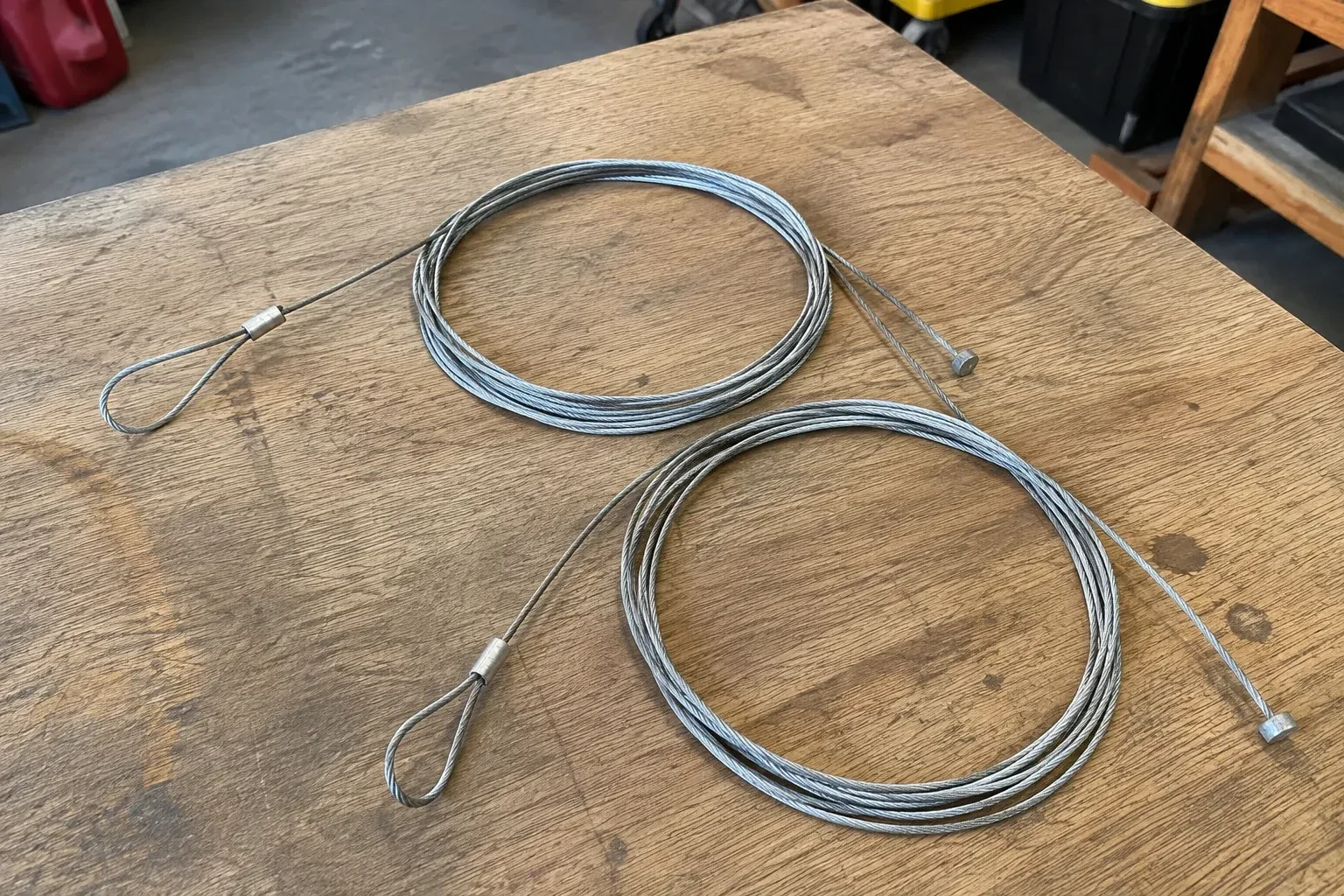
Two steel cables do the lifting on a sectional garage door. Each runs from a bracket at a bottom corner up to the counterbalance, and the springs pull on the door through them. Cable replacement renews that link. The technician secures the door, takes the tension off the springs, removes the worn or displaced cables, fits new ones matched to the door's height and weight, and re-tensions everything so both corners rise together. The result is a door that travels level again, closes flush to the floor, and asks the opener for the modest effort it was designed to give.
How the visit goesThere was a sharp crack from the garage, and when you went to look the door had dropped on one side and jammed. A length of cable lies coiled on the floor by the bottom roller.
Garage Door Cable Replacement
How the visit goes
Bottom brackets and the pin the cable rides on
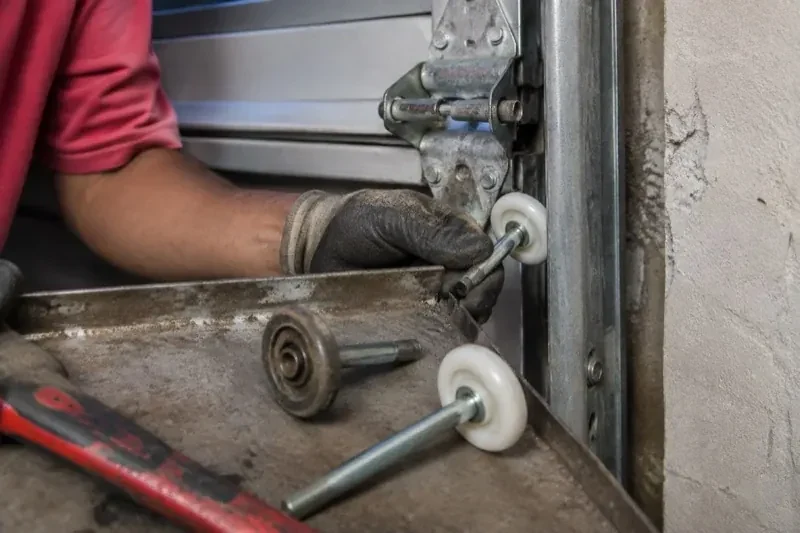
The bottom bracket in each corner anchors the cable and carries the bottom roller, and it lives in the wettest, saltiest spot on the door. The technician looks for bending from an impact, corrosion around the cable pin and the fasteners into the section, and a roller that has seized or lost its stem bearing. On many doors these brackets have tamper-resistant fasteners because they are under load whenever the springs are tensioned, so they are inspected as found and only removed once the counterbalance is unloaded. A bracket that is bent or rusted through is scheduled for replacement in the same visit so the new cable has a sound anchor.
Winding the springs back on
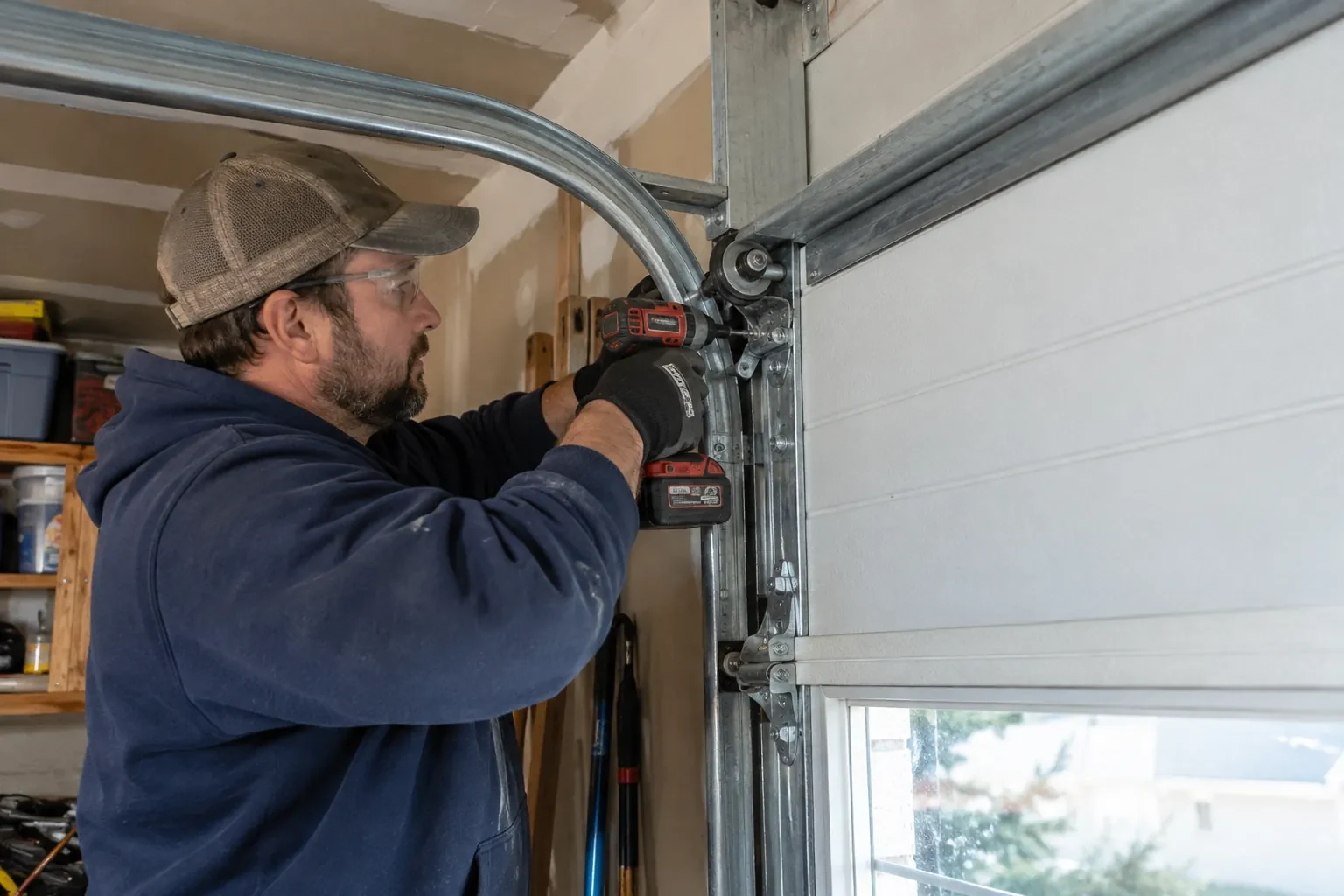
The torsion springs are wound back up with the winding bars, a quarter turn at a time, to the number of turns the door height calls for, which is roughly one full turn for each foot of door plus a small allowance the technician judges from the balance test. The cone set screws are tightened to the shaft, the bars are removed, and the clamps come off. The cables are watched as the door is raised to make sure each wraps onto its drum in a single neat layer with no overlap and pays out cleanly on the way down. A quarter turn added or removed fine-tunes the balance.
A door that runs level and quiet
The first thing you notice is a door that rises squarely, with both bottom corners leaving the floor together and the top section staying flat as it turns into the horizontal track. The bottom seal meets the slab along its whole length, so the draft and the strip of daylight at one corner are gone. The opener sounds calmer, because it is moving a balanced door rather than dragging a crooked one, and it stops reversing for no apparent reason. If you lift the door by hand with the opener released, it moves with light effort and holds where you leave it. That is what a correctly cabled door feels like.
Garage Door Cable Replacement
In the van
Drum set screws
Galvanized aircraft-type lift cables
Bottom rollers and hinges
Winding bars
Clevis pins and cotter pins
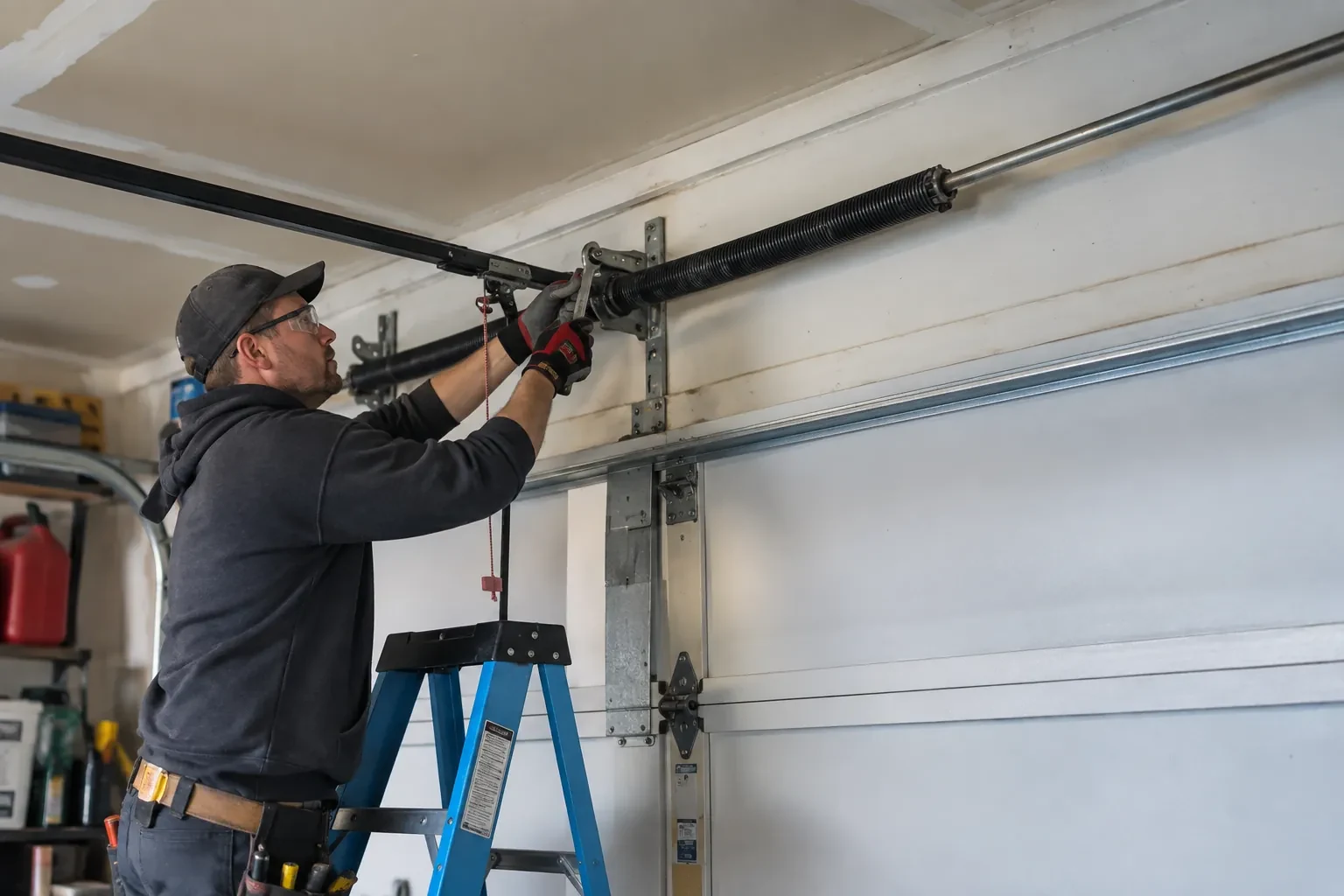
Garage Door Cable Replacement
What affects the quote
Springs found weak or broken
If the inspection shows a spring that is broken, stretched or wound short, replacing it is explained and priced separately from the cable work, and the two are done in one visit if you agree.
Oversized, commercial or high-lift doors
Doors taller or wider than a standard residential opening, or fitted with high-lift hardware, use heavier cables and drums and take longer to set up, which the quote reflects.
How the door is sitting
A door resting closed is simpler than one wedged crooked in the opening or off its track, which has to be supported and straightened before the cables can be handled.
What to have ready
- Does the opener still run, and does it strain or reverse?
- Is there one spring above the opening, or springs stretched along the tracks?
- Did the door come down on something, or did a vehicle touch it?
Garage Door Cable Replacement: questions
QuestionsShould I lubricate the cables?
A light film, yes. A mist of silicone or a lubricant made for garage doors on the cables, especially the lowest stretch near the brackets, sheds moisture and slows rust. Avoid heavy grease or oil, which holds grit and salt against the strands. The springs, hinges, roller bearings and bracket pins take the same product a couple of times a year, and the tracks are simply wiped clean.
Does the new cable have to match the old one exactly?
It has to match the door, which may not be the same thing if the old cable was wrong. Length is set by the door height, the drum profile and the lift type; diameter and construction by the door's weight. A cable that is a little long overlaps on the drum and wears; one that is short leaves the door out of level. The technician measures the door and the drum rather than trusting the old cable.
Should both cables be replaced when only one has failed?
Yes, as a rule. The two cables were fitted together, have flexed around their drums the same number of times and have sat in the same slush, so the survivor is close to the end of its life. A new cable beside a stretched one also makes it harder to set the door level. Two matched cables give an even lift and one visit instead of two.
Related services
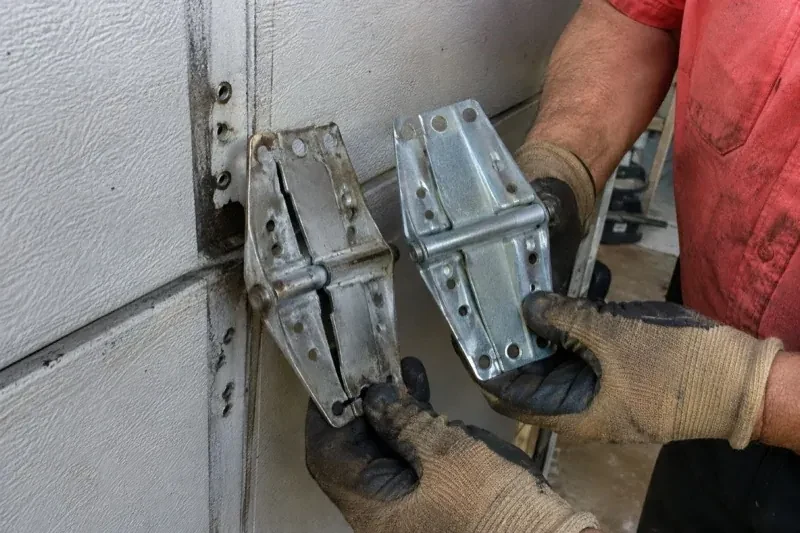
- Garage Door Hinge ReplacementPressing a hand against one of the middle hinges makes it rock on the panel.
- Garage Door Track Repair or ReplacementBacking out this morning, the mirror caught the track beside the door.
- Torsion Spring ReplacementOne side of the door sits higher than the other in the tracks, and a lift cable is hanging slack or has jumped off its drum.