Springs · Lavender
Extension Spring Replacement in Lavender
The door climbs with the left corner ahead of the right, then twists as it turns into the ceiling track.
In plain words
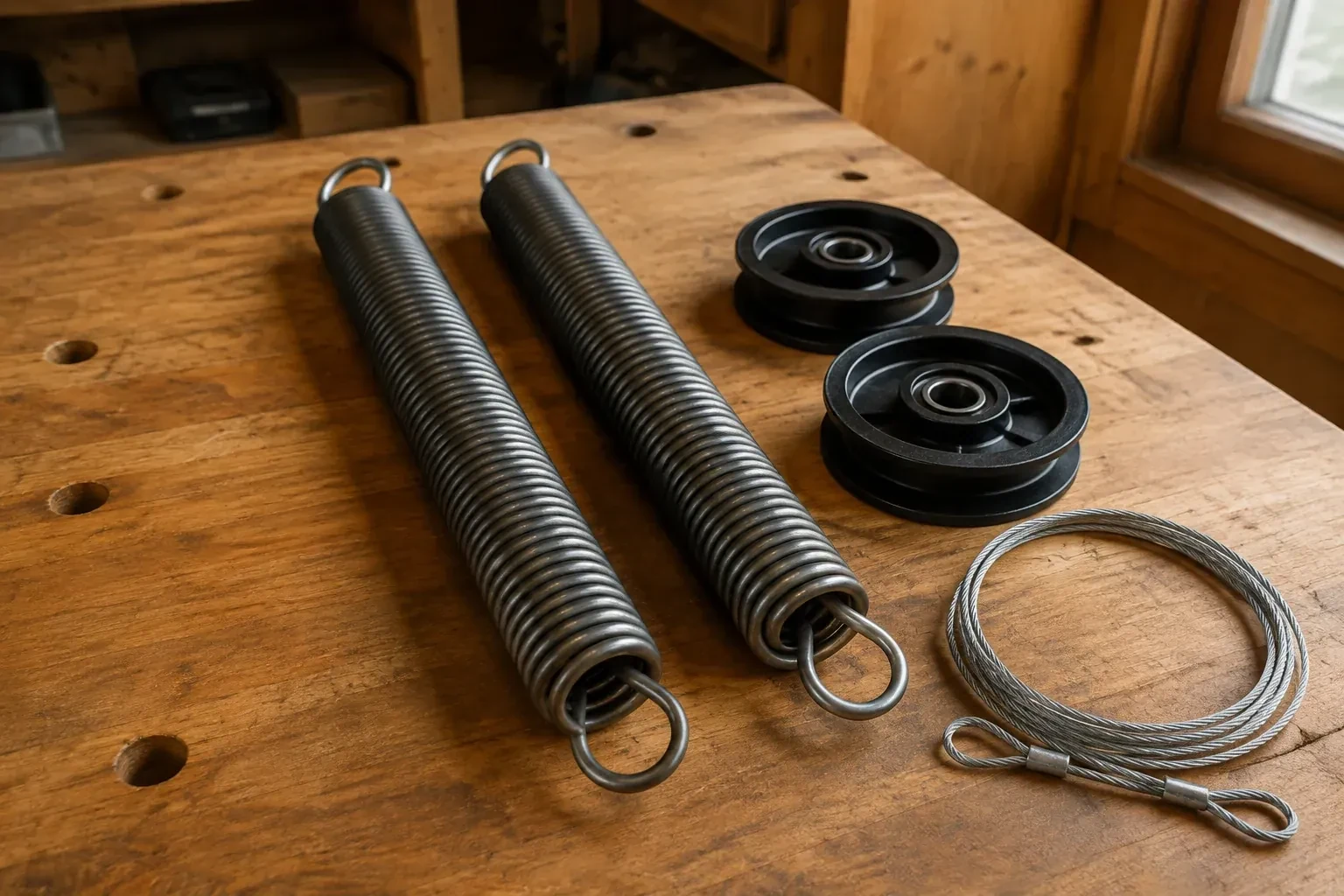
Choosing the right spring is a matter of weight, not colour. Extension springs are rated for the weight they are meant to lift, and the correct pair for your door is found by weighing the door itself with the opener released, then checking that figure against the wire size, coil diameter and length of the old springs. Paint colour on the end coil is only a hint; older springs fade, get overpainted or were never quite right to begin with. A pair matched to the measured weight gives a door that holds at half height and lifts with one hand, and an opener that works lightly.
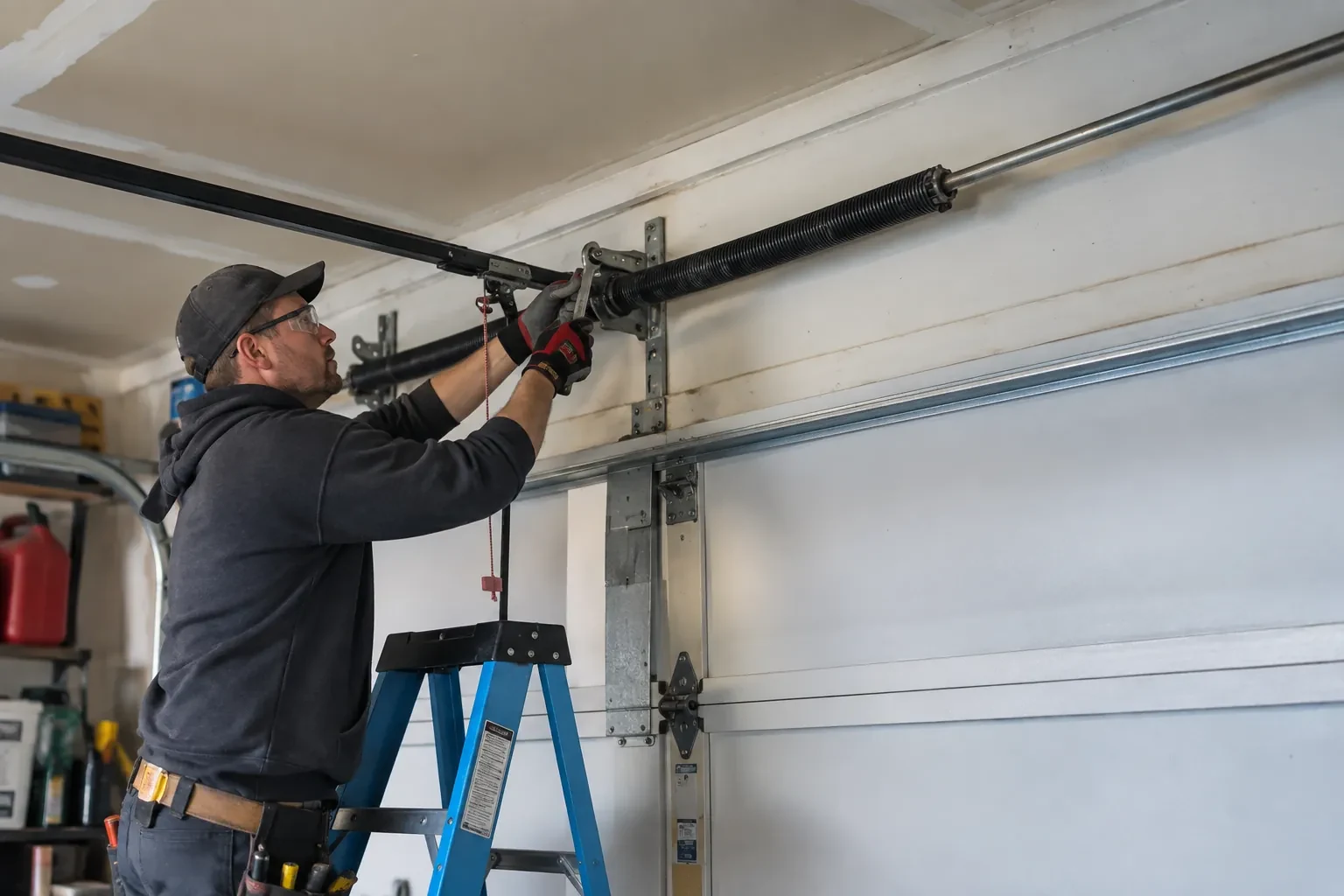
How the visit goesThe door climbs with the left corner ahead of the right, then twists as it turns into the ceiling track. Looking up, the spring on the right side is stretched longer than its partner, with daylight showing between the coils.
Extension Spring Replacement
How the visit goes
Both springs, side by side
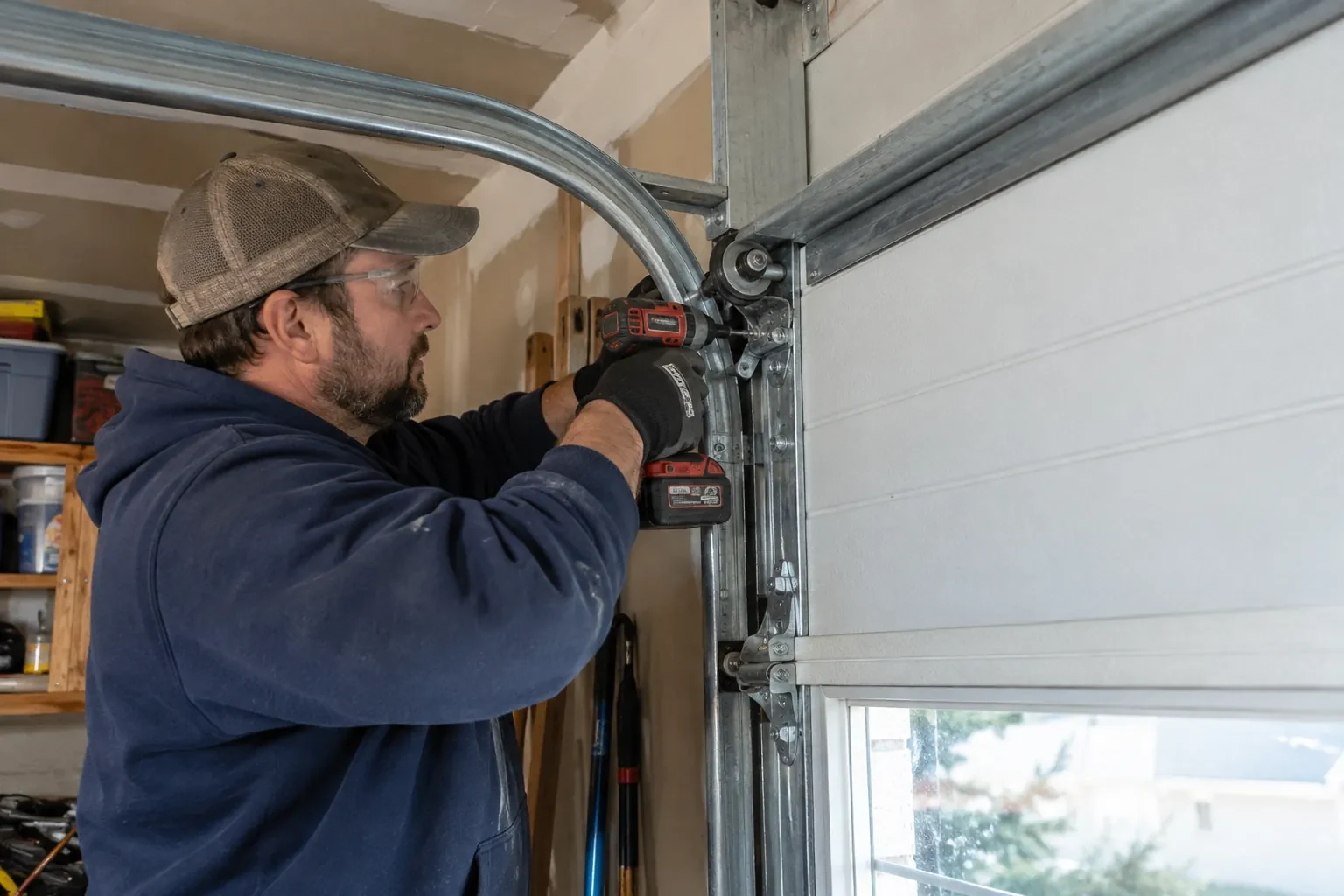
Even when only one spring has snapped, both are read closely. The technician looks for gaps opening between coils with the door up, which means the wire has stretched and lost its pull; rust pitting and scale, especially where the spring sits nearest the back wall; a spring hanging visibly longer or lower than its partner; and end loops that have opened or cracked. The two are compared for length, coil diameter and wire size, because springs of different ratings are sometimes found on the same door after a past repair. Whatever is found, the outcome is the same, a new matched pair, but the reading tells the technician what rating the door really needs.
Balancing the door by hand
Balance is judged with the opener still disconnected. The technician lowers the door to the floor, then lifts it: it should rise with modest effort, stay put when let go at about waist height, sit steady when fully open, and come down under control rather than dropping. If it sinks, both springs need a little more stretch and each S-hook is moved one hole to take up cable; if it climbs on its own, one hole the other way. Adjustments are always made in pairs, with the door open and clamped again each time, so the two springs stay equal. Two or three rounds usually settle it.
Lubrication that keeps the new set turning
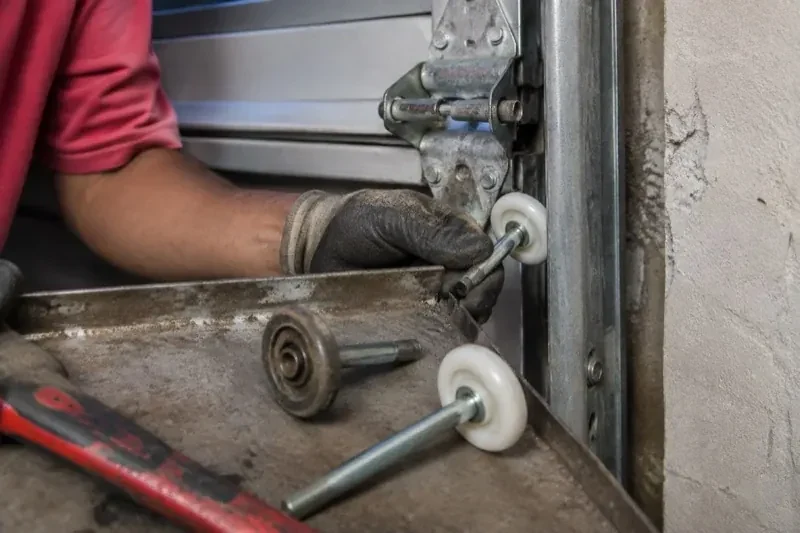
Twice a year, in spring and before winter, a can of garage-door lubricant does most of the maintenance the springs need. Spray a light coat along each extension spring, working from the hanger to the pulley; it slows rust in a damp garage and quiets the coils. Put a drop on each pulley axle and on the bolts through the pulley forks, then on the hinge pins and roller stems. Leave the tracks dry and wipe them clean, since grease there collects grit and stops rollers rolling. Heavy grease and general-purpose oil are avoided on the springs because they hold moisture against the wire. Run the door a few times afterwards to spread the film.
Extension Spring Replacement
In the van
Extension springs, matched pair
Rear spring hangers and angle iron
Bottom brackets and clevis pins
Garage-door spray lubricant
Lift cables
Extension Spring Replacement
What affects the quote
Hangers and anchor points
A rear hanger that has loosened, a front bracket bent by a jumped cable, or framing that needs a new anchor point adds fasteners, angle iron and a little time.
Track or section damage found on the way
A bent horizontal track, a bracket pulled off the jamb or a top section twisted by running the opener on a broken spring is separate repair work, quoted on its own.
Condition of the lift cables
Cables with fraying, rust at the loop or a kink are renewed as a pair while the springs are off. Sound cables are re-routed and set, and the quote says which applies.
What to have ready
- Is it a single or a double door, and what is it made of?
- Has insulation, glass or a wood facing been added to the door?
- Does the opener still move the door, and does it sound strained?
Extension Spring Replacement: questions
QuestionsDo the pulleys need replacing at the same time?
Often, yes. Each side has two pulleys, one on the spring and one fixed at the front of the track, and the cable rides over both on every trip. A pulley whose wheel has worn a sharp groove, or whose bearing has stiffened, drags on the cable and adds load the spring has to overcome, which is a common reason the old spring wore early. Pulleys that spin freely and run true can stay.
My springs squeak and twang. Is that normal?
Some noise is ordinary. Extension springs stretch and relax on every trip, and a dry coil or a pulley with a dry axle will squeak, especially in cold weather; a light spray of lubricant along the springs and a drop on each pulley usually quiets it. A sharper twang, or a new grinding from a pulley, is worth a look, since a stiff pulley loads the spring and wears the cable.
What is a safety cable, and does my door need one?
A safety or containment cable is threaded down the inside of each extension spring and fixed at the hanger behind and the bracket in front. It carries no load in normal use. If a spring snaps, the cable keeps the broken halves in place beside the track. Every extension-spring door should have one each side, and the industry's inspection checklist asks for it. Doors installed decades ago often have none; they are added with the new springs.
Related services
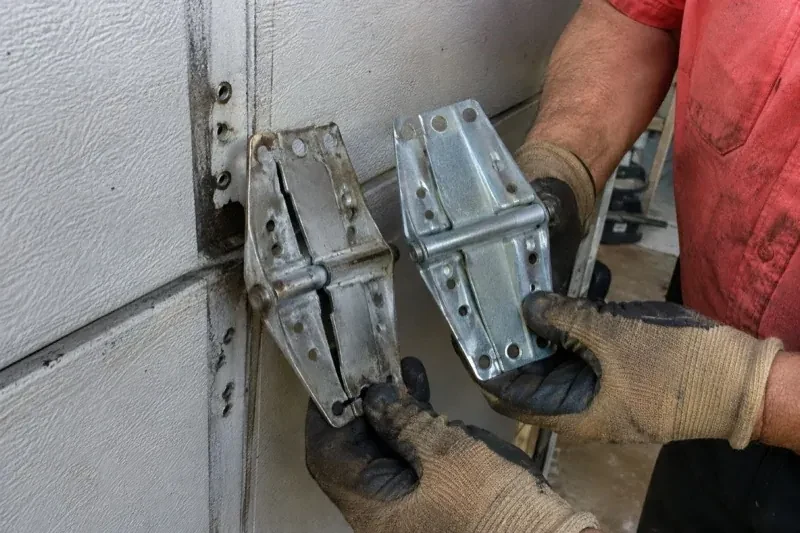
- Garage Door Hinge ReplacementPressing a hand against one of the middle hinges makes it rock on the panel.
- Garage Door Track Repair or ReplacementBacking out this morning, the mirror caught the track beside the door.
- Garage Door Cable ReplacementYour older door has springs along the tracks, and one cable has slipped off its pulley and dangles slack.