Garage Doors in Lavender, OntarioWarmer abovethe garage.
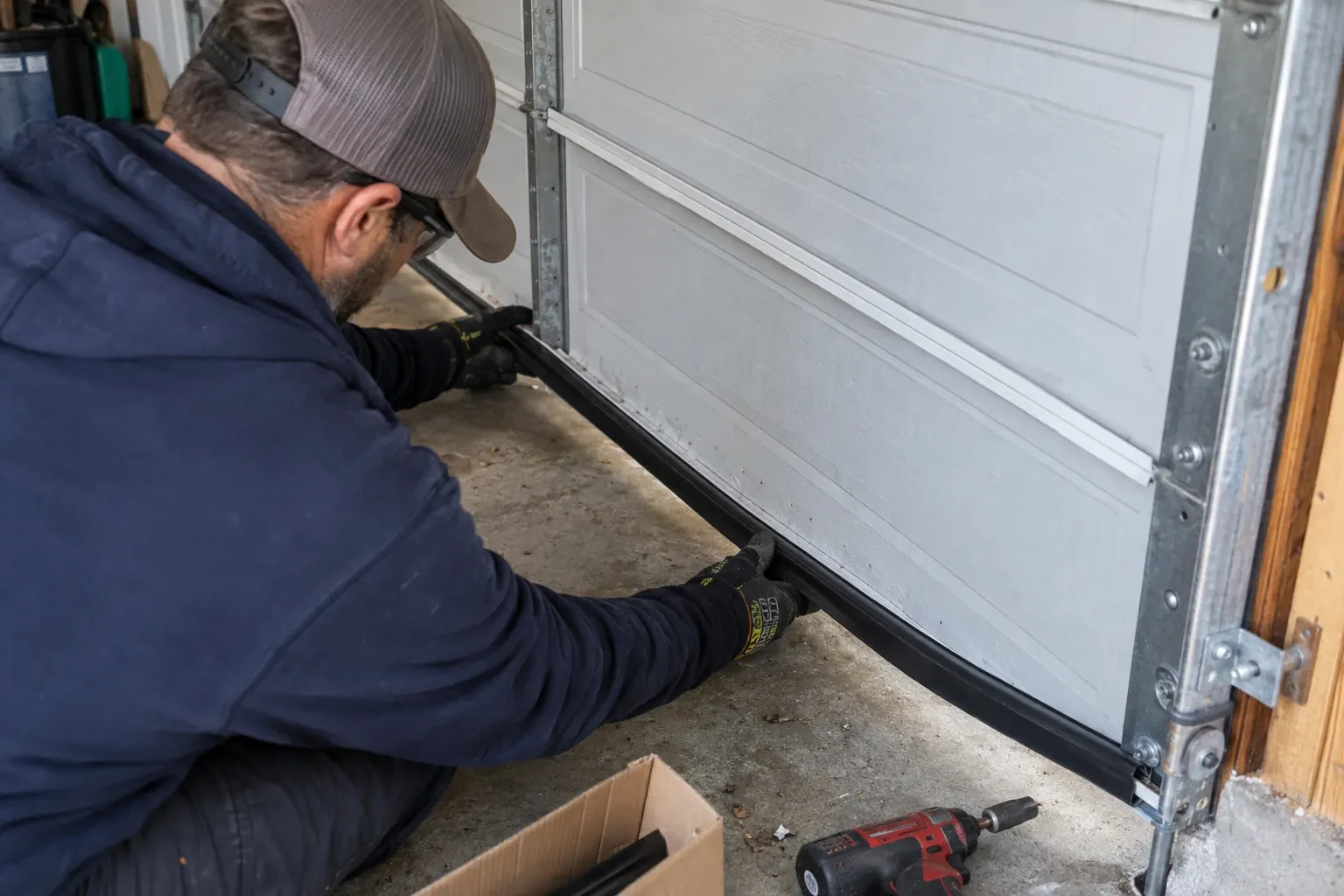
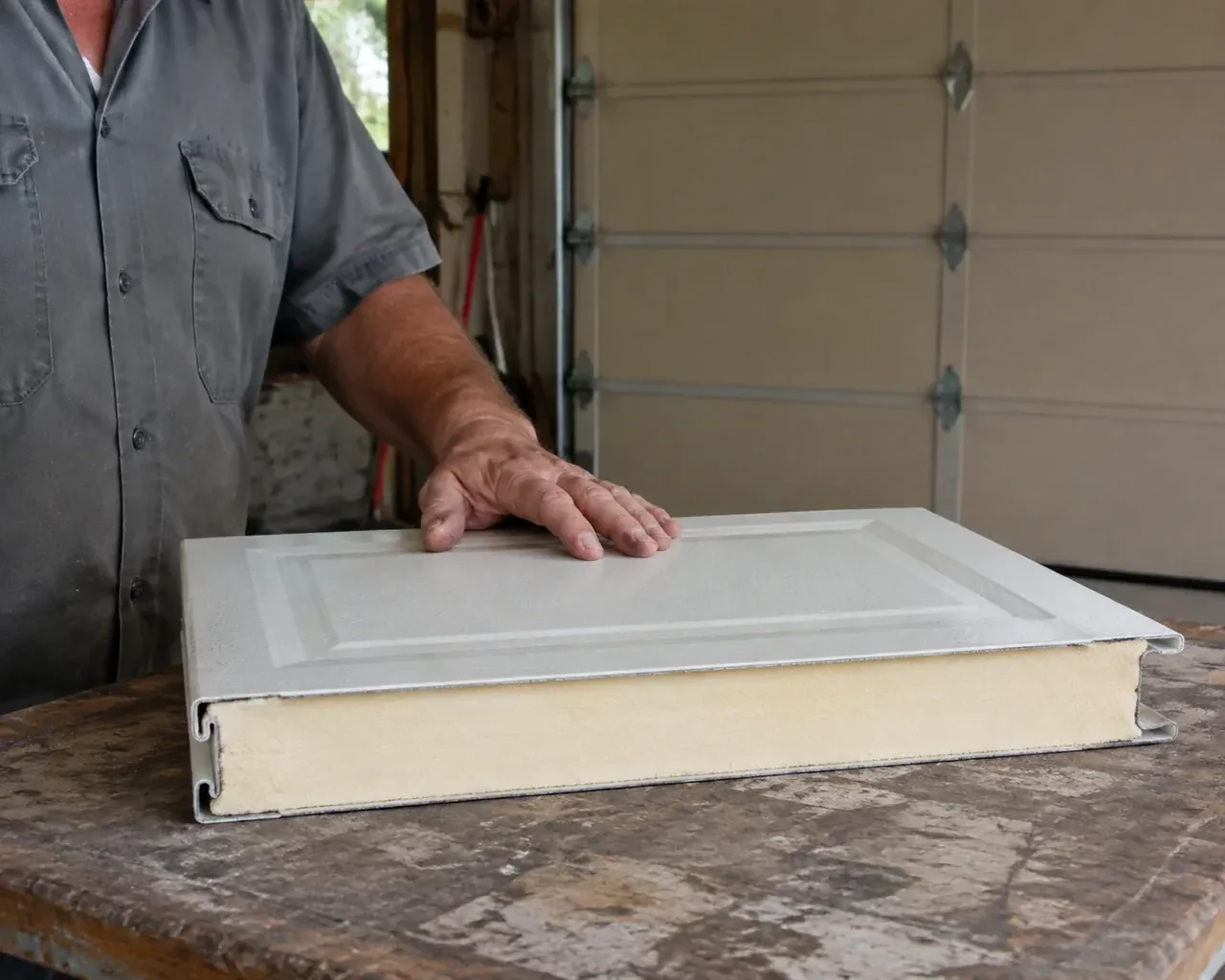
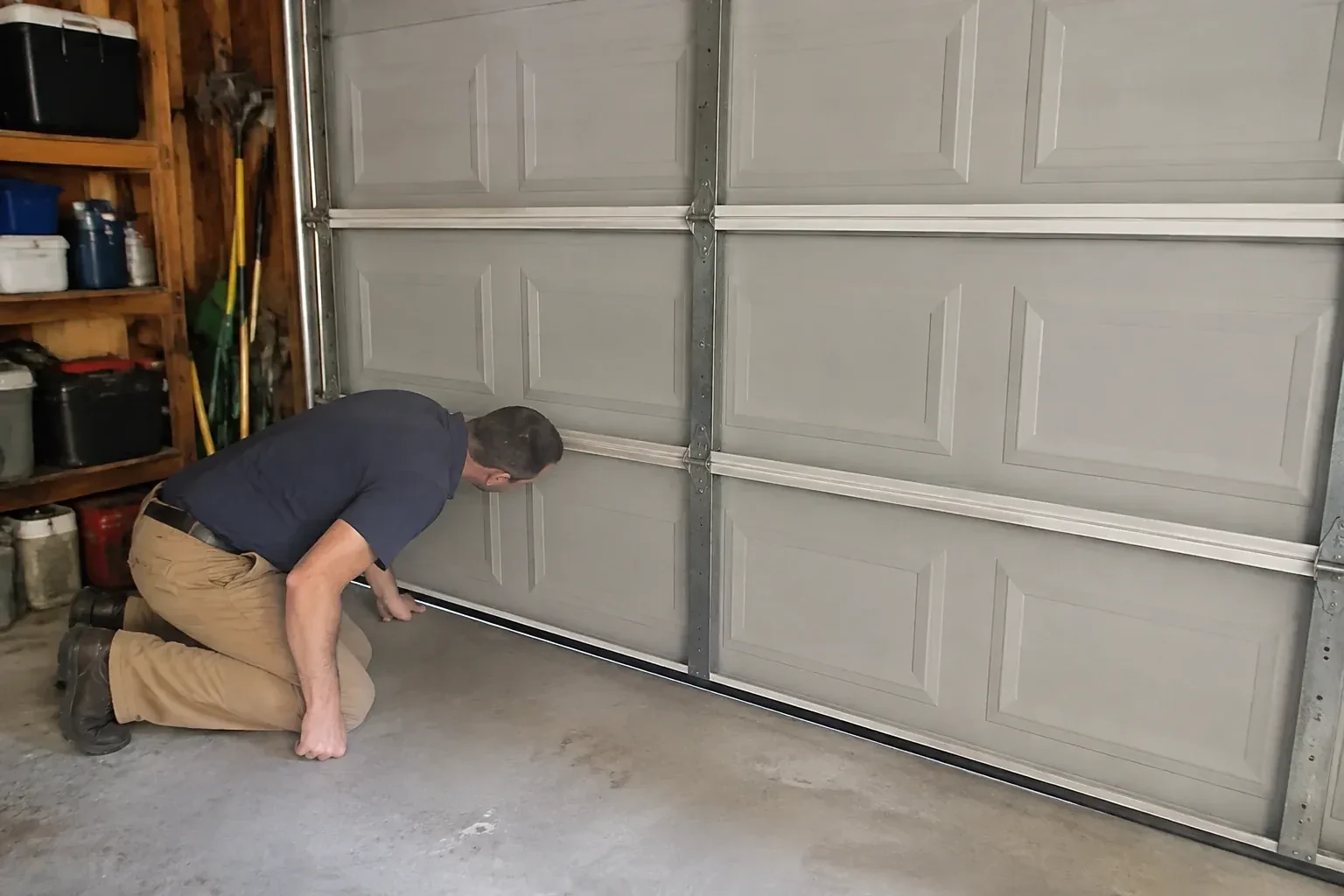
When a bedroom or office sits over the garage in Lavender, the door is part of the building envelope. An insulated door, tight weatherstrip and a properly adjusted bottom seal make that room noticeably more comfortable in January and July alike, and the difference shows up on the heating bill. The same crew covers Honeywood, Redickville, Shrigley, Black Bank and Ruskview.
When a bedroom or office sits over the garage in Lavender, the door is part of the building envelope. An insulated door, tight weatherstrip and a properly adjusted bottom seal make that room noticeably more comfortable in January and July alike, and the difference shows up on the heating bill. The same crew covers Honeywood, Redickville, Shrigley, Black Bank and Ruskview.
Repair when it makes sense. Replace when it doesn't.
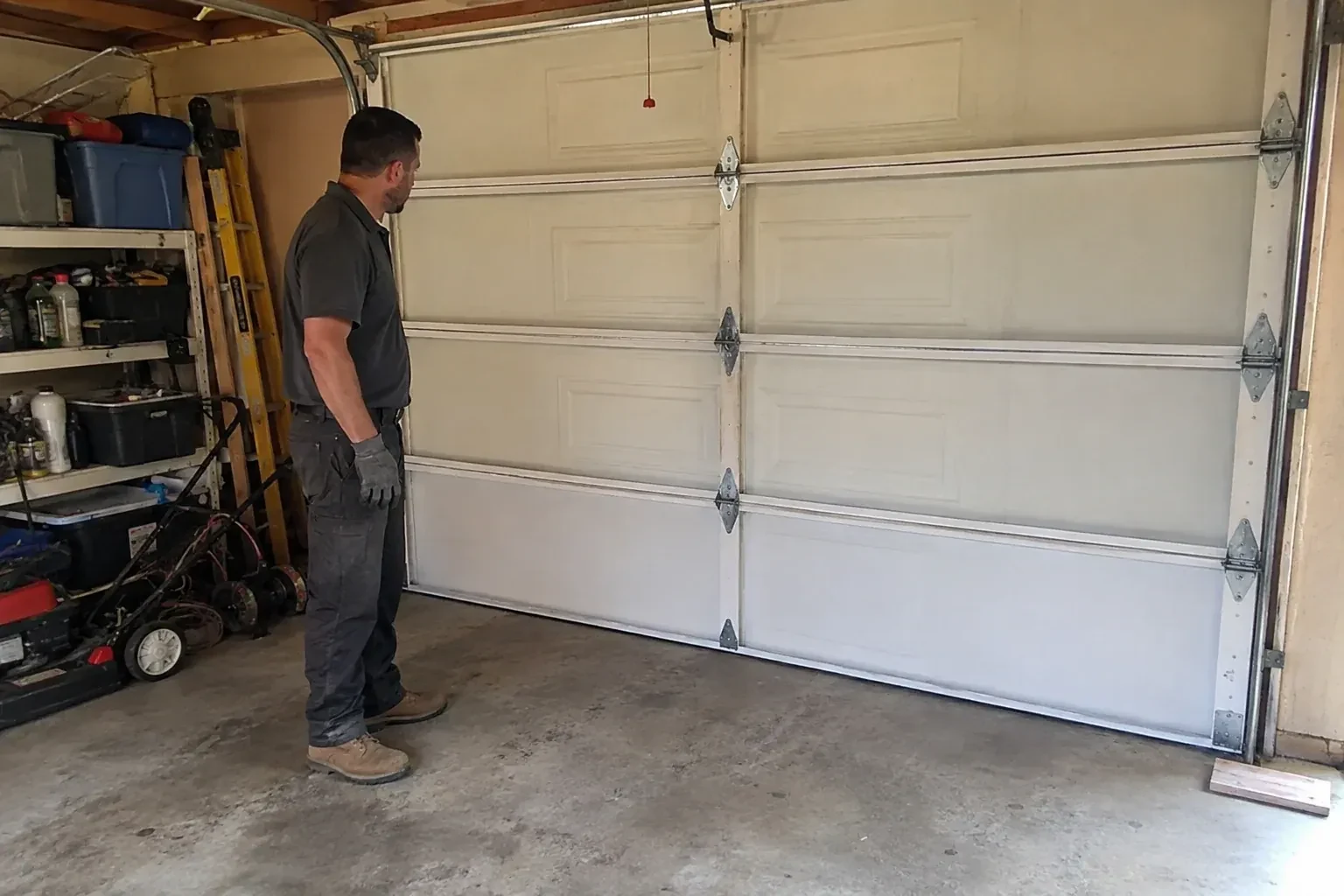
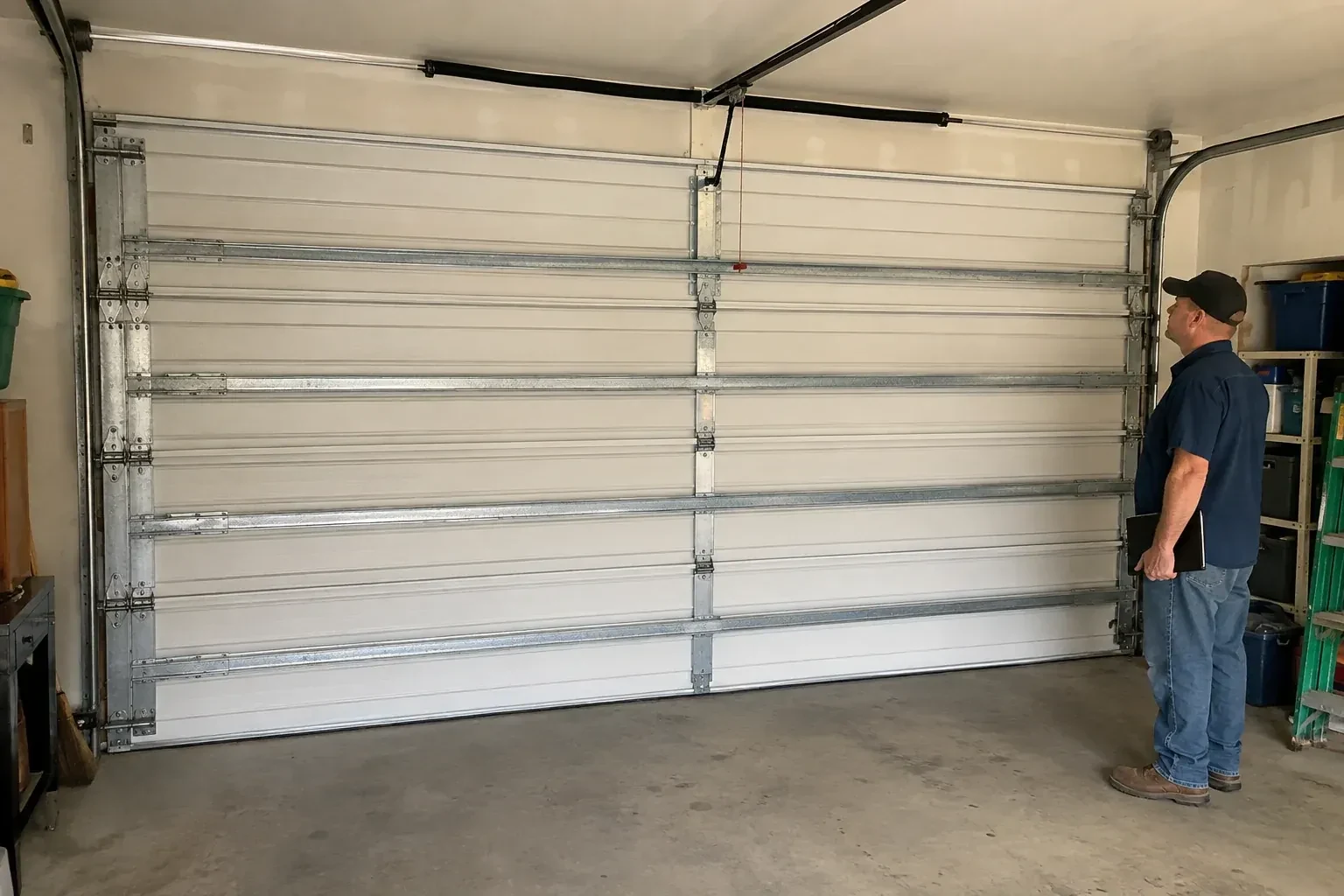
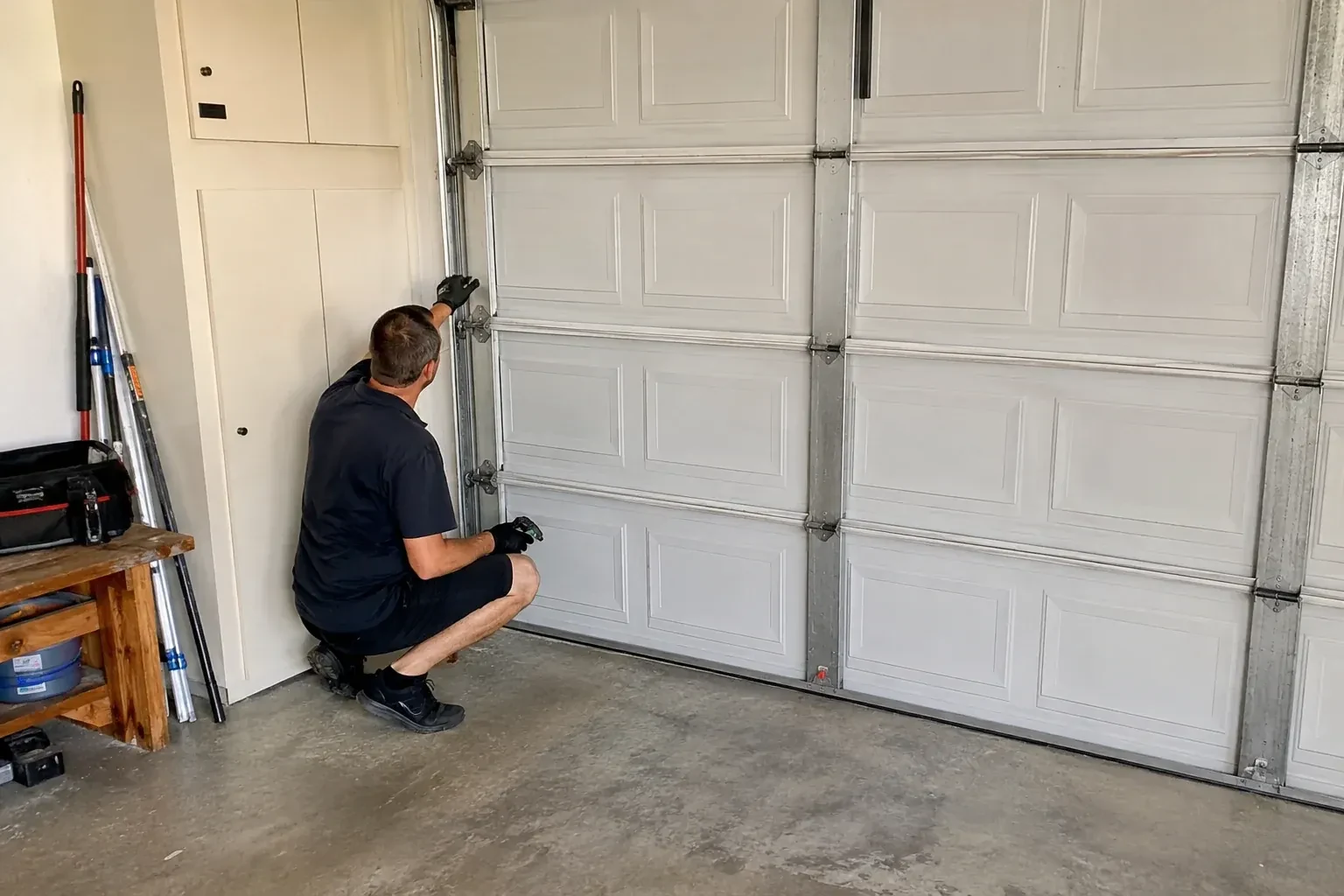
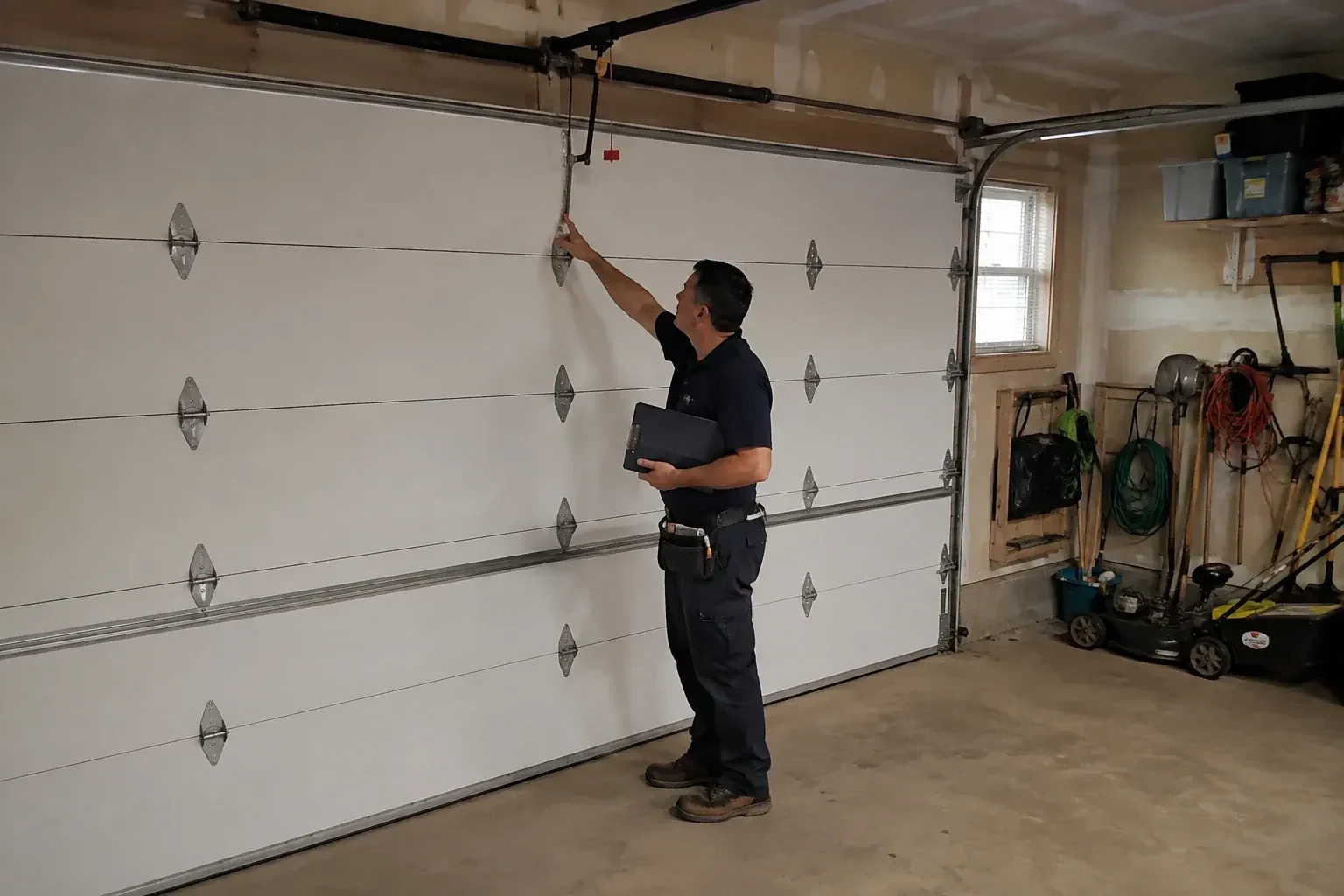
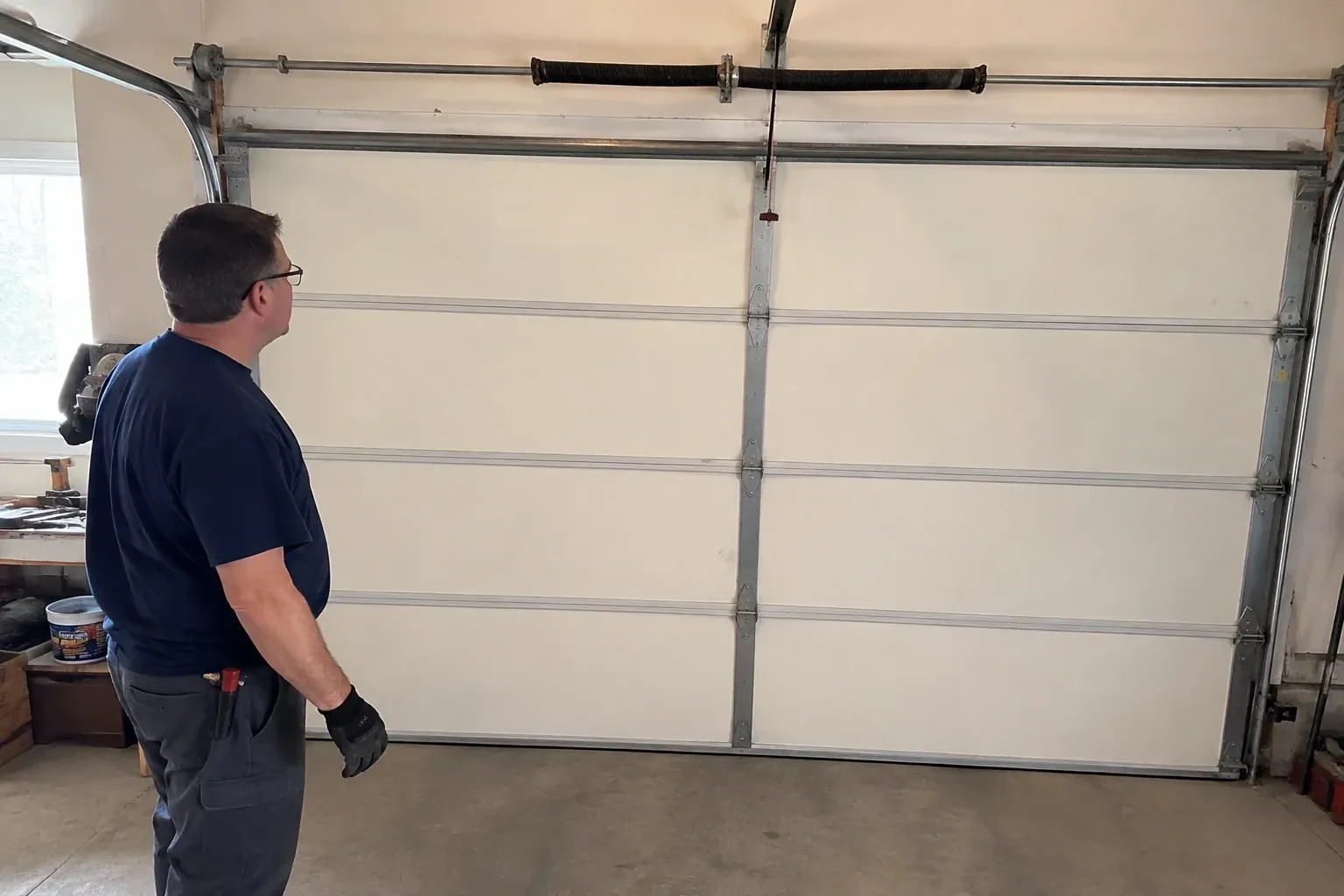
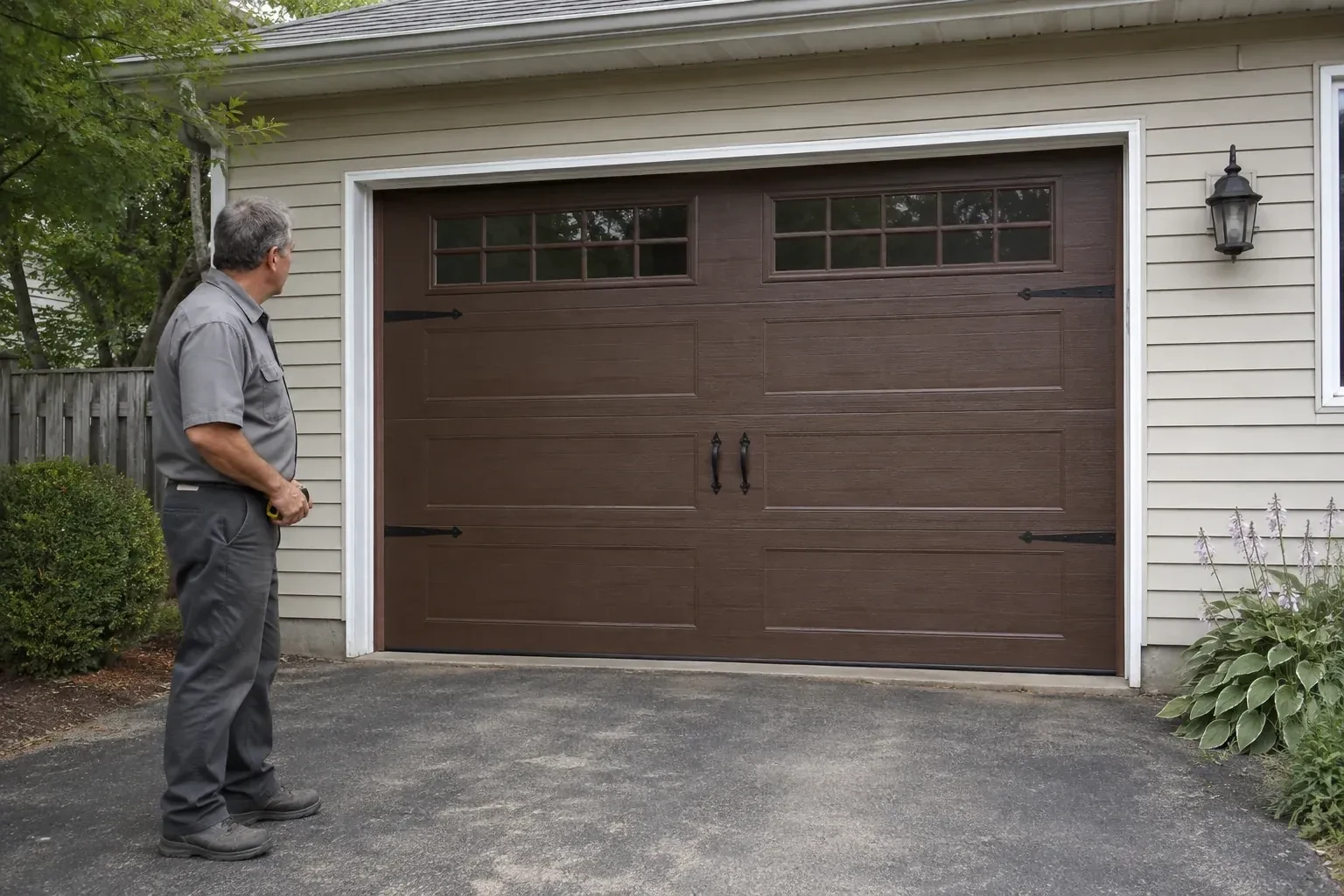
Homes and small businesses in Lavender deal with the same few people from first call to finished job. The person who assesses the door is the one who repairs it, so nothing gets lost between a sales visit and an installation crew, and the reasoning behind every recommendation is available to you directly.
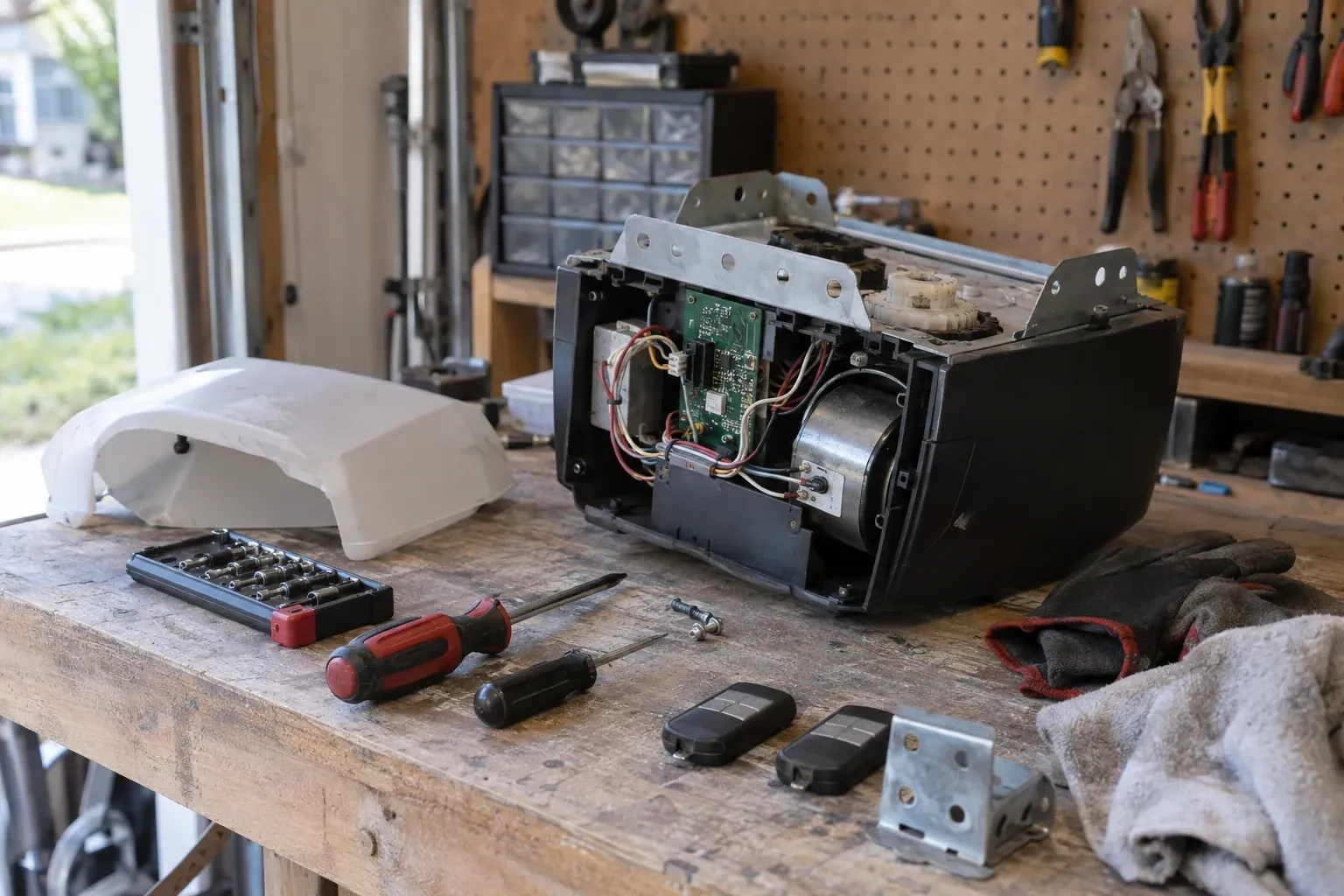
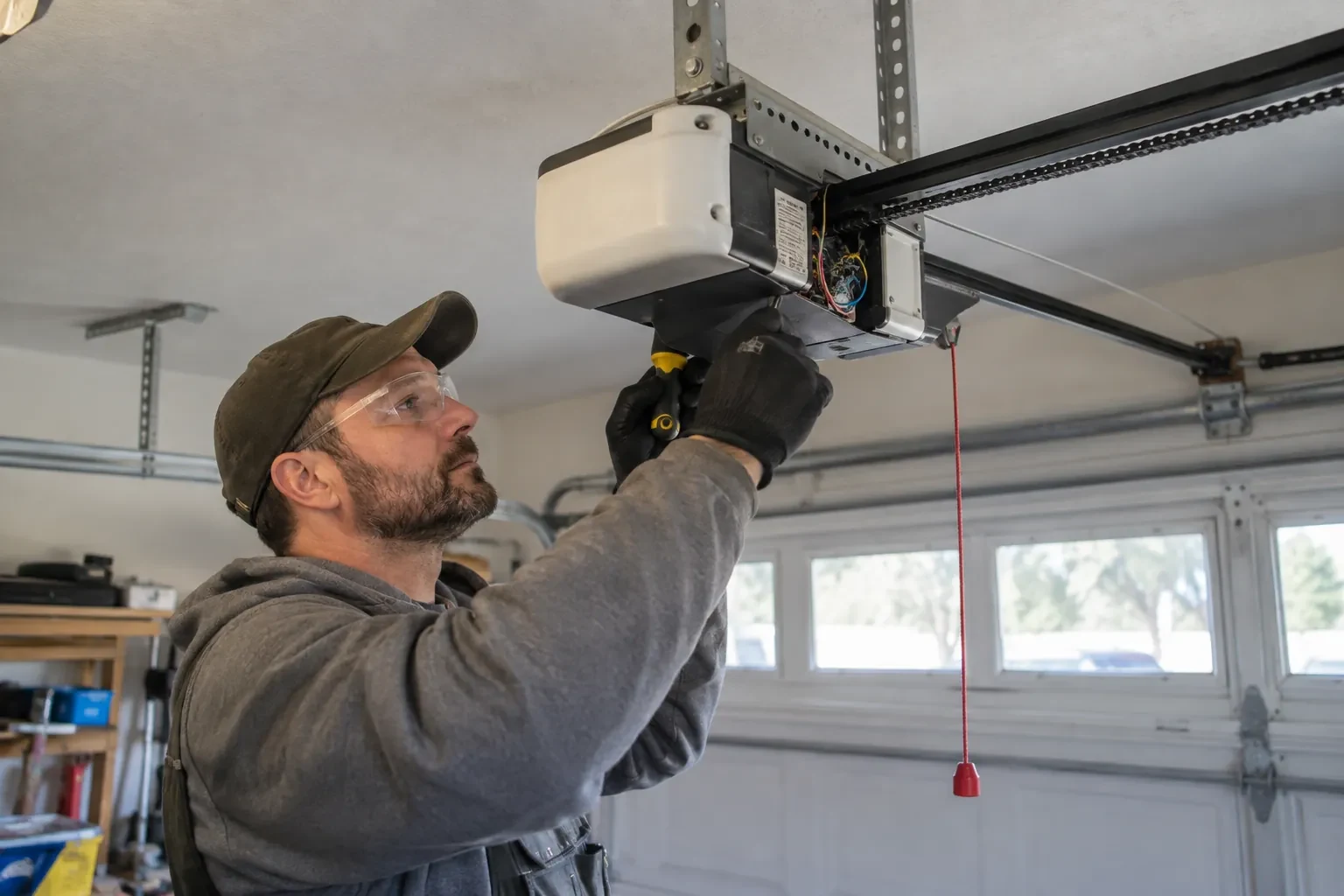
Homeowners across Lavender call us when the remote stops answering, the keypad forgets its code or the opener hums without lifting. We work through the system in order, from power to logic board to travel limits to sensors, and explain each part as we go. New openers are installed and fully set up, with every remote and keypad working before the technician leaves.
24years in business
24/7open every day
Nothing hidden. Every part we replace, you can see. Every adjustment, we explain. If we find something unexpected, we stop and tell you before continuing.
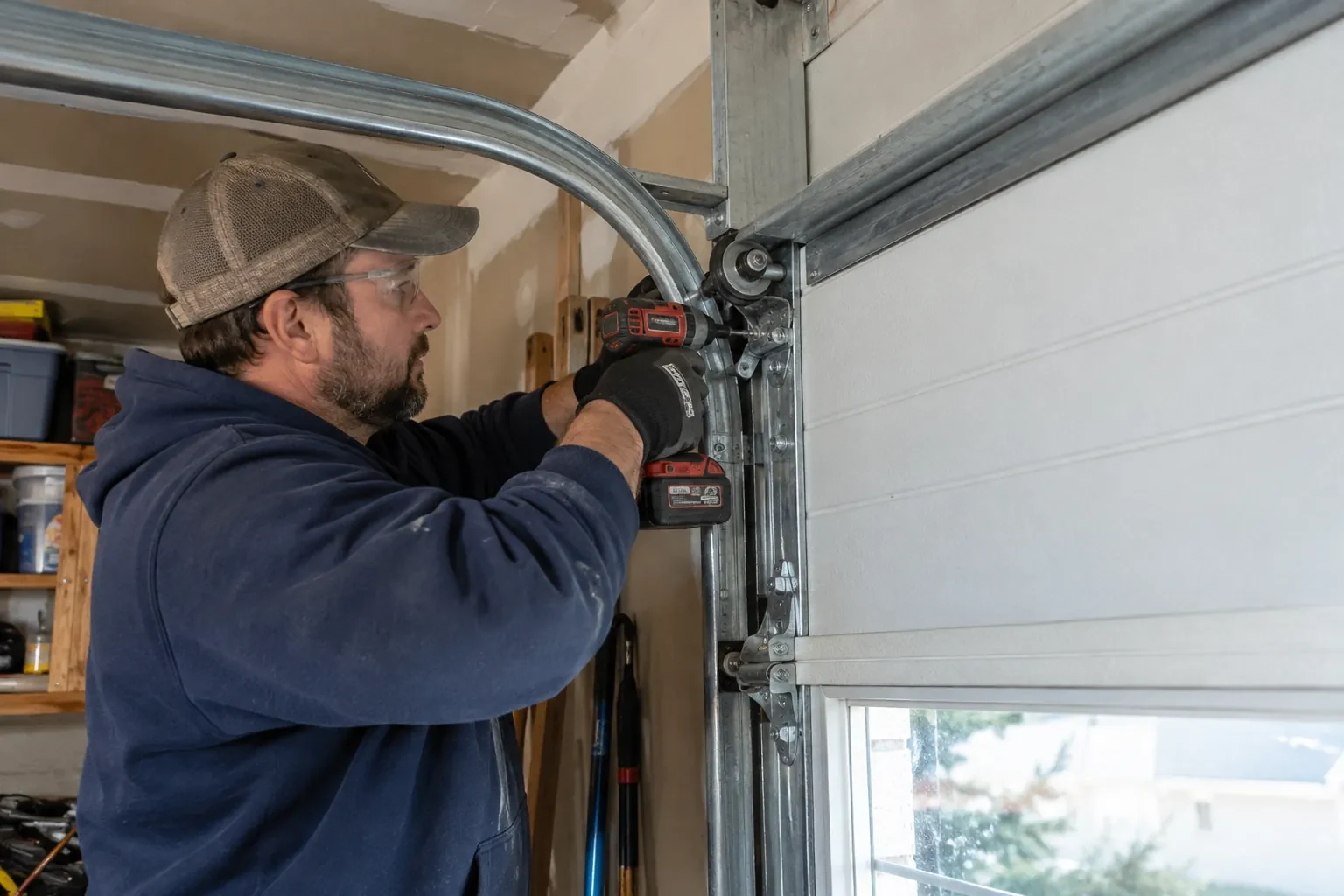
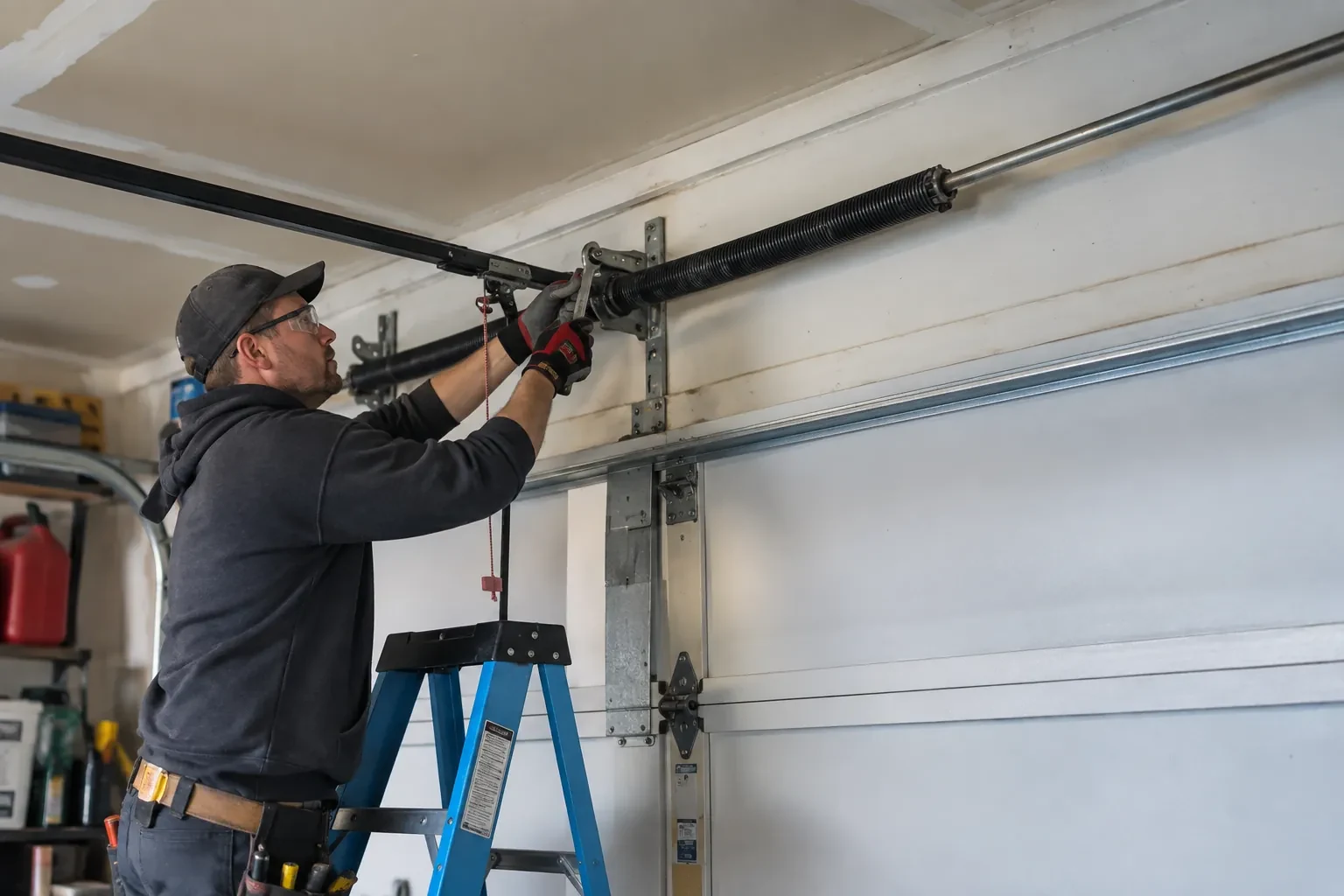
Care with heavy parts. Springs and cables are handled with the right tools and a steady method, and the door is secured before any tension is released.
Clear about what comes next. Before we leave, you know what was done, what to watch for, and when the door might want attention again.
Whether the door on your house in Lavender needs a single roller or a whole new opener, the services listed here cover it. Repairs come first, because most doors can be saved; springs, cables and hardware follow; then openers and remotes; and finally new doors for homes and commercial buildings.
About 51% of homes in Clearview were built in 1980 or earlier, according to the 2021 Census.
Older homes
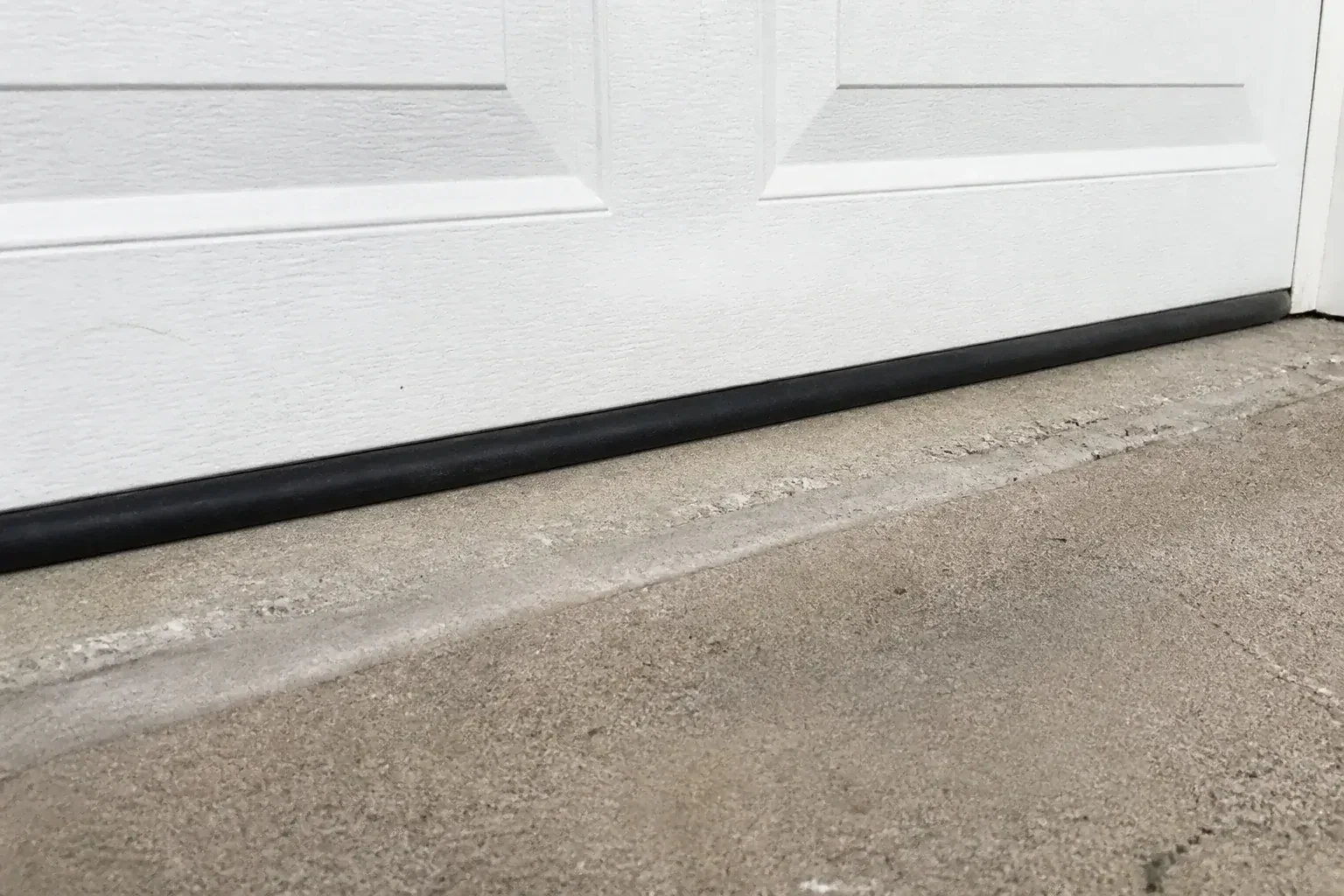
Decades of freeze and thaw work on the concrete apron in front of an older garage, and an uneven floor means the bottom seal meets a gap on one side. A thicker seal or an adjusted threshold closes it and keeps snow and cold air out.
Single-detached houses make up about 90% of homes in Clearview (2021 Census).
Mostly houses
Detached homes usually have their own driveway and apron, and years of freeze and thaw can leave the concrete uneven where the door meets it. A thicker bottom seal or a threshold strip closes the gap, keeping snow, leaves and cold air out of the garage.
Years of slap shots have peppered the lower two sections with dents. Each one alone is small, but from the street the door looks tired, and the deepest dent near the centre has cracked the paint and shows bare steel.
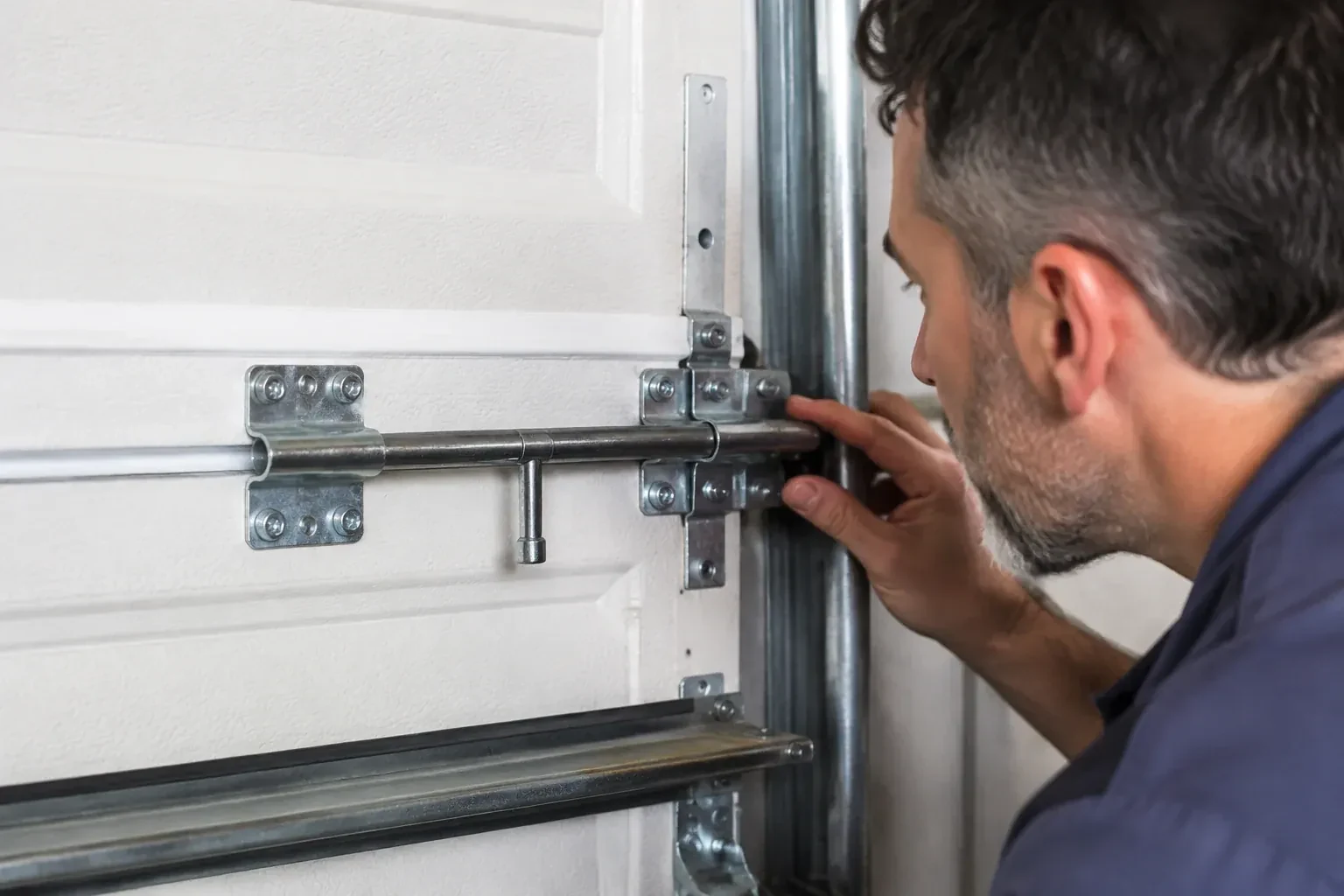
The power is out in a storm, you pulled the red cord and lowered the door by hand, and now you want to lock it. The slide bolt on the inside edge is welded in place by years of rust and refuses to budge.
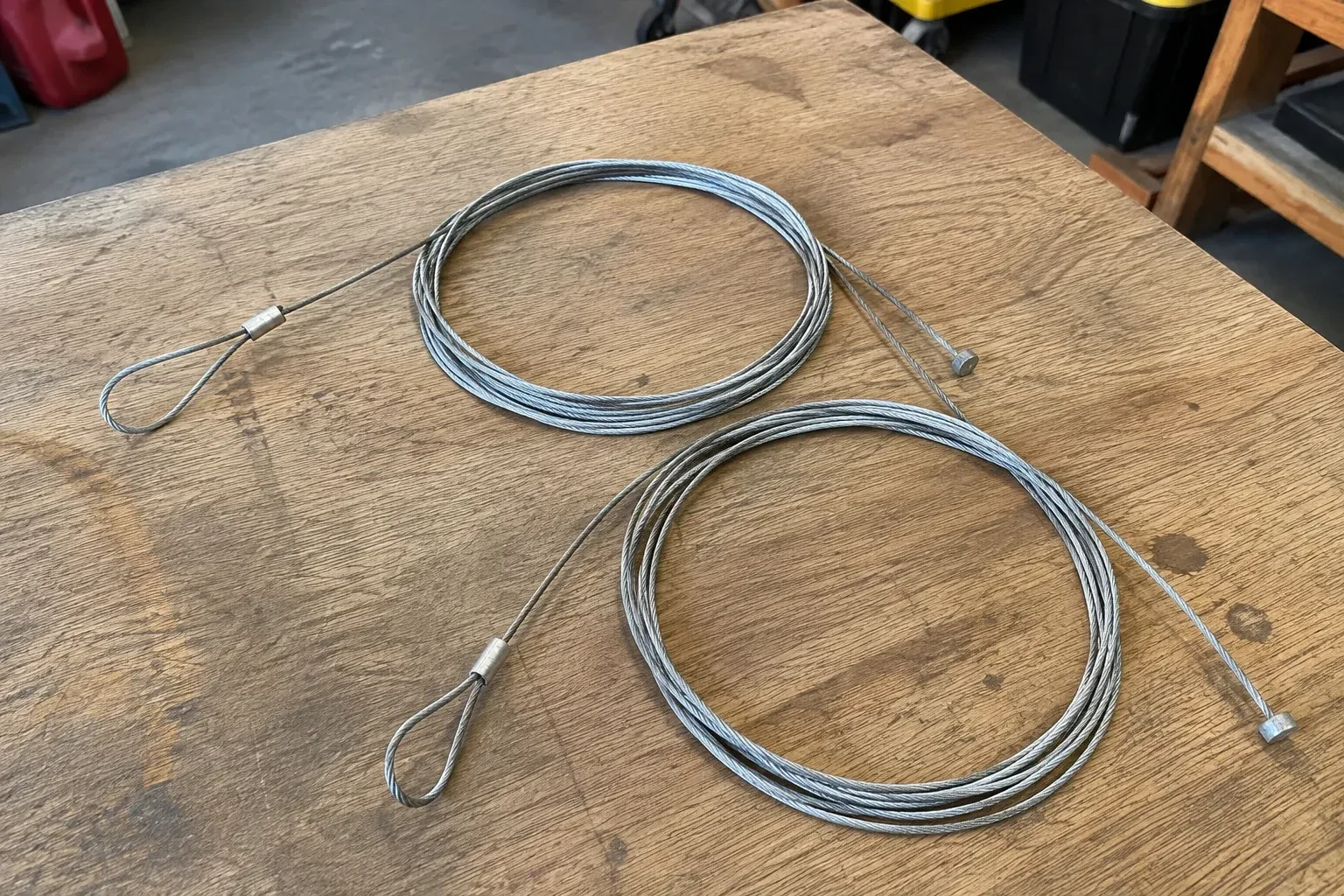
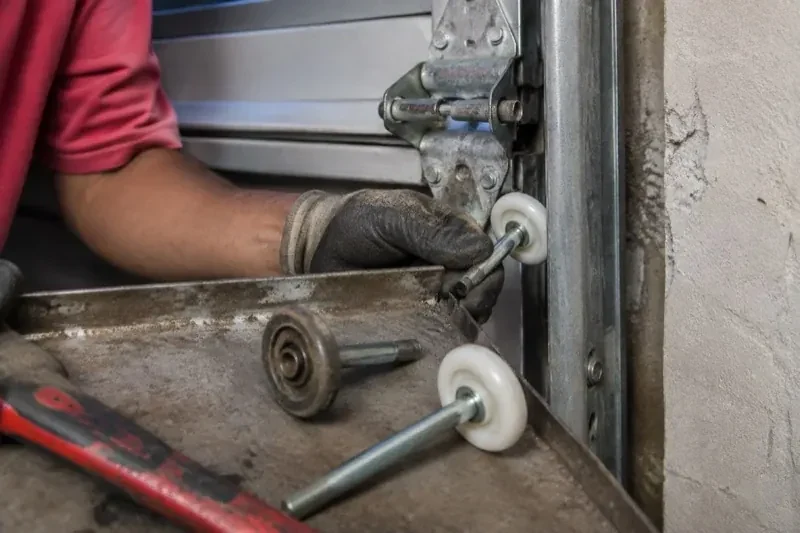
There was a sharp crack from the garage, and when you went to look the door had dropped on one side and jammed. A length of cable lies coiled on the floor by the bottom roller.
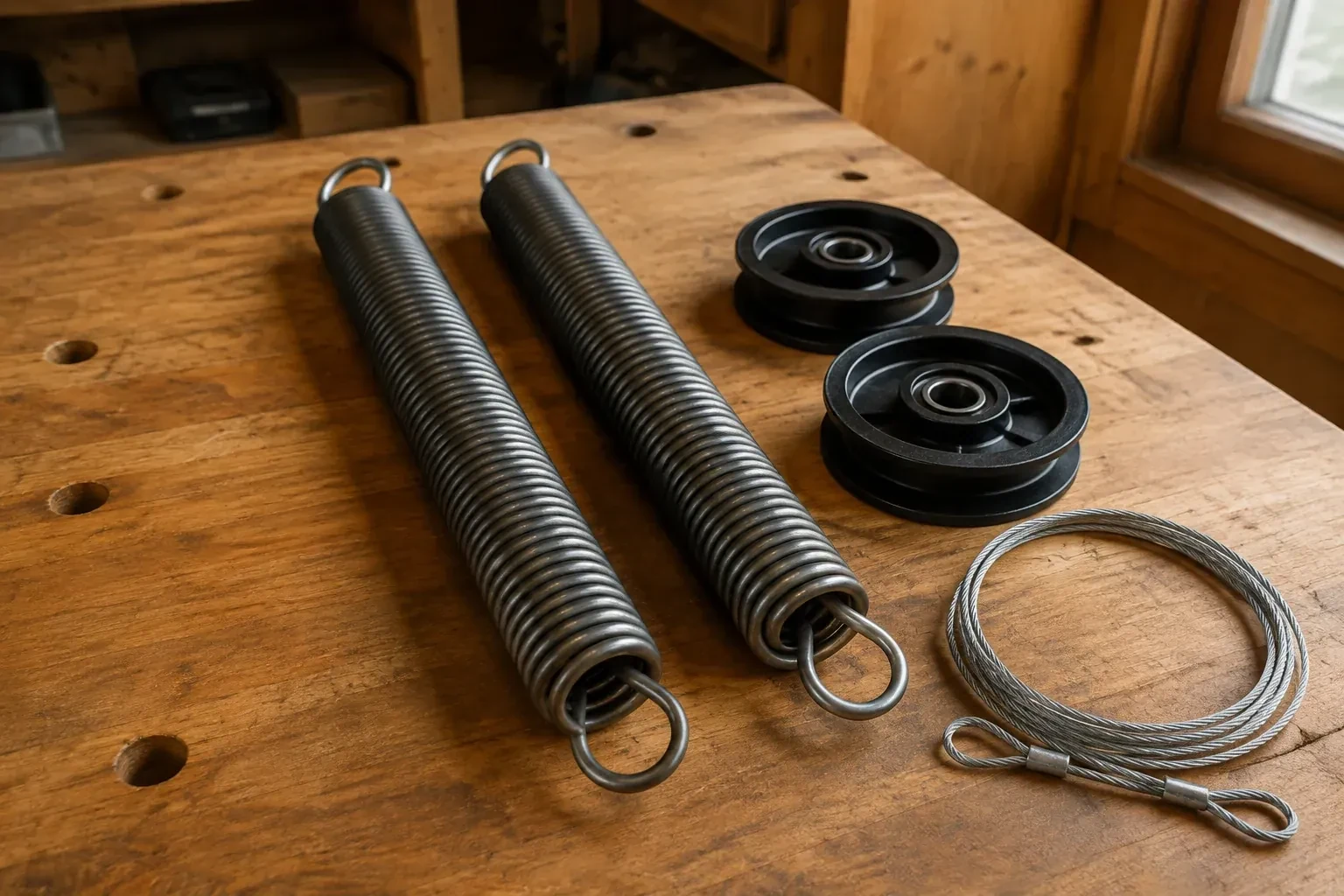
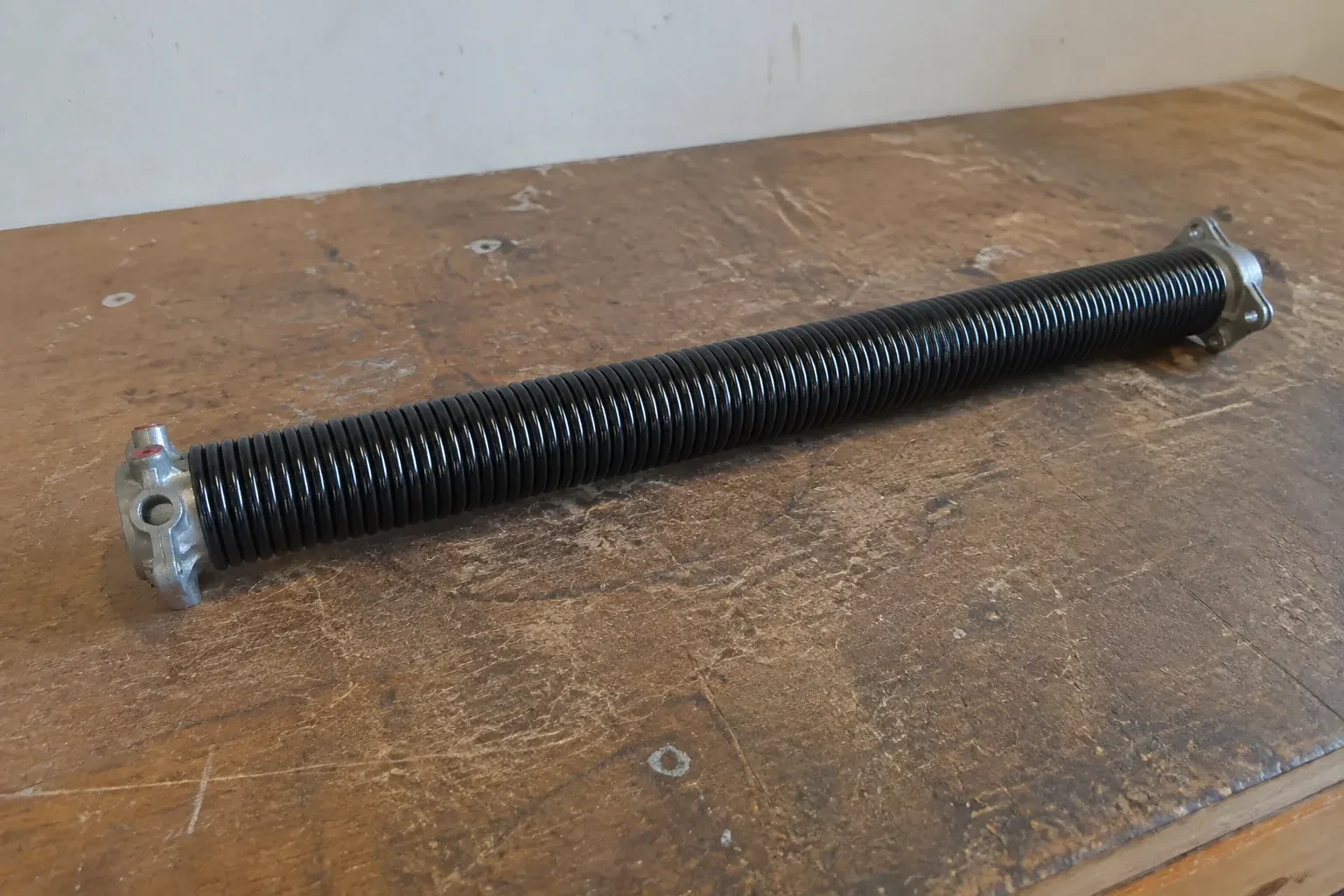
The door climbs with the left corner ahead of the right, then twists as it turns into the ceiling track. Looking up, the spring on the right side is stretched longer than its partner, with daylight showing between the coils.
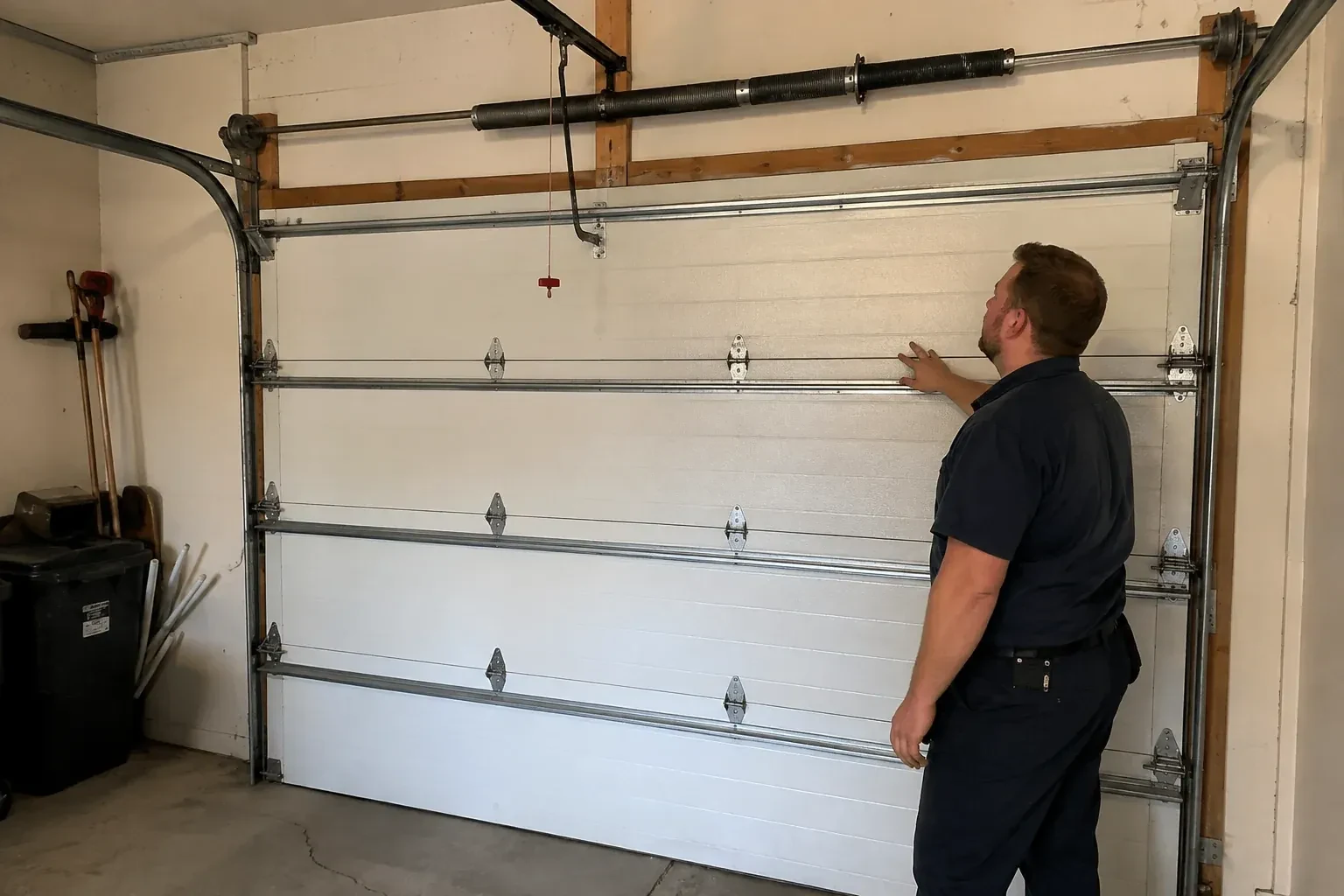
Released from the opener, the door will not hold anywhere. Lift it to hip height, take your hands away, and it sinks back to the concrete, gathering speed on the way down. Two years ago it used to hover exactly where you left it.
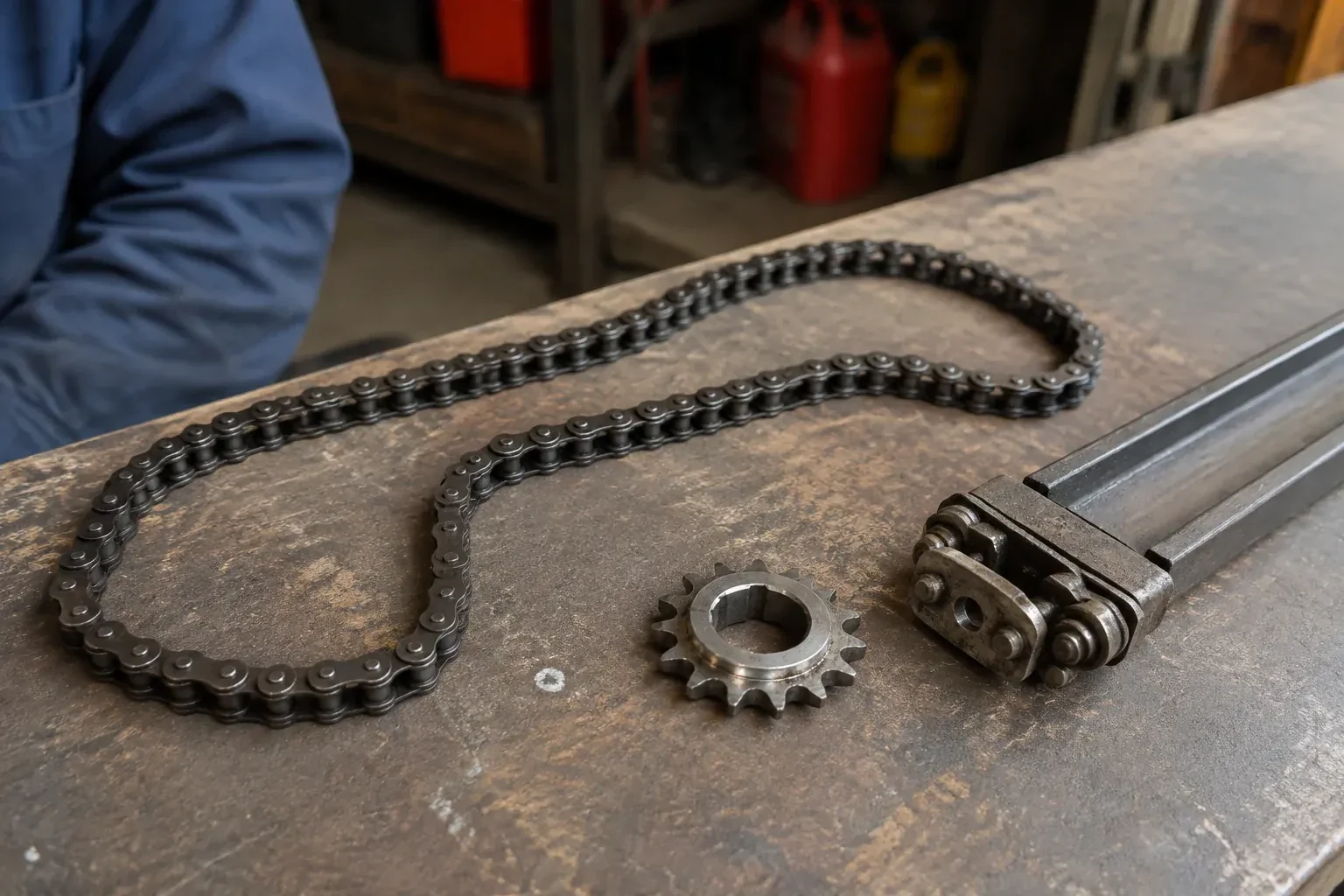
Halfway up, the door lurches. Something in the drive skips a beat, the chain jumps, and the door finishes its travel with a jolt. It happens more on cold mornings and always at the same point on the rail.
One remote lives in a car you sold last spring. The other needs three presses from the driveway and its battery cover is taped on. Your phone is already in your hand when you pull in, and it would make a better opener.
The garage becomes notably colder each winter, with drafts around the perimeter and condensation on thin door sections. You want a replacement selected for better sealing and insulation as part of a more comfortable space.
Several sections are dented and the bottom edge has begun to rust. Instead of matching another isolated panel, you are ready to choose a complete insulated steel door with new coordinated hardware.
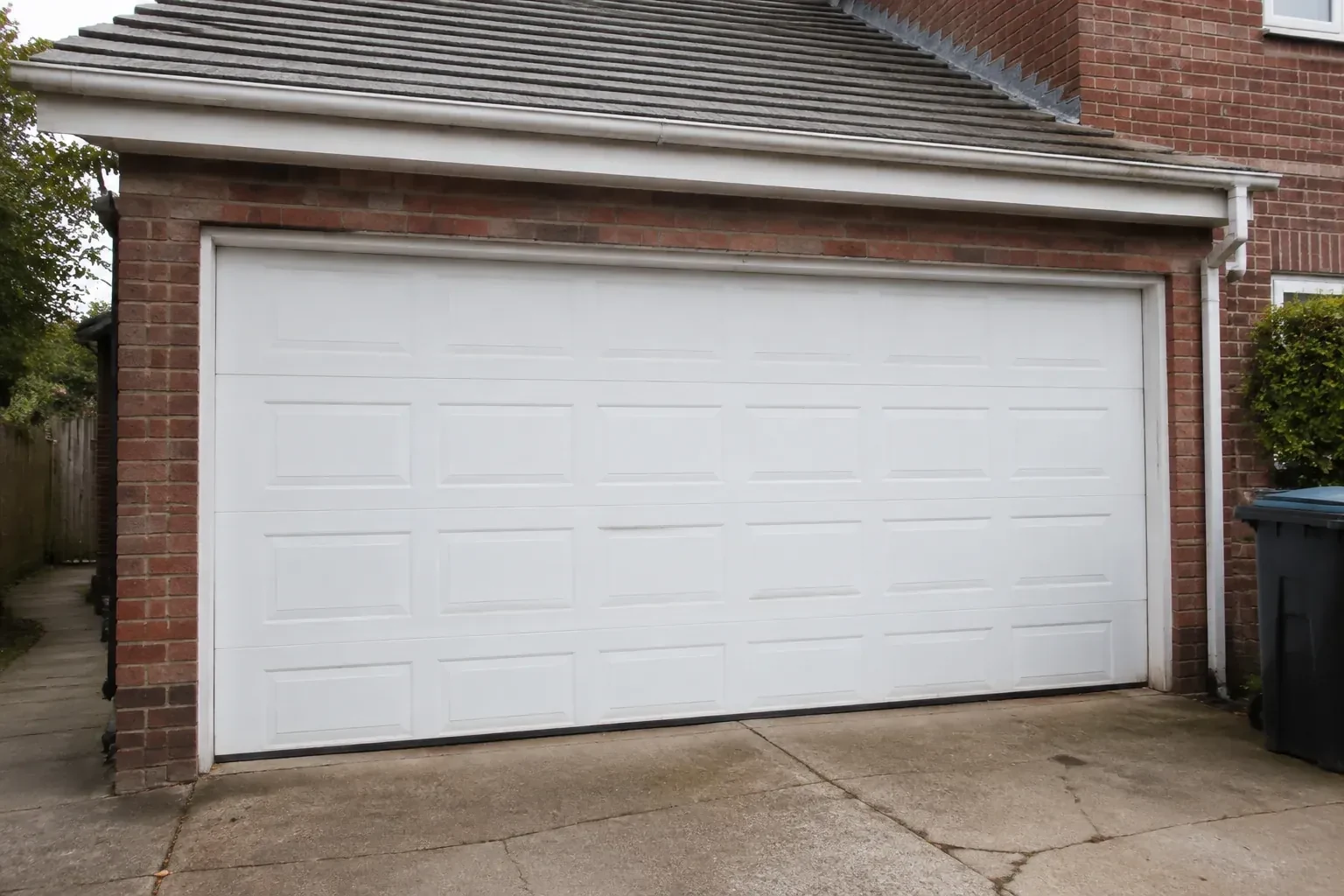
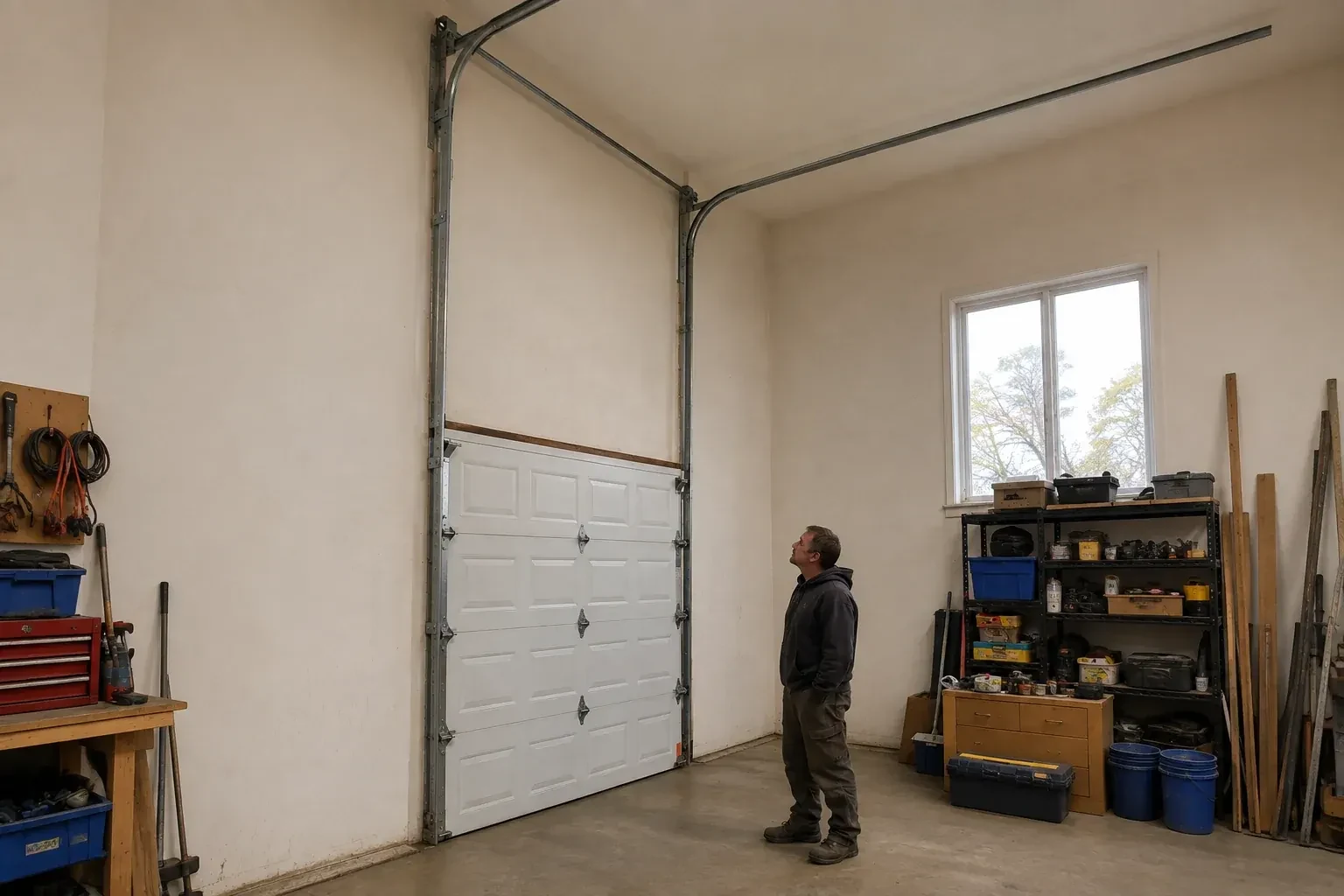
The current double door shudders when pressure changes outside, and daylight appears briefly along one edge. Its tracks are light, the jamb material is aging, and no one knows which reinforcement was originally specified.
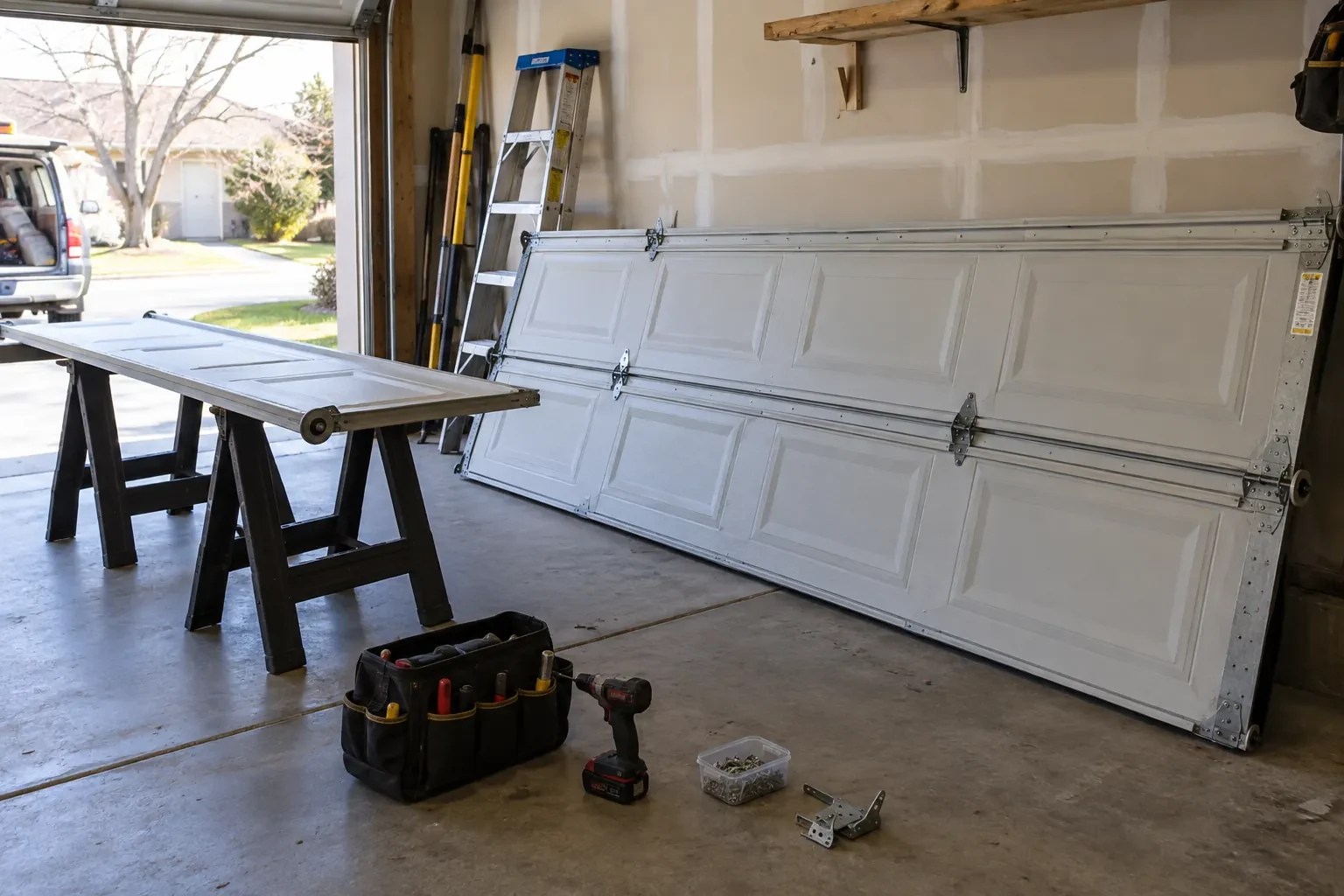
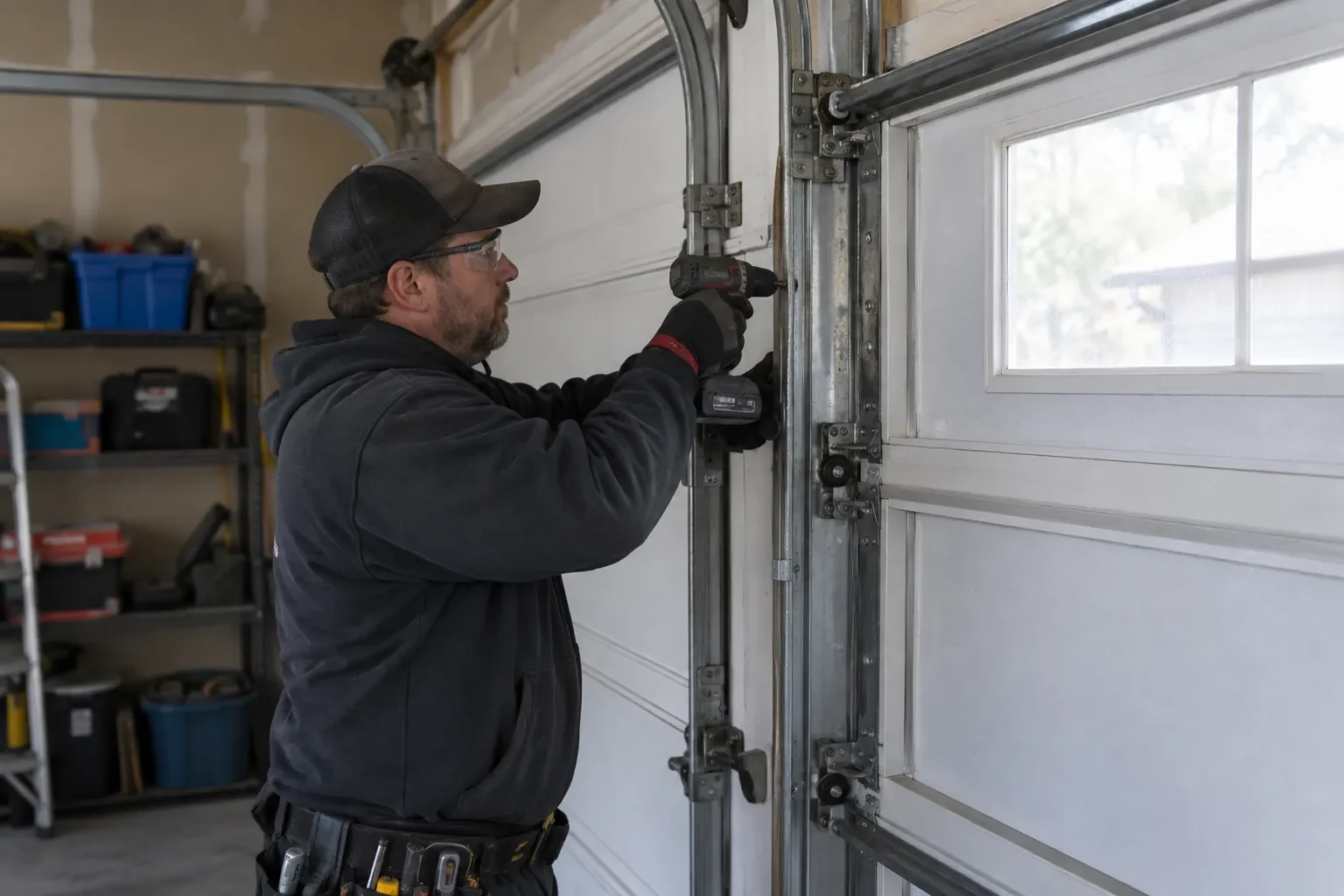
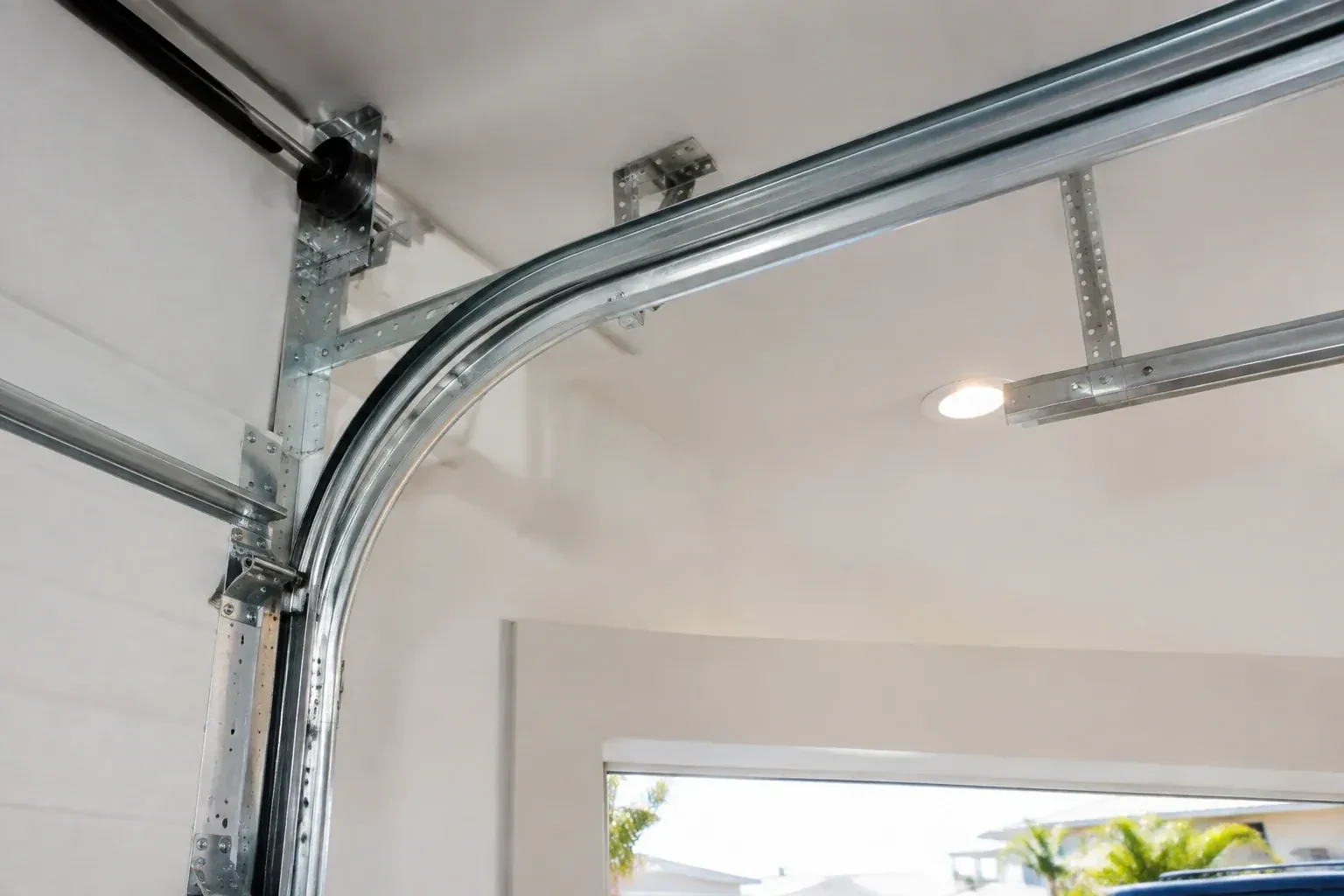
When the old door comes down, everything that carried it goes with it: the tracks, the springs, the cables and the rollers. A new door on old hardware is a compromise, and we do not install that way.
How do I know whether the damage is only cosmetic?
Watch the door move. A cosmetic dent leaves the section flat at the joints, the door travelling without a catch, and the hinges and rollers seated normally. Signs that the damage goes further include a crease that reaches a joint or stile, a hinge screw that has pulled out, a roller sitting crooked in the track, a gap of daylight at a joint, or a shudder as that section reaches the track curve. Any of those calls for a proper assessment.
Do I need a manual lock at all if I have an opener?
Many households do without one. With the trolley engaged, an opener holds the door shut, and most wall consoles include a lock-out button that disables every remote while you are away. A manual lock earns its place for power outages, for a detached garage without an opener, and for anyone who likes a physical bar in the track. The technician can set the door up either way.
Does the new cable have to match the old one exactly?
It has to match the door, which may not be the same thing if the old cable was wrong. Length is set by the door height, the drum profile and the lift type; diameter and construction by the door's weight. A cable that is a little long overlaps on the drum and wears; one that is short leaves the door out of level. The technician measures the door and the drum rather than trusting the old cable.
My springs squeak and twang. Is that normal?
Some noise is ordinary. Extension springs stretch and relax on every trip, and a dry coil or a pulley with a dry axle will squeak, especially in cold weather; a light spray of lubricant along the springs and a drop on each pulley usually quiets it. A sharper twang, or a new grinding from a pulley, is worth a look, since a stiff pulley loads the spring and wears the cable.
I added insulation panels to my door. Does that affect balance?
Yes, and it is one of the most common reasons a door starts to sink. Springs are matched to the door's weight, and insulation kits, replacement sections, windows or a heavier seal add weight the original springs were not sized for. A technician can weigh the door and either add tension to suit it or, if the added weight is beyond what the springs can carry, specify new ones.
Will the safety reversal be tested as part of the repair?
Always, and after every adjustment, because changing tension, limits or force changes how the operator senses an obstruction. The door is closed onto a 38 mm block on the floor and must return to open on contact, then closed again while the low sensor beam is interrupted and must reverse the same way. If either test fails the settings are revisited until both pass, and you are shown the tests so you can repeat them monthly.
My garage is detached. Will the signal reach?
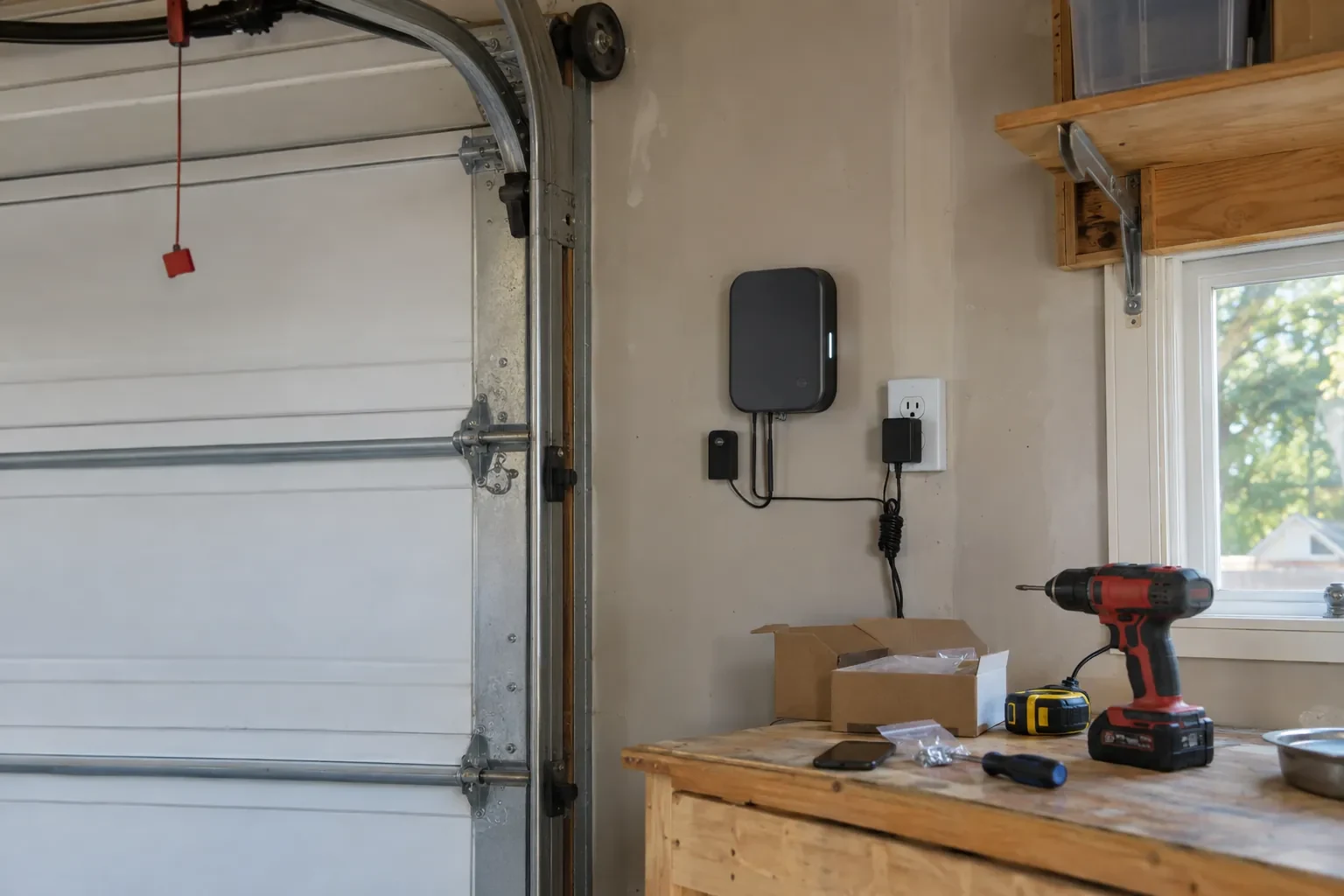
Sometimes on its own, often with help. A driveway, two exterior walls and a metal-clad garage can knock a signal down to the point where the hub connects but drops offline regularly. The technician measures at the mounting spot and, where the reading is marginal, adds a small access point or extender positioned to bridge the gap, so the hub joins a strong signal from day one rather than a weak one you have to keep nursing.
Can the existing tracks stay with the new door?
A replacement is planned with track designed for the selected sections and hardware. Door thickness, completed weight, roller position, available headroom and operator location can all affect compatibility. Using the matched track package lets the sections and counterbalance operate as the system was designed, with geometry that can be checked during installation.
Can decorative handles and hinges be added?
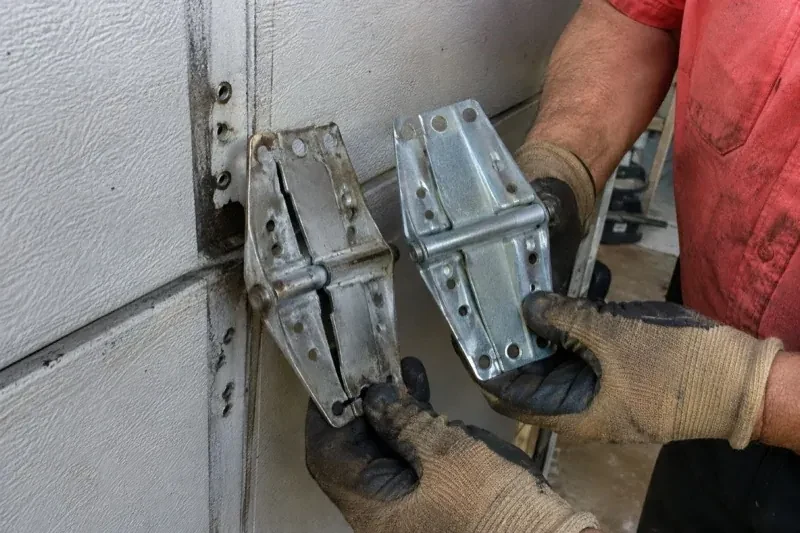
Decorative hardware can often be included when it is approved for the chosen door and installed in the specified locations. The order records finish, pattern and placement so the exterior remains balanced. Functional lifting hardware is a separate matter and must provide a safe gripping point. Added pieces should not obstruct section joints, tracks, seals or the door's path.
Why does the technician inspect the jambs and framing?
Door loads travel through the tracks and brackets into the jambs, then into the building structure. Soft wood, split material, loose blocking, shallow anchors, or unsupported trim can interrupt that path. Inspecting the mounting surfaces shows whether ordinary preparation is sufficient or whether structural work should be coordinated before the new system is attached.
Request a visit
Homes and small businesses in Lavender deal with the same few people from first call to finished job. The person who assesses the door is the one who repairs it, so nothing gets lost between a sales visit and an installation crew, and the reasoning behind every recommendation is available to you directly.