Springs · Mulmur
Torsion Spring Replacement in Mulmur
One side of the door sits higher than the other in the tracks, and a lift cable is hanging slack or has jumped off its drum.
In plain words
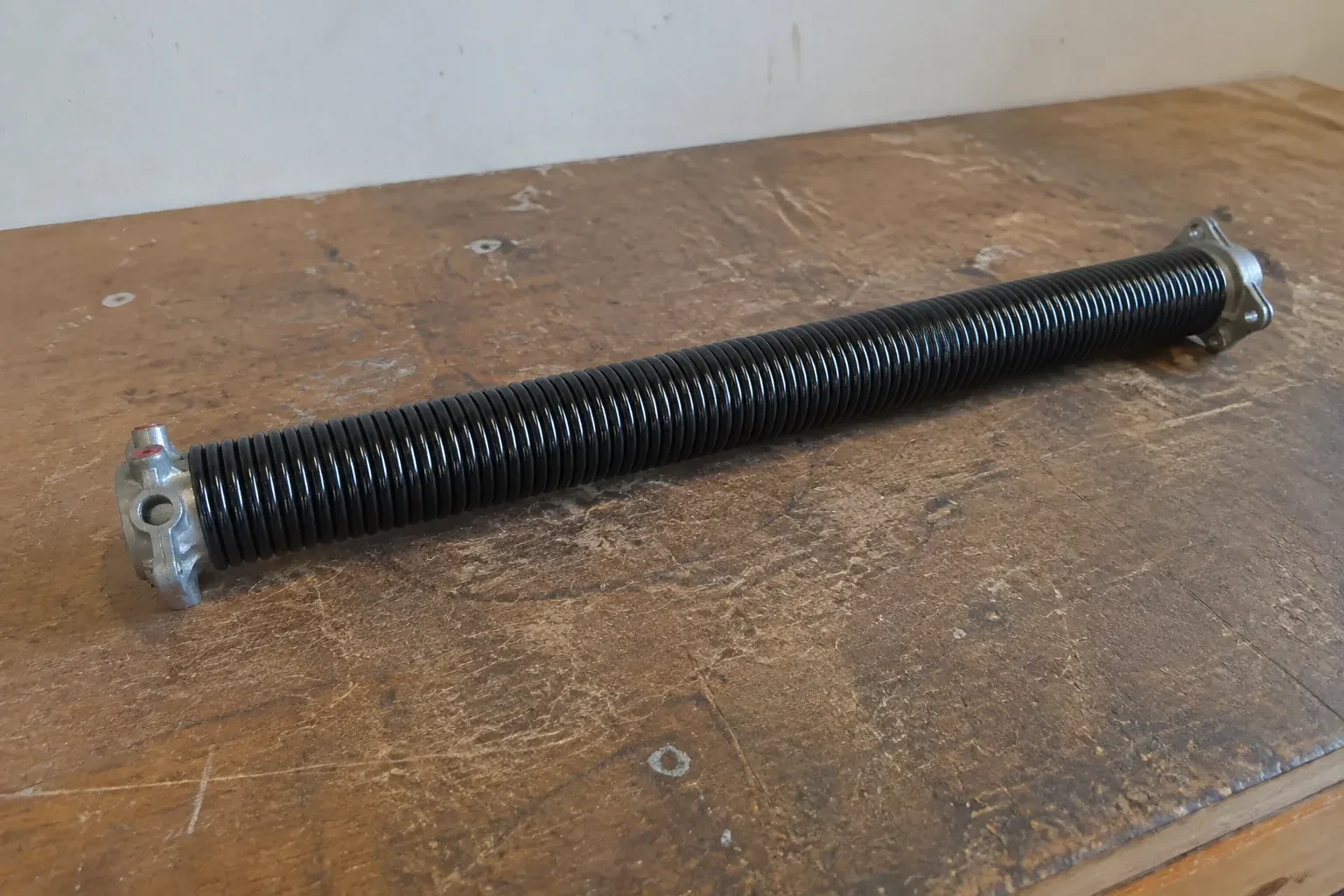
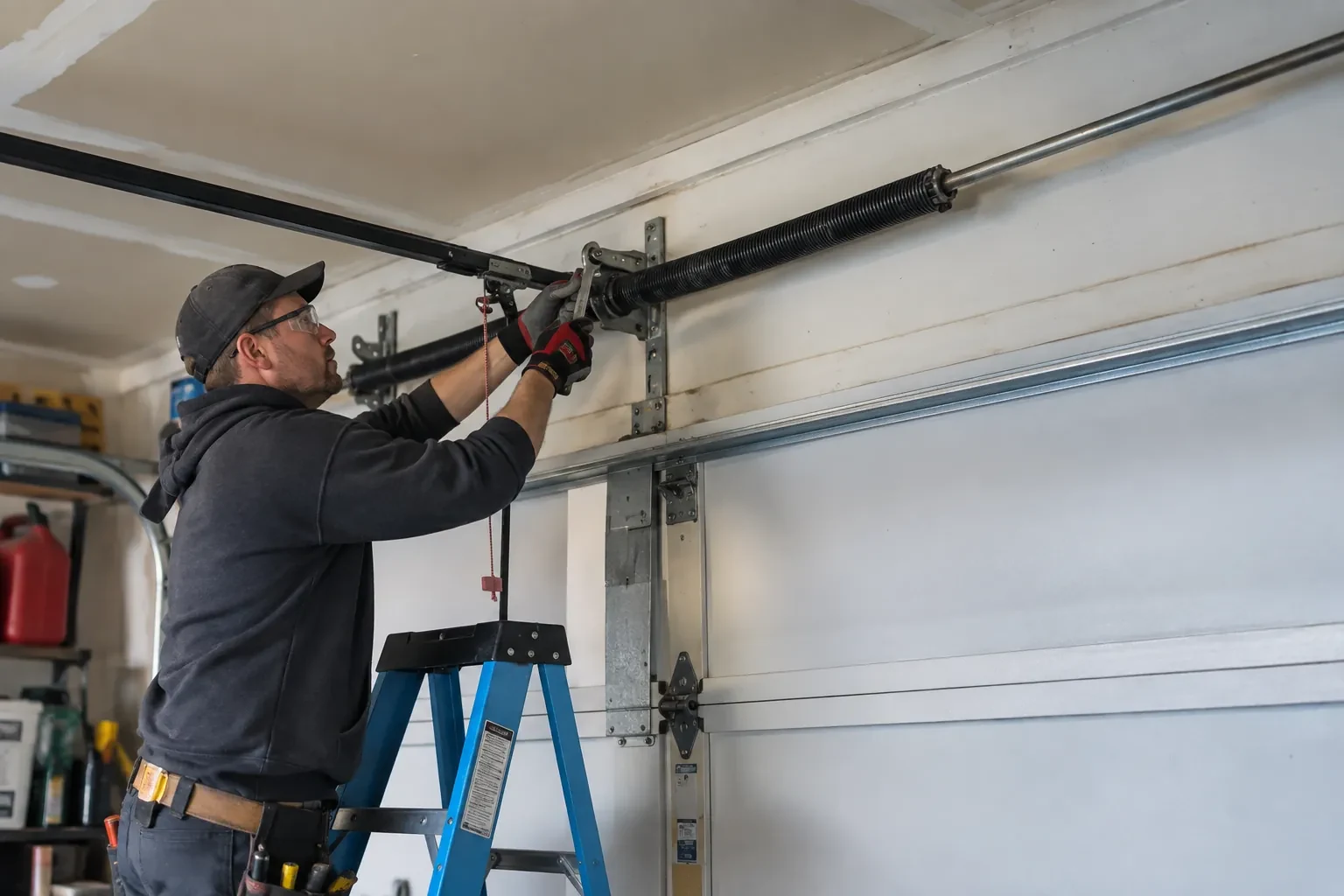
Torsion spring replacement is really a service on the whole balance system. The spring sits on a shaft that turns in a centre bearing and two end bearings, drives a pair of cable drums, and lifts the door through two steel cables. With the shaft out for the new spring, the technician inspects each of these parts, replaces bearings that grind or wobble, checks cables for fraying at the bottom brackets and confirms the drums are seated. Refreshing worn pieces at the same time means the new spring works on smooth hardware and the door runs true.
How the visit goesLooking up at the coil above the door, you can see a clean split with a gap of several centimetres between the two halves. The rest of the spring looks fine, but the door has become almost impossible to move by hand.
Torsion Spring Replacement
How the visit goes
Following the hardware the spring drives
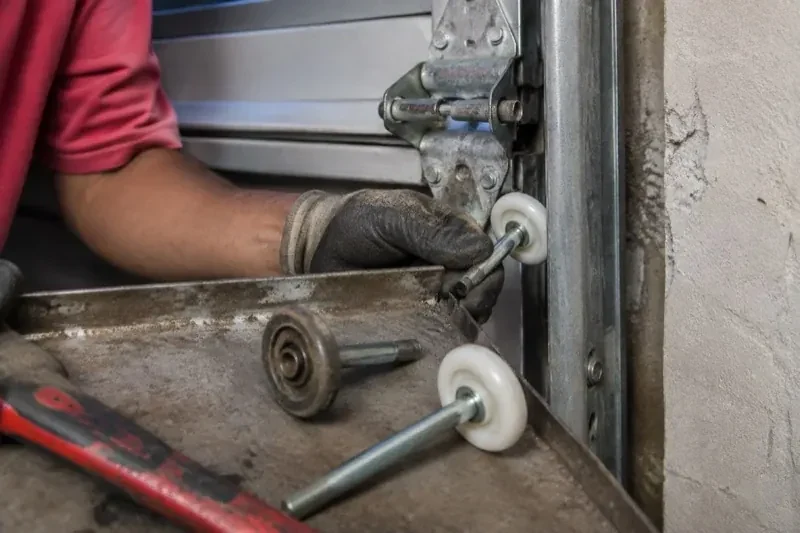
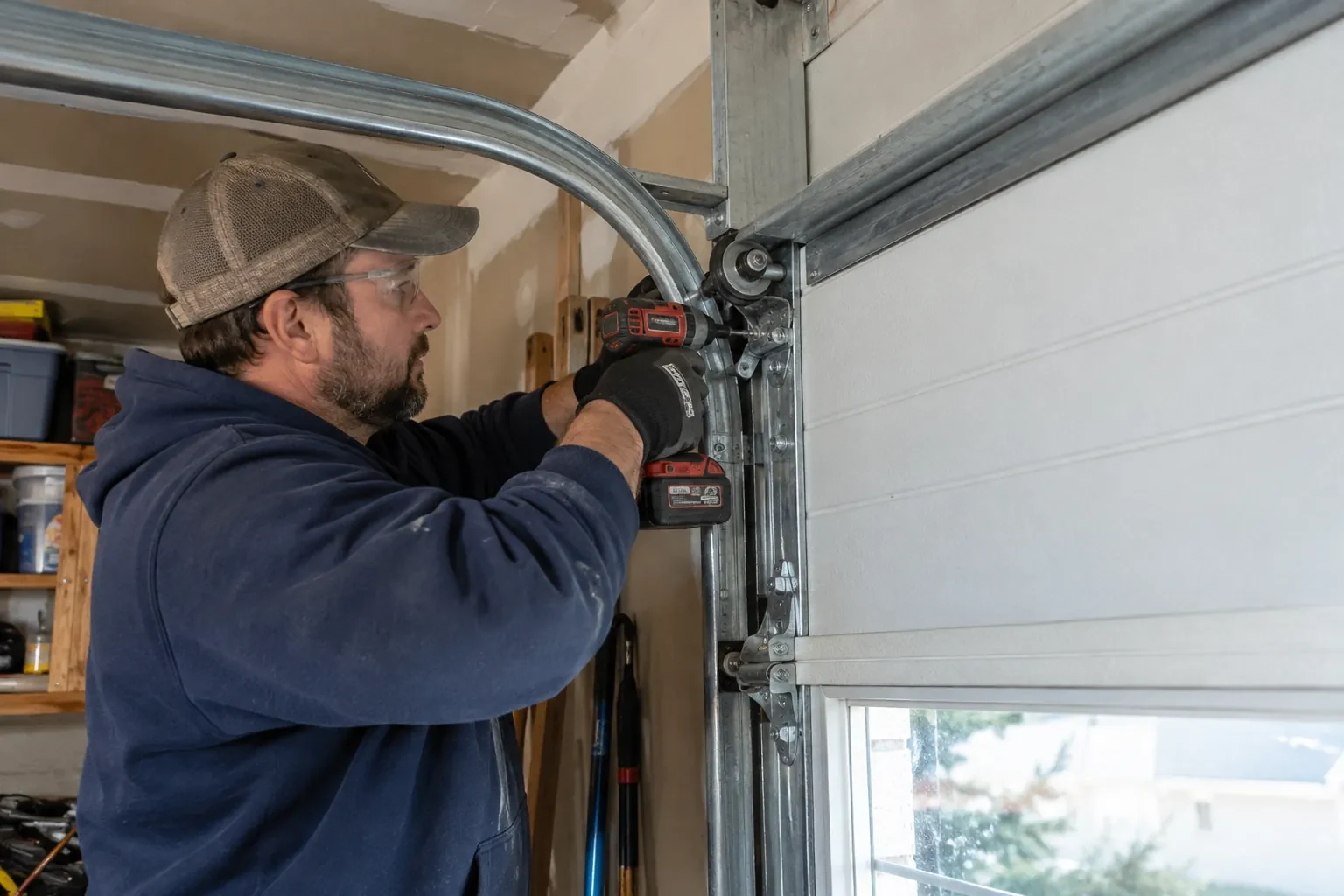
The spring is one part of a chain, so the check follows that chain from the shaft outward. The centre bearing and the end bearings are turned by hand to feel for roughness or wobble. Cable drums are inspected for cracked flanges and worn grooves, and lift cables are examined along their length and at the bottom brackets, where fraying and rust usually start. Bottom brackets and their fasteners are looked at for corrosion, and the shaft is checked for straightness. Findings here decide whether the visit is a spring swap alone or a spring plus a few tired companions.
Finishing the job properly
After the balance and opener tests pass, the technician lubricates the new spring coils, bearings, hinges and roller bearings with a garage-door lubricant, leaving the track clean so the rollers run true. The old spring and any replaced parts are removed from the site. The customer is shown how the door should feel by hand, where the manual release is and how to use it, and what was installed, including the spring specification for future reference. A final look confirms clamps are off, tools are clear of the tracks and the area beneath the shaft is tidy.
Your spring on record
The technician leaves you with the specification of what was installed: wire size, inside diameter, length, wind direction and the cycle rating chosen, along with notes on any bearings or cables replaced. Keep that record with the door's paperwork or photograph it. It means future service starts from known numbers rather than fresh measurement, and if a door section or opener is ever changed, the installer can confirm the springs still suit the door's weight. Many technicians also mark the installation date on the spring or centre bracket so the age of the system is easy to read later.
Torsion Spring Replacement
In the van
Stationary cone bolts and nuts
Centre bearing bracket and bearing
Locking pliers for the track
End bearing plates
Torsion shaft and coupler
Torsion Spring Replacement
What affects the quote
Cycle rating chosen
A standard-cycle spring and a high-cycle spring balance the door the same way but differ in wire and length. Choosing a longer-life spring is an option the household can weigh against how often the door is used.
Age of the door and matching hardware
Older doors sometimes carry shaft diameters, bearing plates or drum patterns that are no longer common. Sourcing compatible hardware or adapting the mounting adds to the scope for these doors.
Converting from extension springs
Moving a door from extension springs to a torsion system adds a shaft, bearings, drums and brackets, and removes the old pulleys, which is a broader job than replacing an existing torsion spring.
What to have ready
- Is a vehicle parked inside the garage right now?
- Are the cables on either side still tight, or hanging loose?
- Is there a working power outlet near the opener and clear space under the shaft?
Torsion Spring Replacement: questions
QuestionsWhat does a cycle rating mean?
One cycle is a full open and close. Springs are built for a set number of cycles, and a standard residential spring is commonly rated around ten thousand. A household that uses the door six times a day reaches that in roughly four to five years, while a door used twice a day stretches the same rating much further. Higher-cycle springs use heavier wire and a longer coil to produce the same force with less stress, so they last proportionally longer.
Why does the door need to be balanced, and how is that tested?
Balance means the spring is holding almost exactly the door's weight, so the door neither flies up nor slams down and the opener only guides it. It is tested by releasing the opener, lifting the door to about waist height and letting go: a balanced door stays there. The technician fine-tunes in quarter turns of the spring until the door holds at several heights and travels evenly on both sides.
Can I keep using the opener until the technician arrives?
The kindest thing for the door is to leave it where it is and use another entrance. An opener is designed to move a door the springs have already made light; asking it to lift a full-weight door strains the trolley and gear drive and can crease the top section. Keeping the door still and clear of people until the spring is replaced protects the rest of the system from extra repairs.
Related services
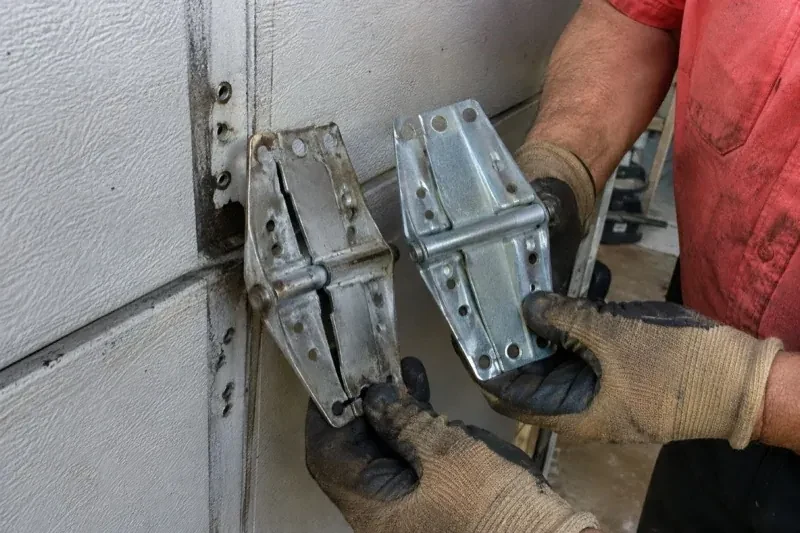
- Garage Door Hinge ReplacementPressing a hand against one of the middle hinges makes it rock on the panel.
- Garage Door Track Repair or ReplacementBacking out this morning, the mirror caught the track beside the door.
- Garage Door Cable ReplacementYour older door has springs along the tracks, and one cable has slipped off its pulley and dangles slack.