Springs · Mulmur
Garage Door Hinge Replacement in Mulmur
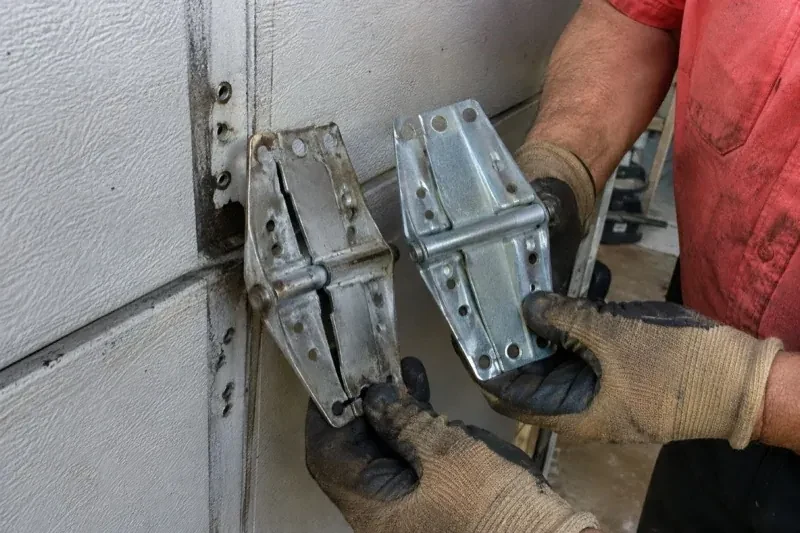
Pressing a hand against one of the middle hinges makes it rock on the panel.
In plain words
A hinge rarely fails on its own. A door that has drifted out of balance makes the opener drag it, and every hinge takes that strain on each trip. A roller whose bearing has seized twists the hinge that holds it. A track that has crept out of line makes the panels bind at the curve, and the hinge at that joint flexes until it cracks. Hinge replacement therefore begins with the whole door: rollers, track, balance and the panel edges around each hinge. The cause is corrected alongside the new hinge so the fresh part is not asked to absorb the same stress that finished the old one.
How the visit goesAfter a cold night the bottom seal had frozen to the slab. The opener strained, something gave, and now one of the upper hinges sits with its leaf bent outward and the panel below it flexes when the door moves.
Garage Door Hinge Replacement
How the visit goes
Stopping the door before anything else
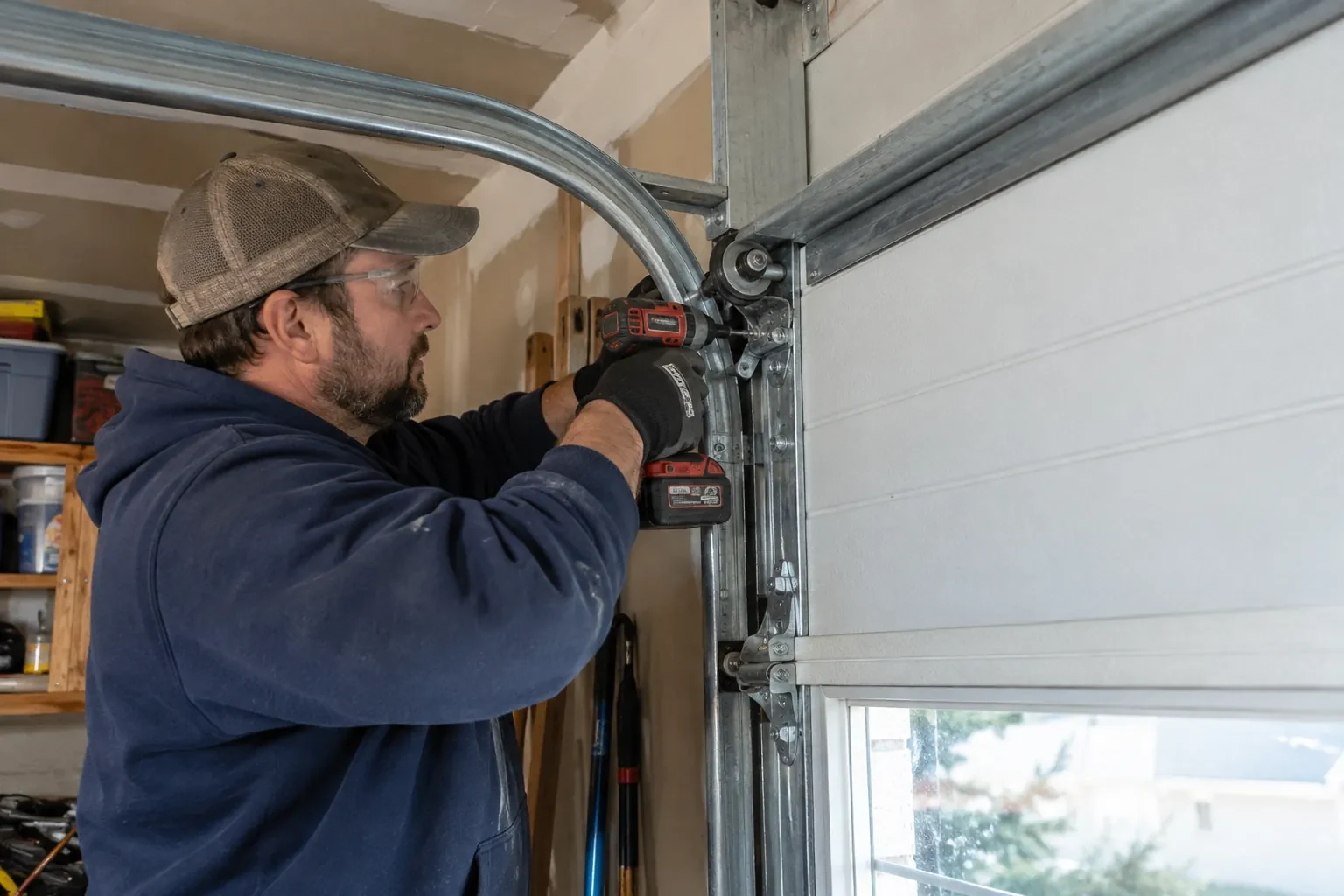
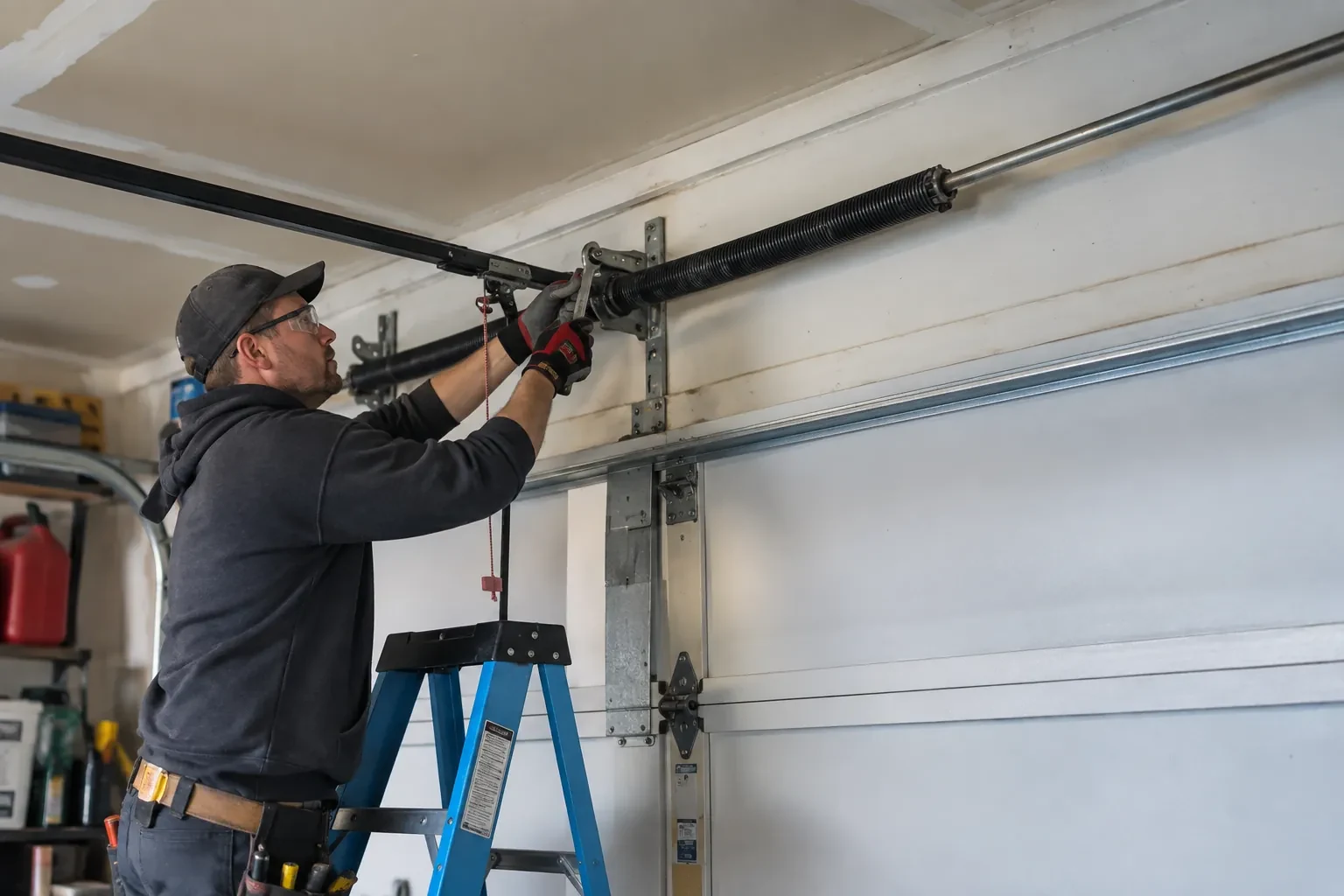
The first job is to take the door out of play. The technician pulls the opener's release cord so the motor is disconnected from the door, and leaves the door fully closed. Closed is the right position for hinge work, because each panel is resting on the one below and the bottom panel is sitting on the floor, so the hinges are holding the panels together rather than holding them up. If a hinge has already let go and a panel is hanging awkwardly, a clamp on the track or a prop under the section takes that weight before anyone touches it. Only then does the inspection begin.
Changing an edge hinge with its roller
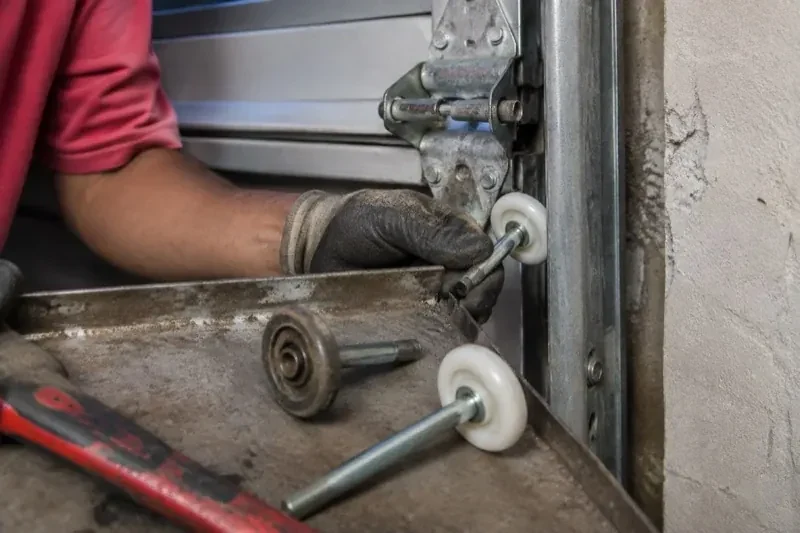
An edge hinge holds the roller in the track, so the roller comes with it. The technician steadies the panel with a clamp, backs out the hinge screws, then eases the roller stem out of the hinge tube while tilting the wheel clear of the track, or loosens a track bracket a fraction to make room. The old hinge comes off, the new one of the same number goes on with the roller stem seated in its tube, the wheel is guided back into the track, and the hinge is fastened. Both edge hinges on a joint are handled this way, one after the other, with the panel alignment rechecked between them.
A monthly look from the inside
The maintenance checklist the door industry publishes asks homeowners to check hinges, brackets and fasteners visually from inside with the door closed, once a month. Stand where you can see both ends of the door and follow each joint with a flashlight: a screw head that stands proud, a hinge leaf lifted off the panel, a fresh crack spreading from a hole, or a rust stain running down from a knuckle. Then watch the door open and confirm the rollers stay in the track. Anything you spot is a small job at that stage. The whole check takes about a minute.
Garage Door Hinge Replacement
In the van
Carriage bolts, nuts and washers
Numbered galvanized edge hinges
Flashlight and level
Hinge support plates
Hex-head self-drilling screws
Garage Door Hinge Replacement
What affects the quote
Rollers renewed at the same time
Where a roller is cracked, seized or flat-spotted, replacing it while the hinge is off is efficient, and the roller set is listed as an optional item you can accept or decline.
Supporting the panel while hinges are changed
A heavy insulated panel needs to be braced while its hinges are off, so it does not sag or twist out of place mid-repair. Lighter steel or wood panels usually need no extra support, and the technician decides which applies once the panel is in front of them.
Steel, wood or insulated door
A wood door takes different fasteners and often needs timber repaired around the holes; a heavy insulated door may need a heavier hinge. Construction shapes both the parts and the time.
What to have ready
- Is the door closed, open or stuck partway right now?
- Is the loose or broken hinge at the edge of the door or in the middle?
- Where does the pop, click or gap appear, and roughly how high up?
Garage Door Hinge Replacement: questions
QuestionsWhy does the door pop or click at the same spot every time?
A noise at a fixed height points at the joint passing through the curve at that moment. A cracked hinge leaf flexing open and snapping back, a pin rocking in a worn hole, or a roller stem shifting in a loose hinge all make a sharp report as the load transfers. Because it always happens at one place, the technician can go straight to that joint and usually finds the hinge or roller responsible.
What information helps when I book the visit?
Whether the door is closed, open or stuck; where the noise or the gap appears and roughly how high; whether you can see a cracked, bent or loose hinge and whether it is at the edge or the middle; whether the door is a single or a double, steel or wood, and how many panels it has; and whether anything hit the door lately. A photo of the hinge and its stamped number is useful.
How should I lubricate the hinges?
A short burst of silicone or white lithium spray made for garage doors on each hinge knuckle and roller stem, spring and autumn, then run the door a few times to work it in. Wipe away any excess. Skip heavy grease and general-purpose oil, which trap grit and salt against the steel. Leave the track dry and simply wipe it clean, since lubricant in the track makes wheels slide instead of roll.
Related services
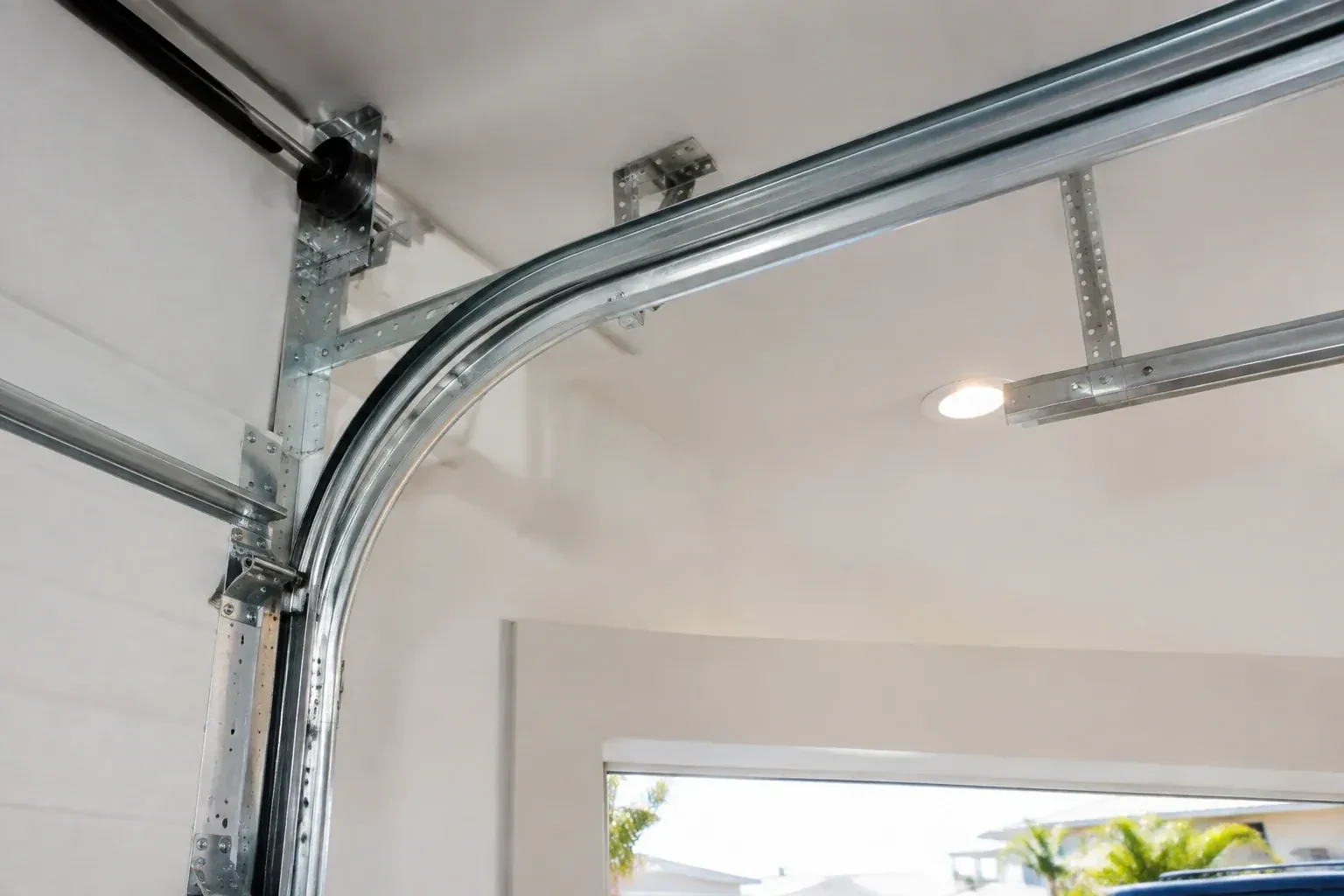
- Garage Door Track Repair or ReplacementBacking out this morning, the mirror caught the track beside the door.
- Garage Door Cable ReplacementYour older door has springs along the tracks, and one cable has slipped off its pulley and dangles slack.
- Torsion Spring ReplacementOne side of the door sits higher than the other in the tracks, and a lift cable is hanging slack or has jumped off its drum.