Garage Doors in Mulmur, OntarioOpen on time.Every morning.
A business in Mulmur cannot serve customers behind a door that will not lift. We keep shop doors, loading bays and service bays moving with the operators, springs and safety edges they need, schedule the work around your trading hours, and set up a maintenance routine so surprises become rare. We also come out to Conover, Horning's Mills, Violet Hill, Earnscliffe, Kilgorie, Mansfield, Perm, Randwick, Springwater Lakes, Stanton, Terra Nova and Whitfield.
A business in Mulmur cannot serve customers behind a door that will not lift. We keep shop doors, loading bays and service bays moving with the operators, springs and safety edges they need, schedule the work around your trading hours, and set up a maintenance routine so surprises become rare. We also come out to Conover, Horning's Mills, Violet Hill, Earnscliffe, Kilgorie, Mansfield, Perm, Randwick, Springwater Lakes, Stanton, Terra Nova and Whitfield.
Repair when it makes sense. Replace when it doesn't.
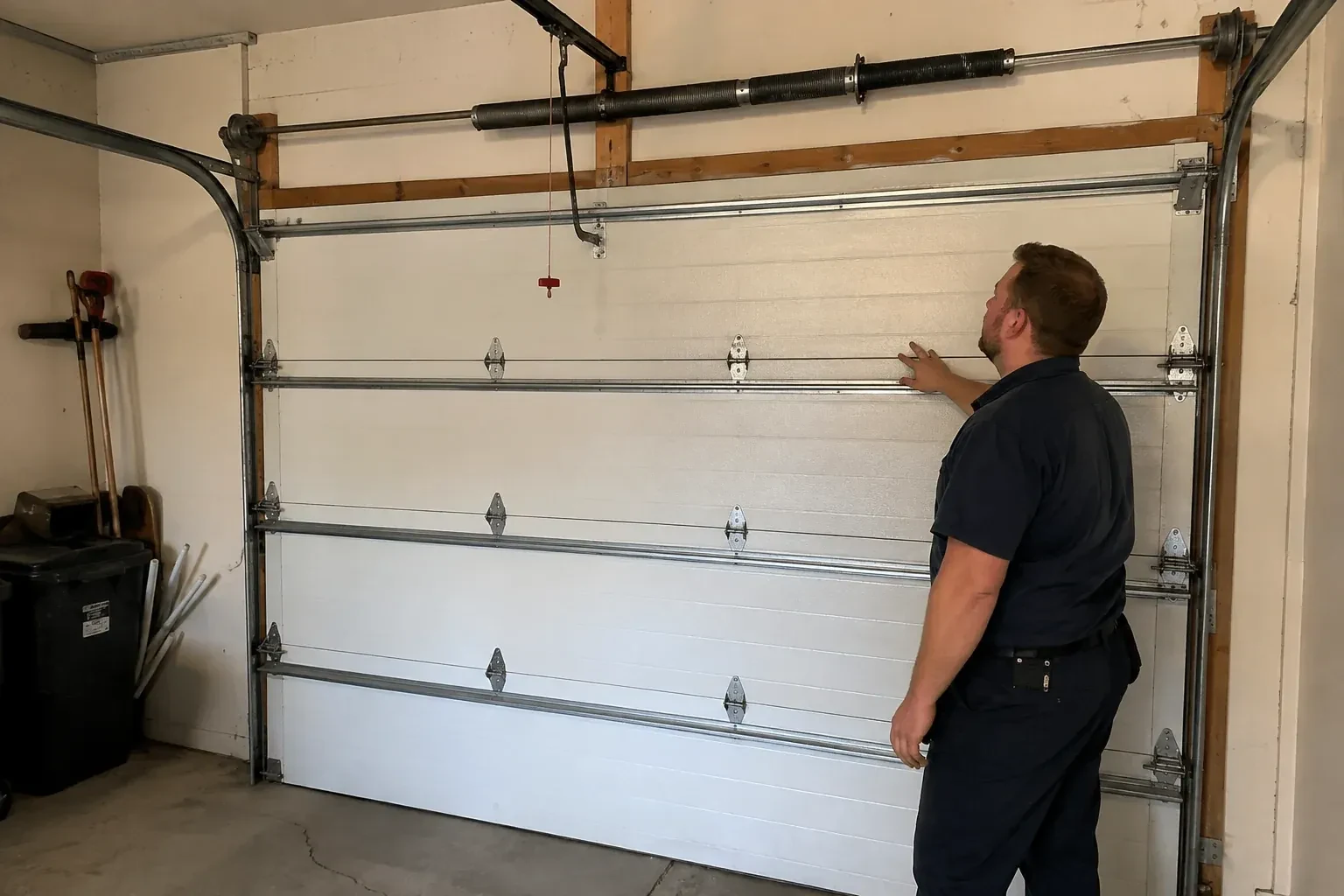
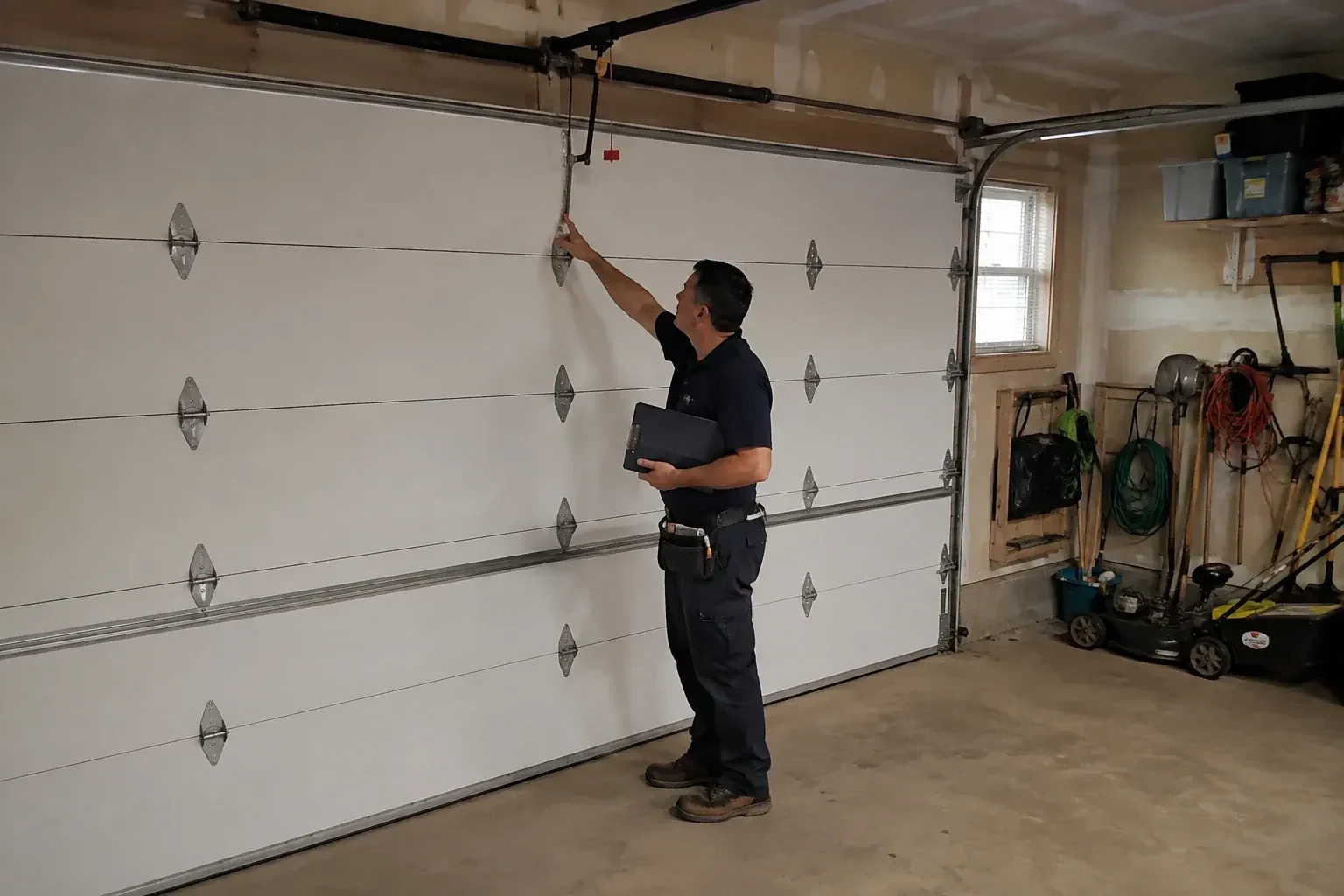
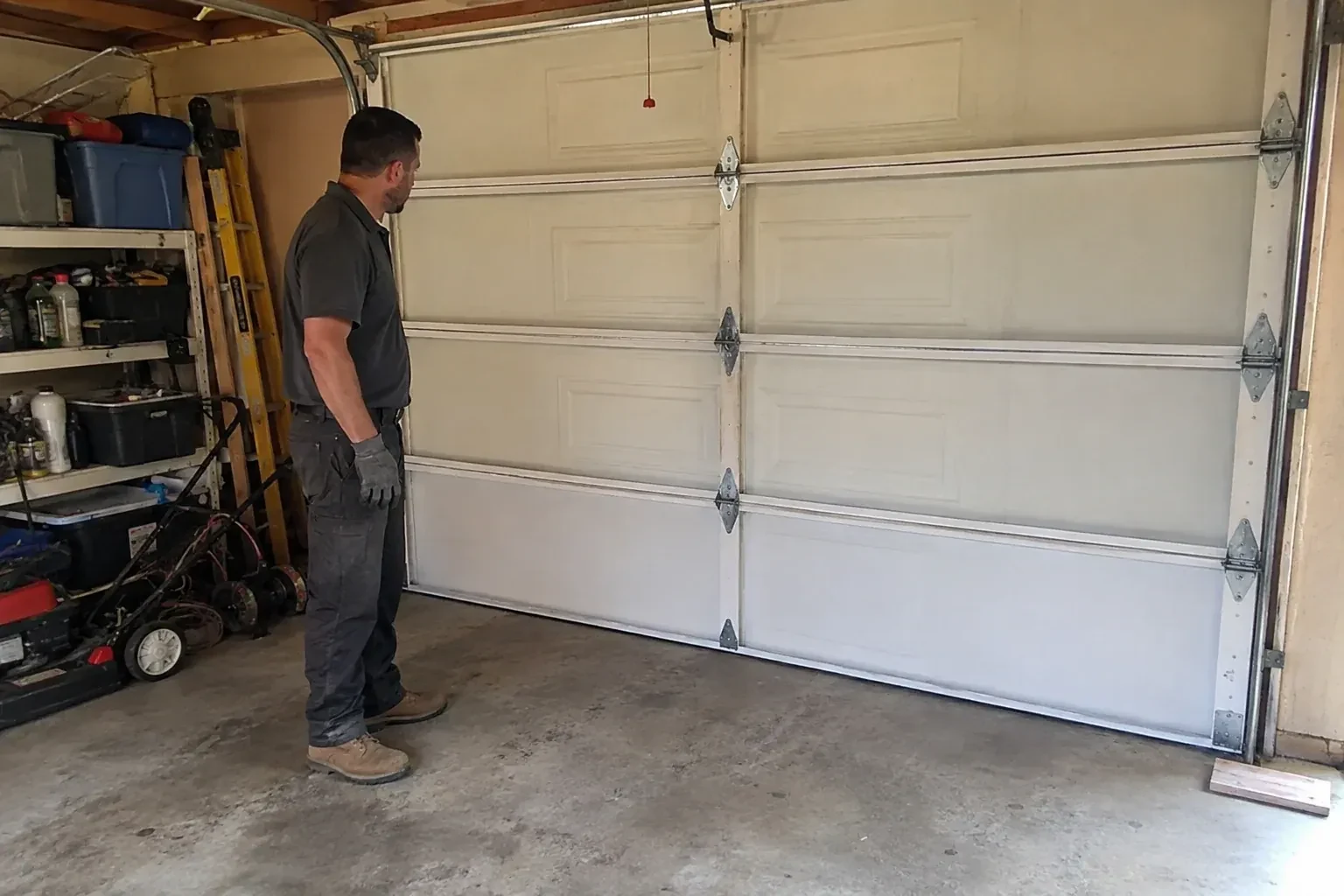
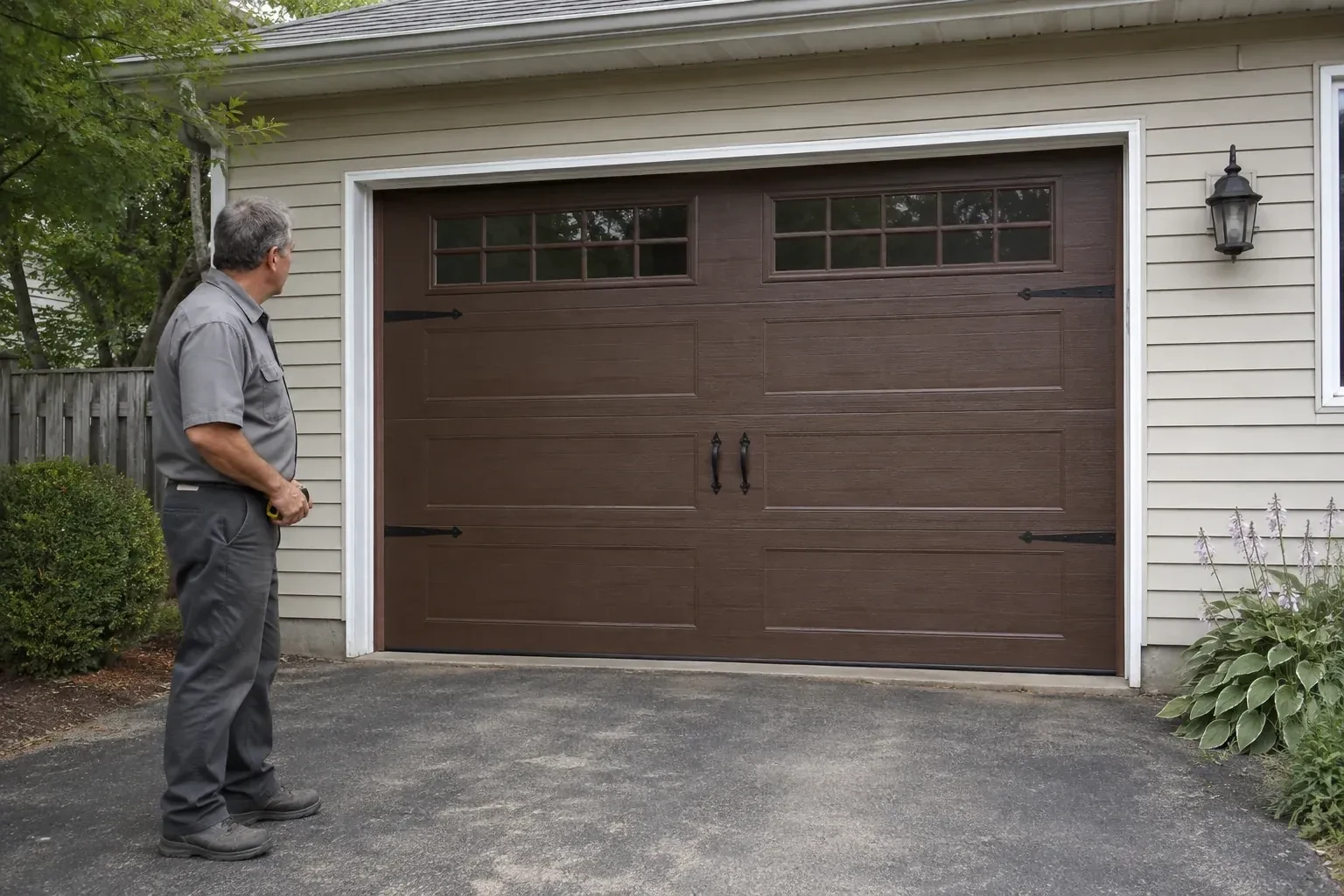
When a garage door in Mulmur has stopped, the household is usually stuck too, so we organise the day around getting the door moving safely. The technician clears the fault, checks the rest of the door so the next part does not follow, and explains what he did before he drives away.
Shops, warehouses and workshops in Mulmur run on their doors, and a stalled door means a stalled day. We service commercial sectional and rolling steel doors, high-cycle springs, heavy-duty operators and safety edges, and we keep that hardware on hand. The person in charge on site gets a plain explanation of the fault and the fix, and a record for next time.
24years in business
24/7open every day
Nothing hidden. Every part we replace, you can see. Every adjustment, we explain. If we find something unexpected, we stop and tell you before continuing.
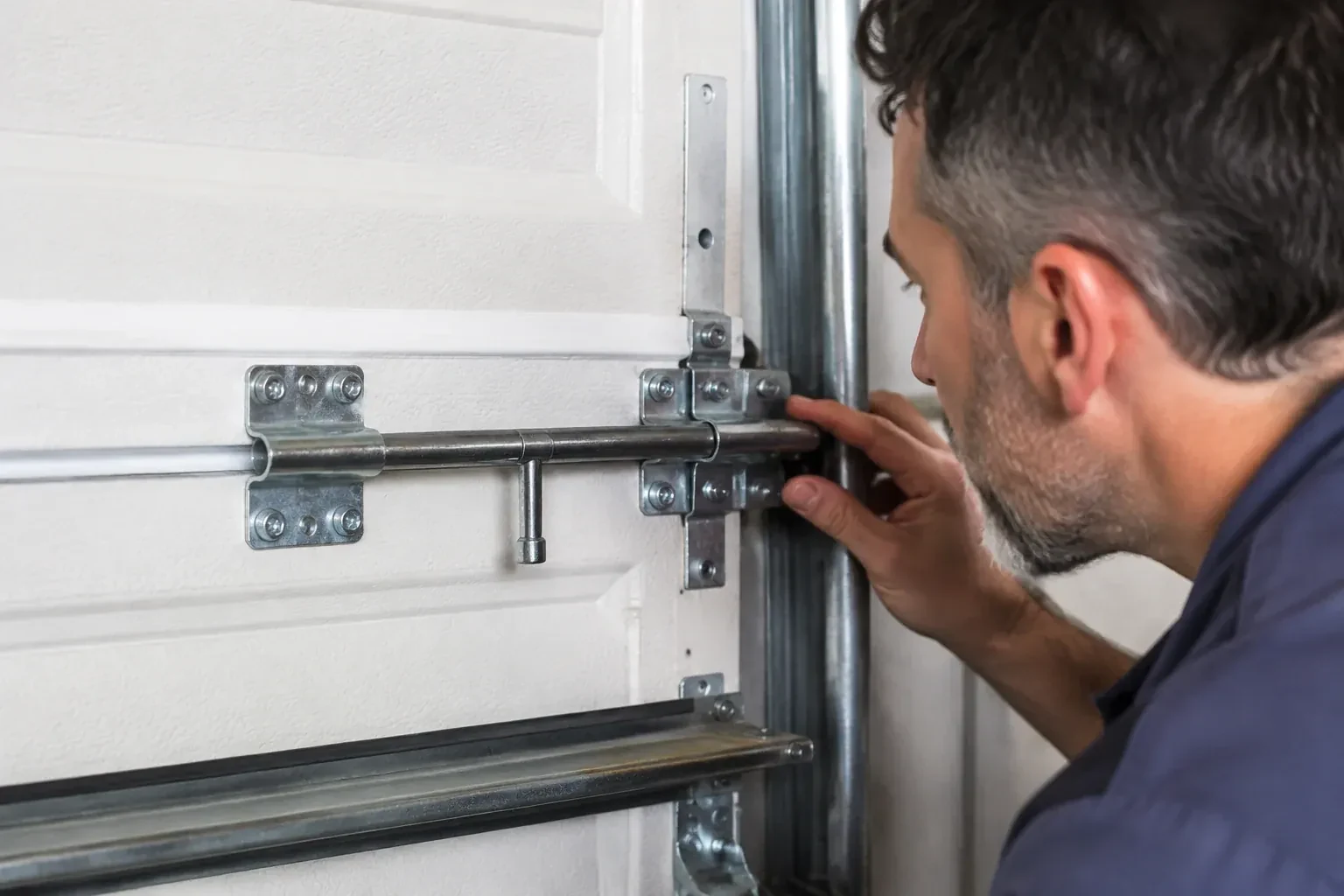
Care with heavy parts. Springs and cables are handled with the right tools and a steady method, and the door is secured before any tension is released.
Clear about what comes next. Before we leave, you know what was done, what to watch for, and when the door might want attention again.
Set up a visit to your home or business in Mulmur.
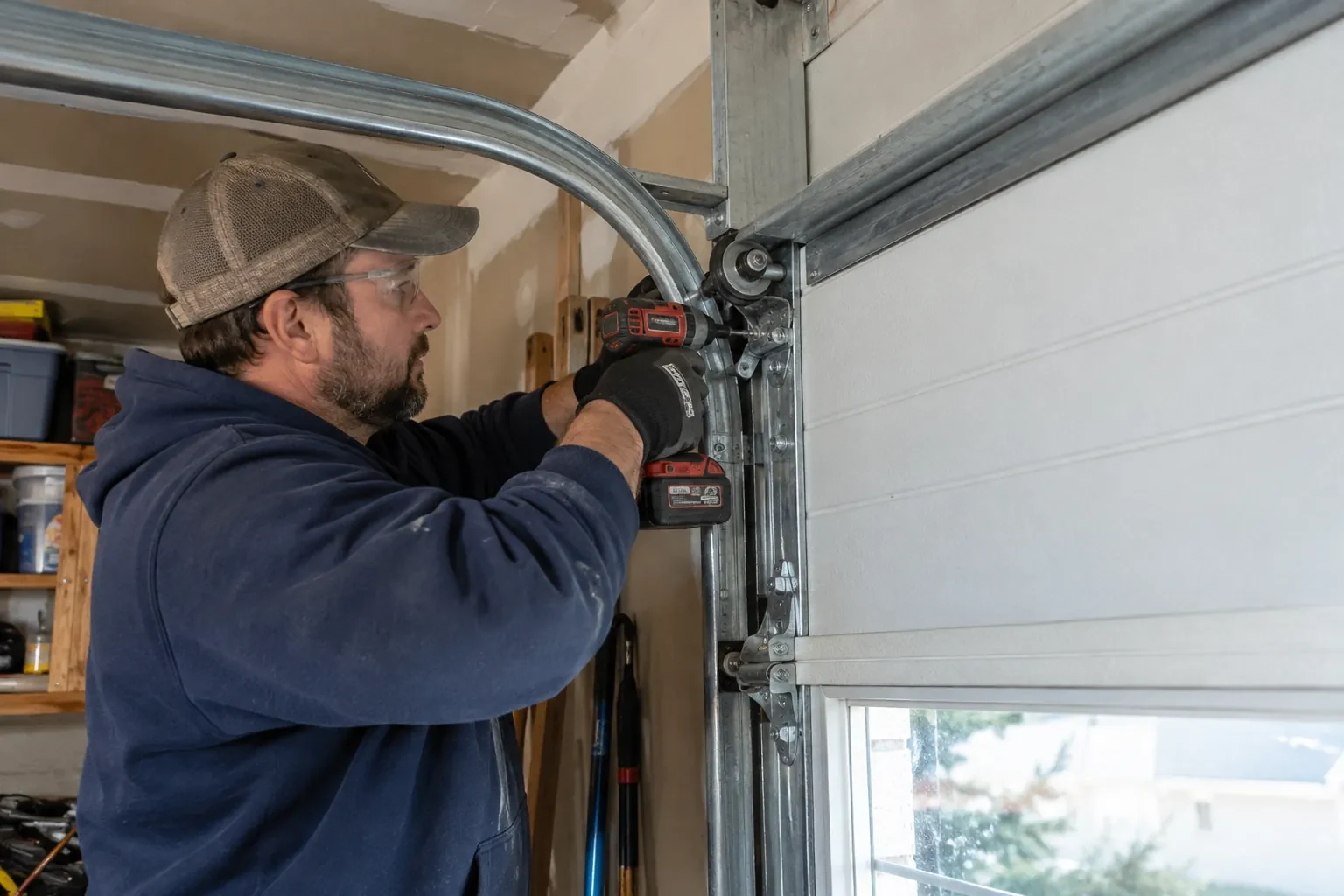
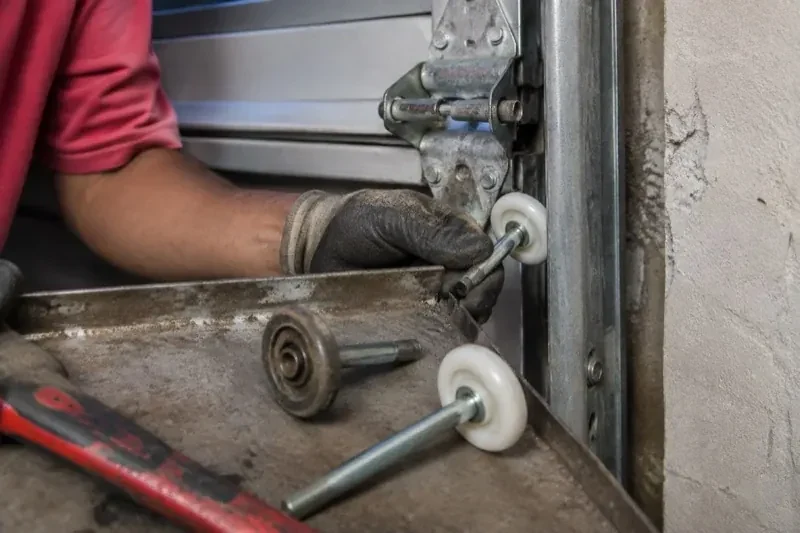
Broken spring, snapped cable, door off the track, opener humming but not lifting, remote lost, seal cracked, panel dented, door too loud for the bedroom above: those are the calls we take from Mulmur, and each has its own service page explaining how we handle it.
About 45% of homes in Mulmur were built in 1980 or earlier, according to the 2021 Census.
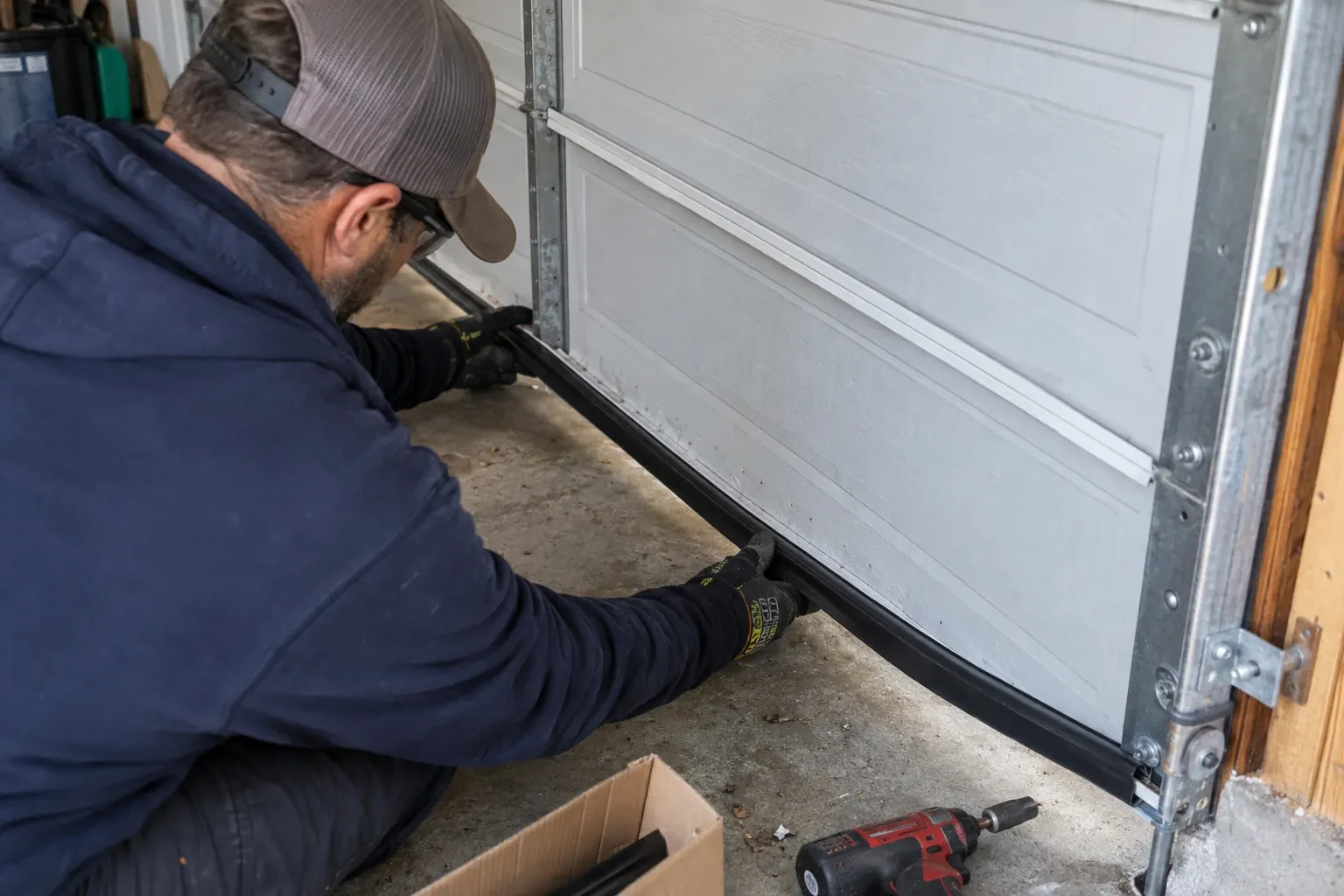
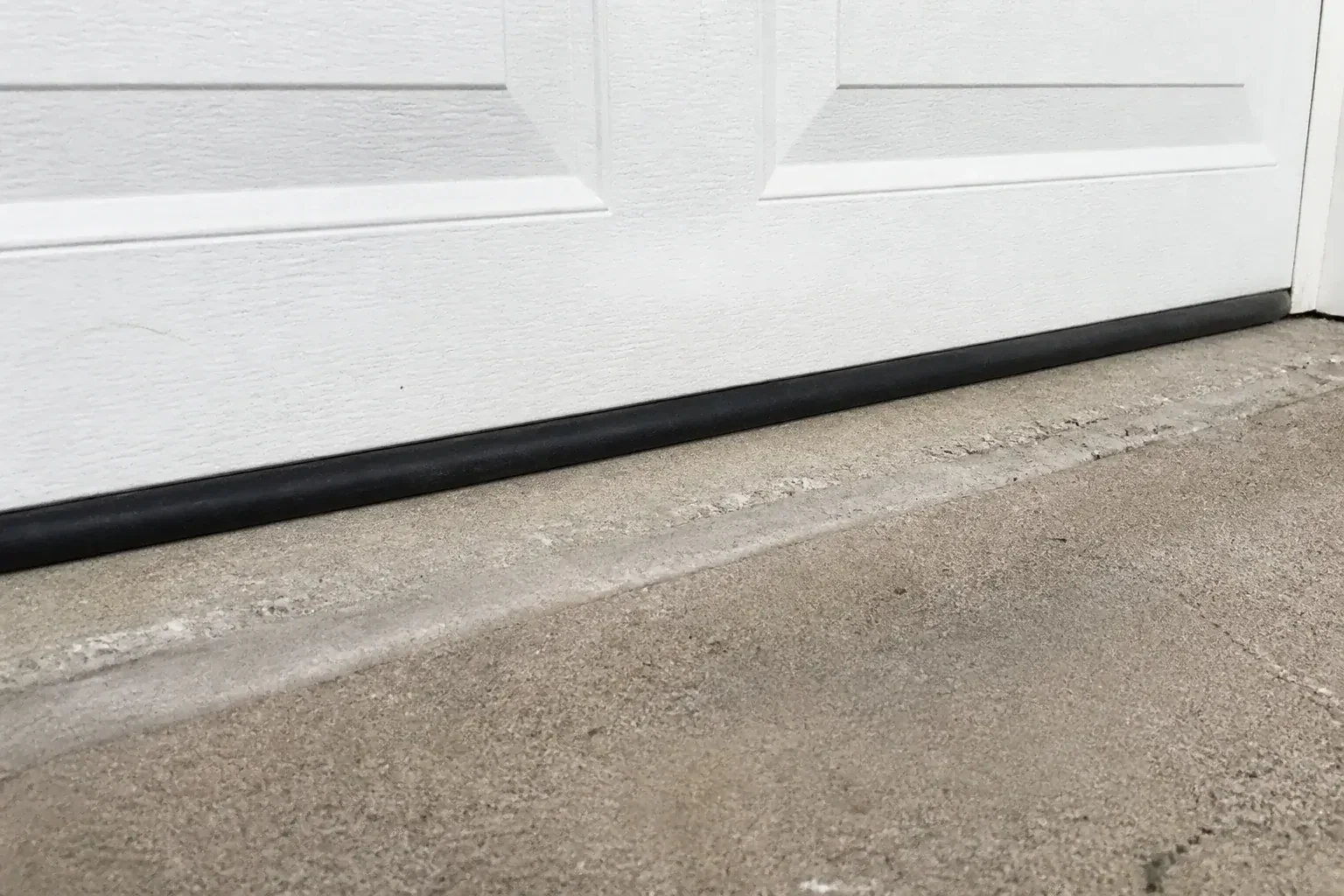
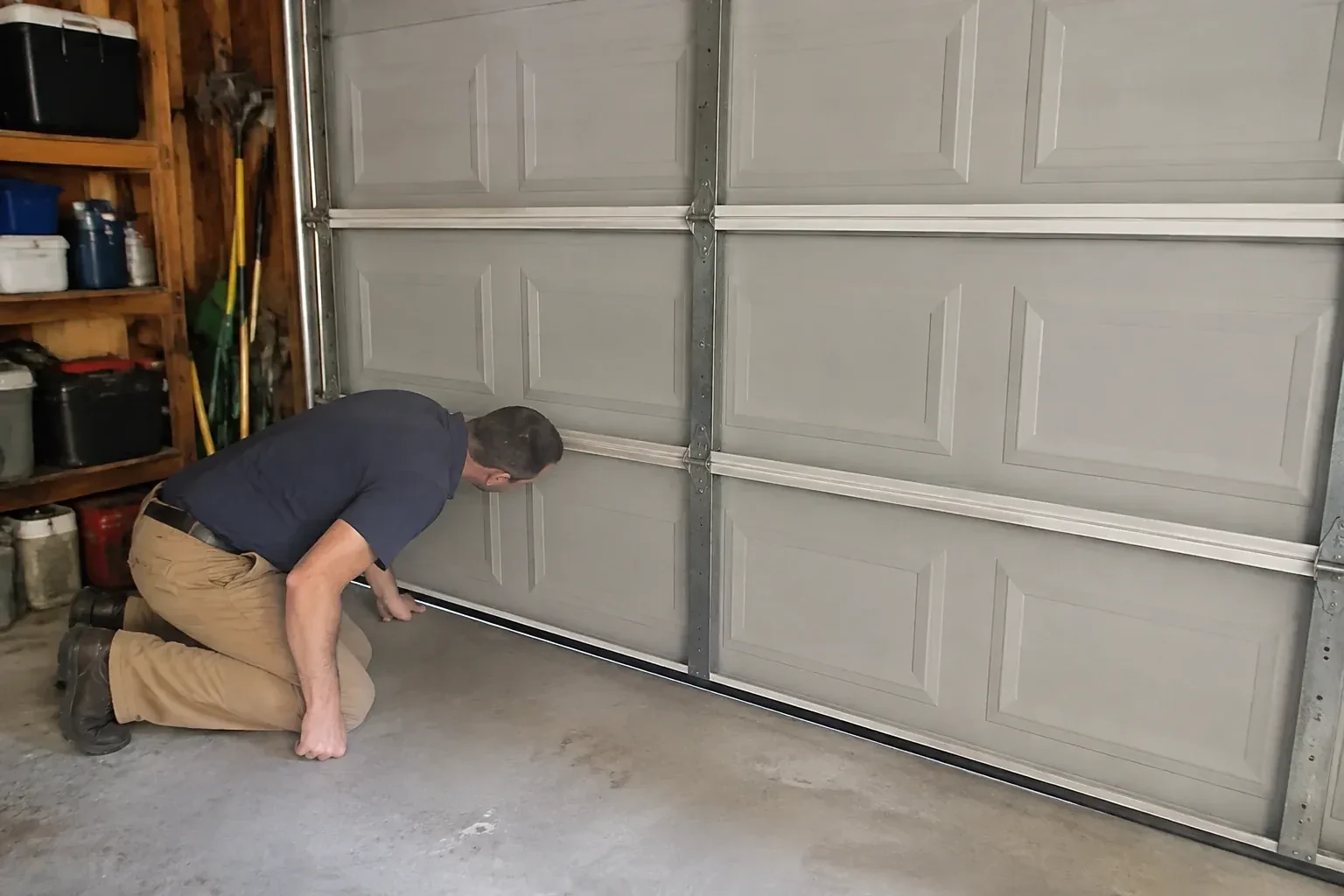
Where houses span several decades, weatherproofing needs vary: older garages with uneven aprons need thicker bottom seals, newer ones mainly need cracked seal sections replaced. The technician looks at how the door meets the floor and the jambs and fits the seal that actually closes the gap.
Single-detached houses make up about 99% of homes in Mulmur (2021 Census).
Mostly houses
Where most homes are single-detached, nearly every property has its own garage door and its own opener, and the homeowner makes every decision about it. That makes for straightforward visits: one door, one owner, and a repair or replacement chosen at the house without anyone else to consult.
There are mouse droppings along the wall behind the recycling bins, and at one bottom corner of the door the vinyl has a neat chewed notch the width of a thumb. Something has found its way in for the winter.
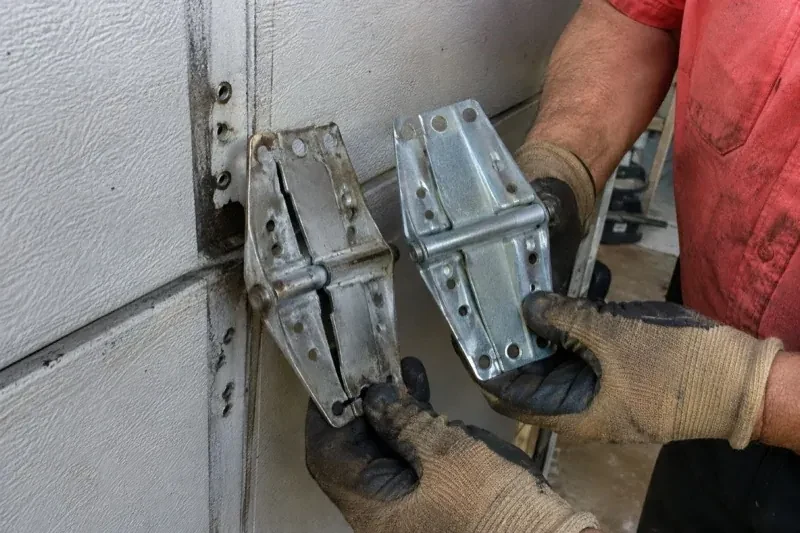
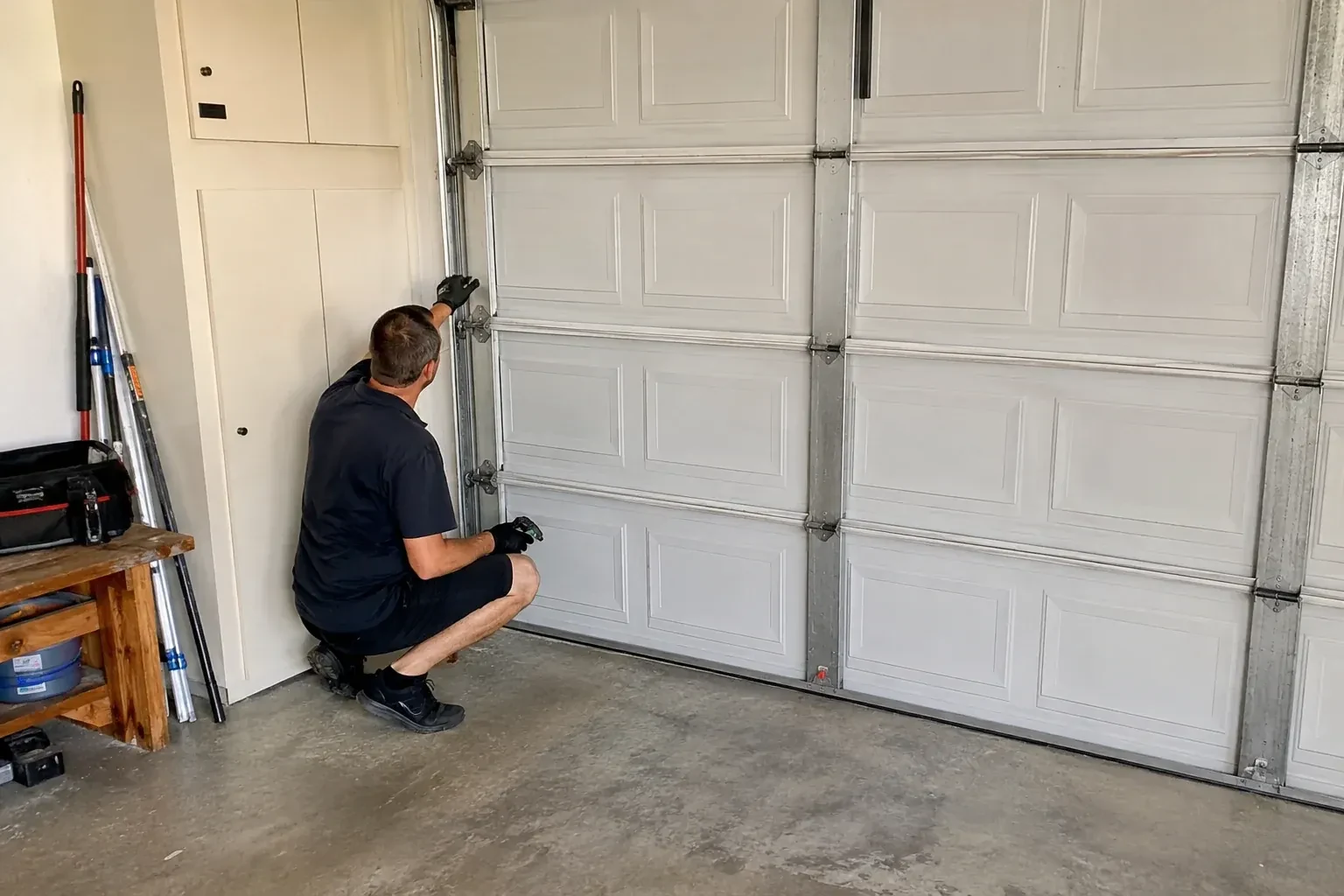
After a cold night the bottom seal had frozen to the slab. The opener strained, something gave, and now one of the upper hinges sits with its leaf bent outward and the panel below it flexes when the door moves.
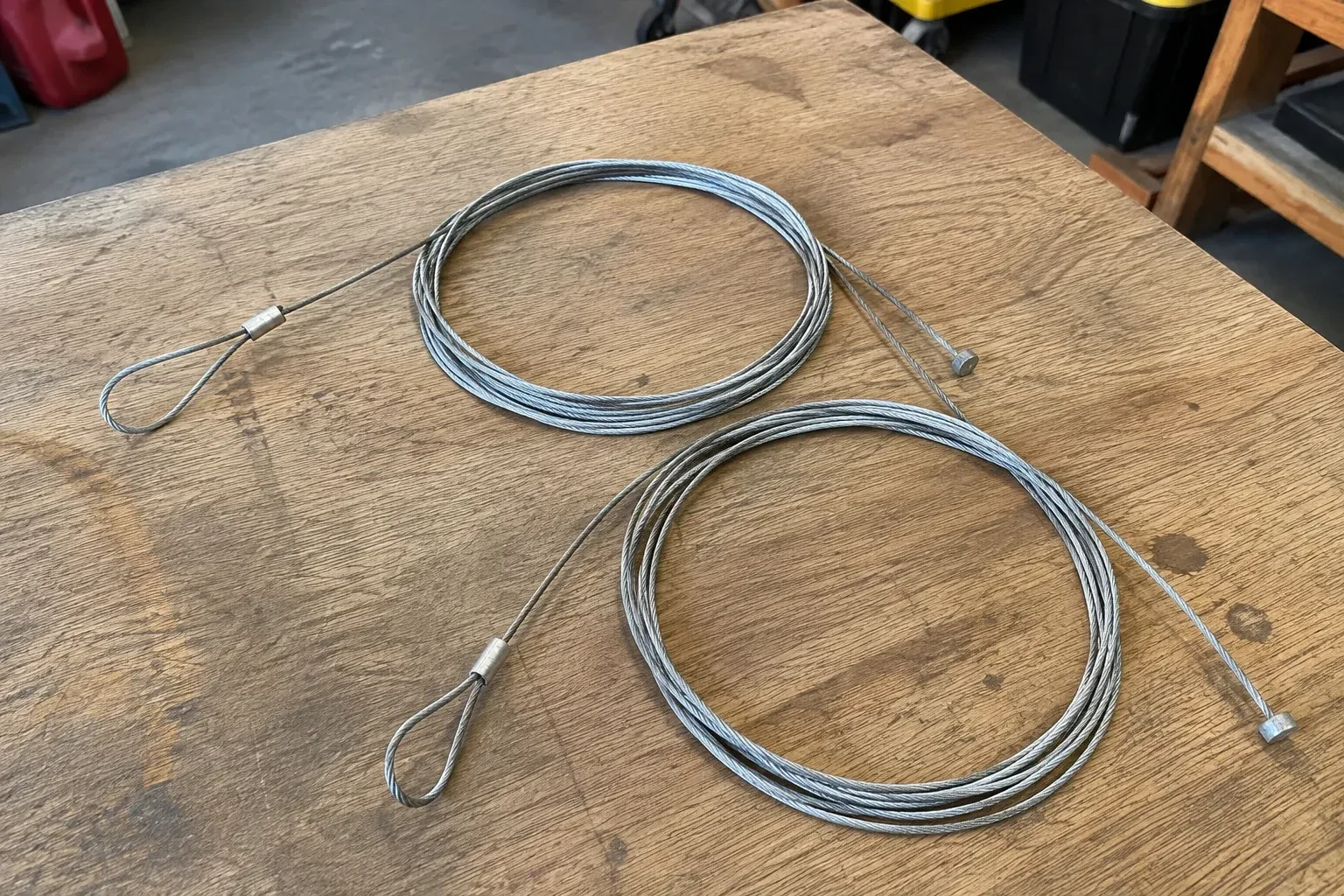
Your older door has springs along the tracks, and one cable has slipped off its pulley and dangles slack. The door lifts crooked and needs a shoulder to close, when it used to glide.
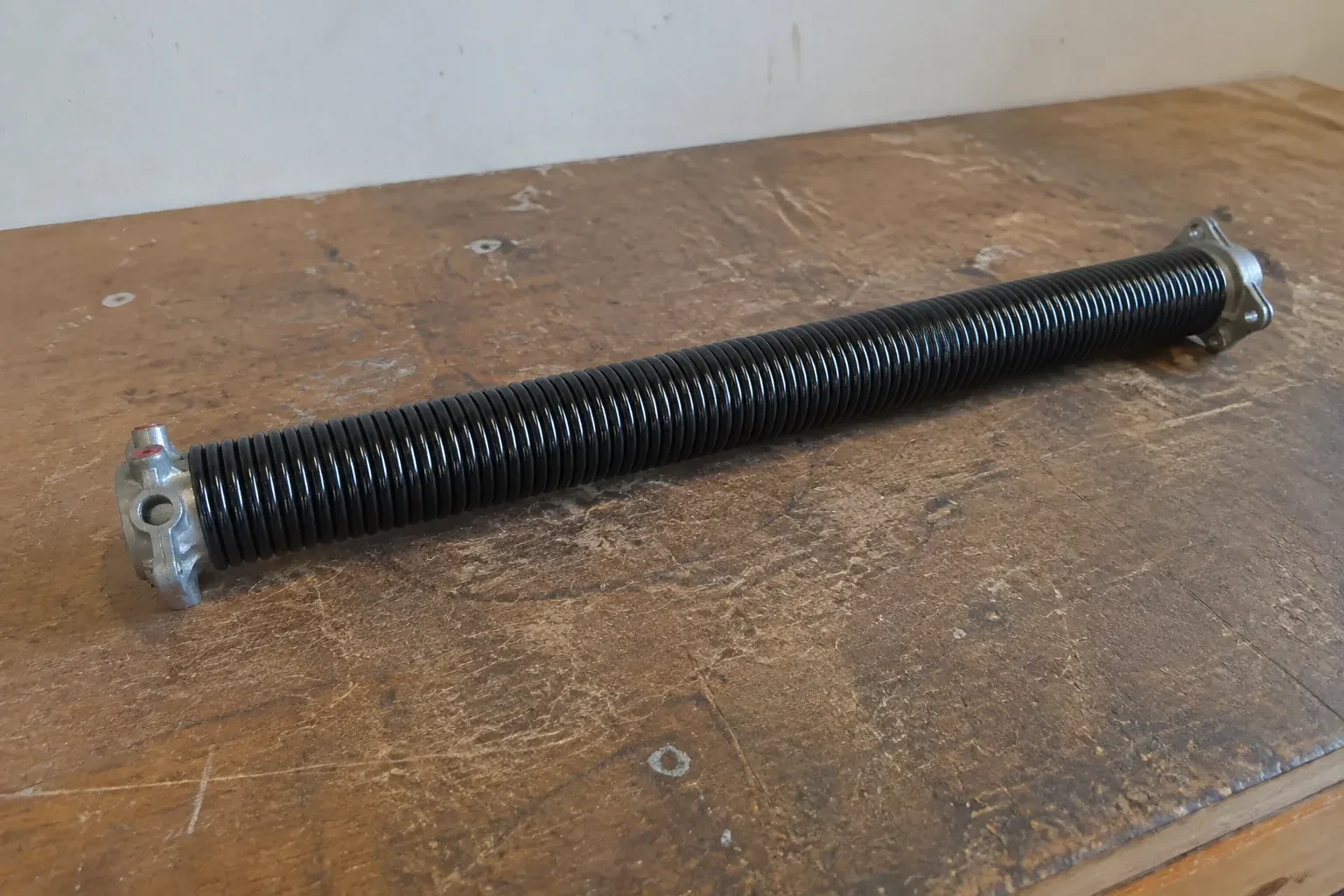
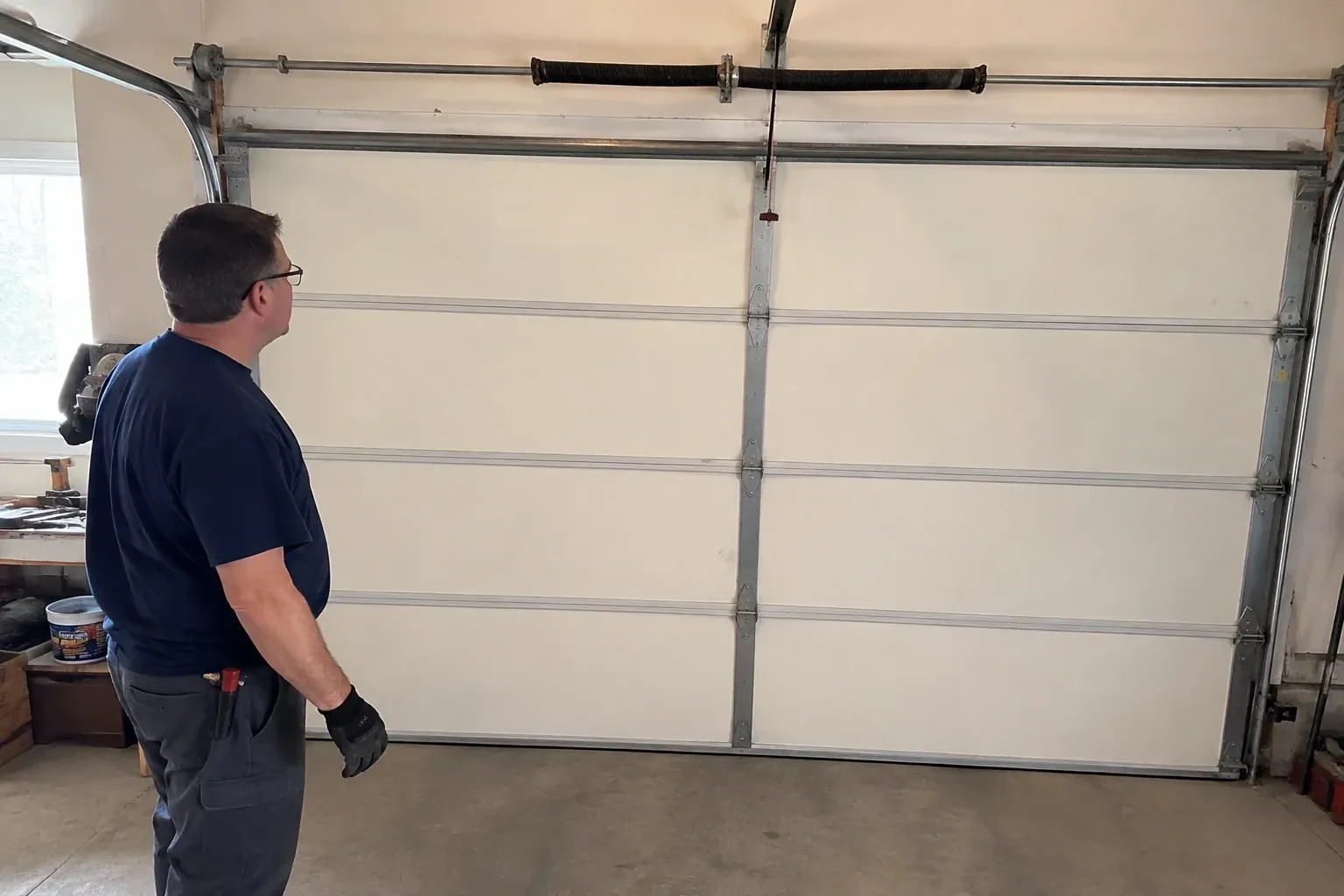
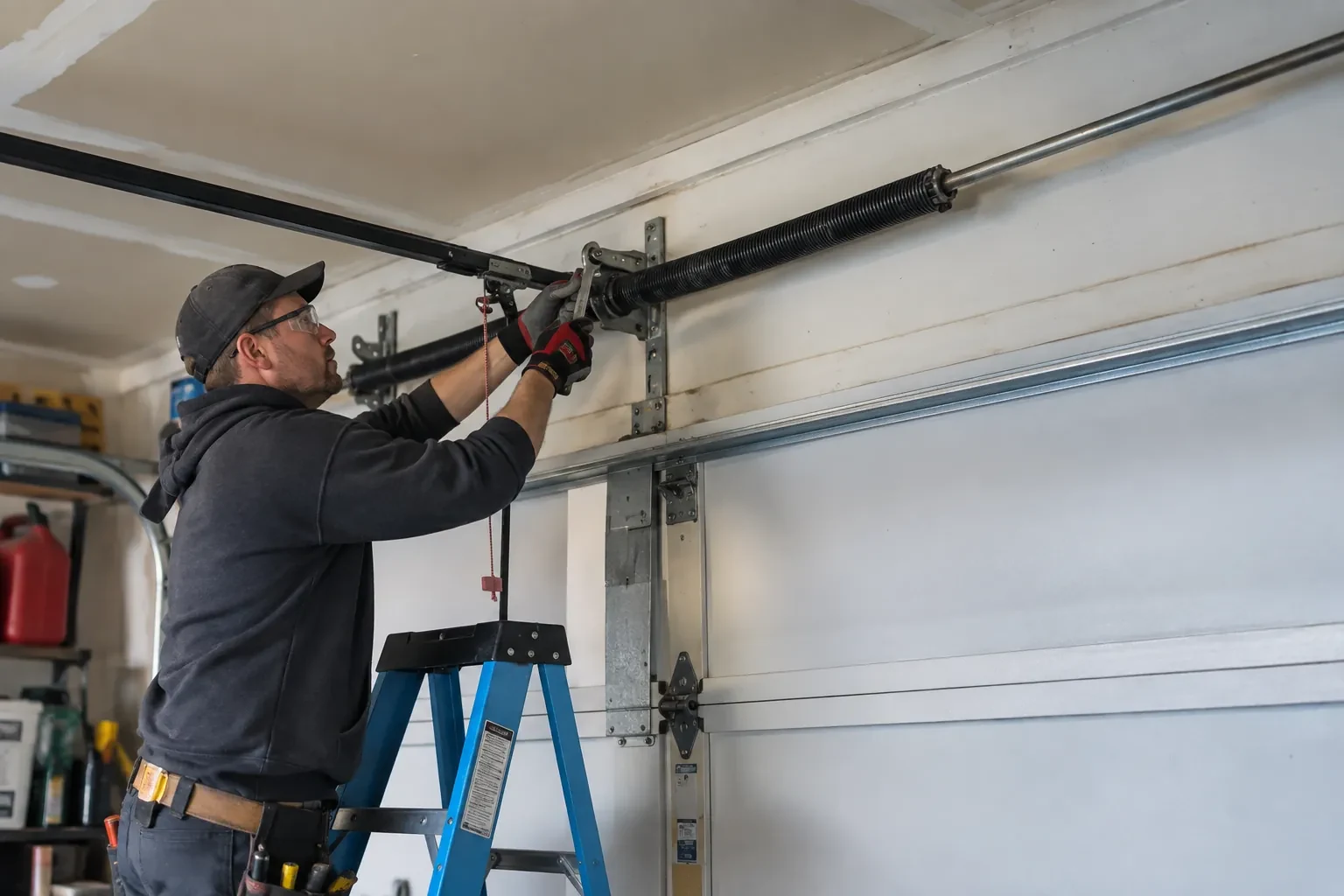
Looking up at the coil above the door, you can see a clean split with a gap of several centimetres between the two halves. The rest of the spring looks fine, but the door has become almost impossible to move by hand.
Released from the opener, the door will not hold anywhere. Lift it to hip height, take your hands away, and it sinks back to the concrete, gathering speed on the way down. Two years ago it used to hover exactly where you left it.
The door goes up perfectly. Coming down is the trouble: partway to the floor it stops, climbs back to the top, and the light on the opener blinks at you. The only way to close it is to stand inside holding the wall button the whole way down.
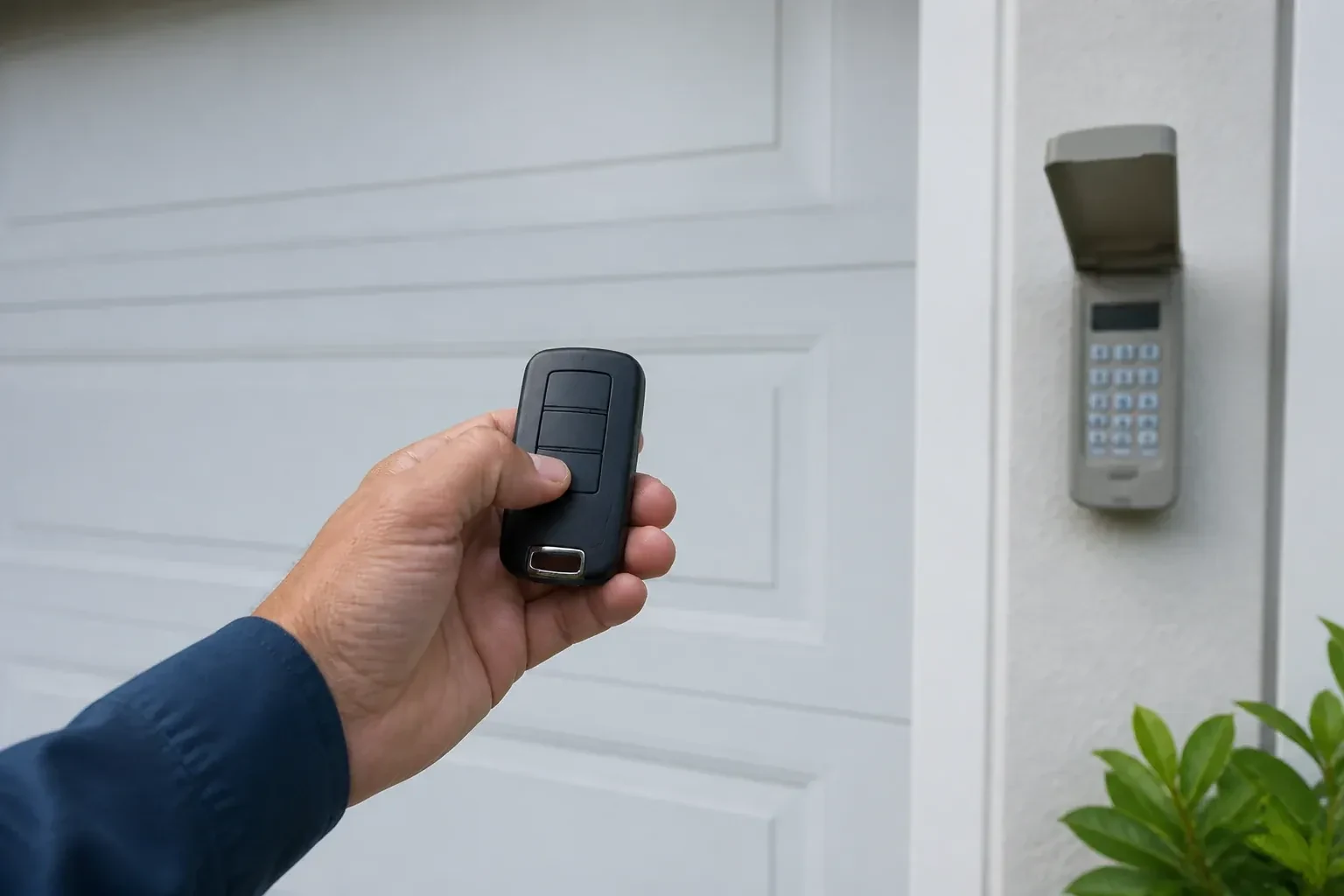
After the move, the previous owner's remotes are somewhere in another city and the keypad on the outside wall wants a code nobody wrote down. The wall button works. Nothing else does, and you have no idea who else can open your garage.
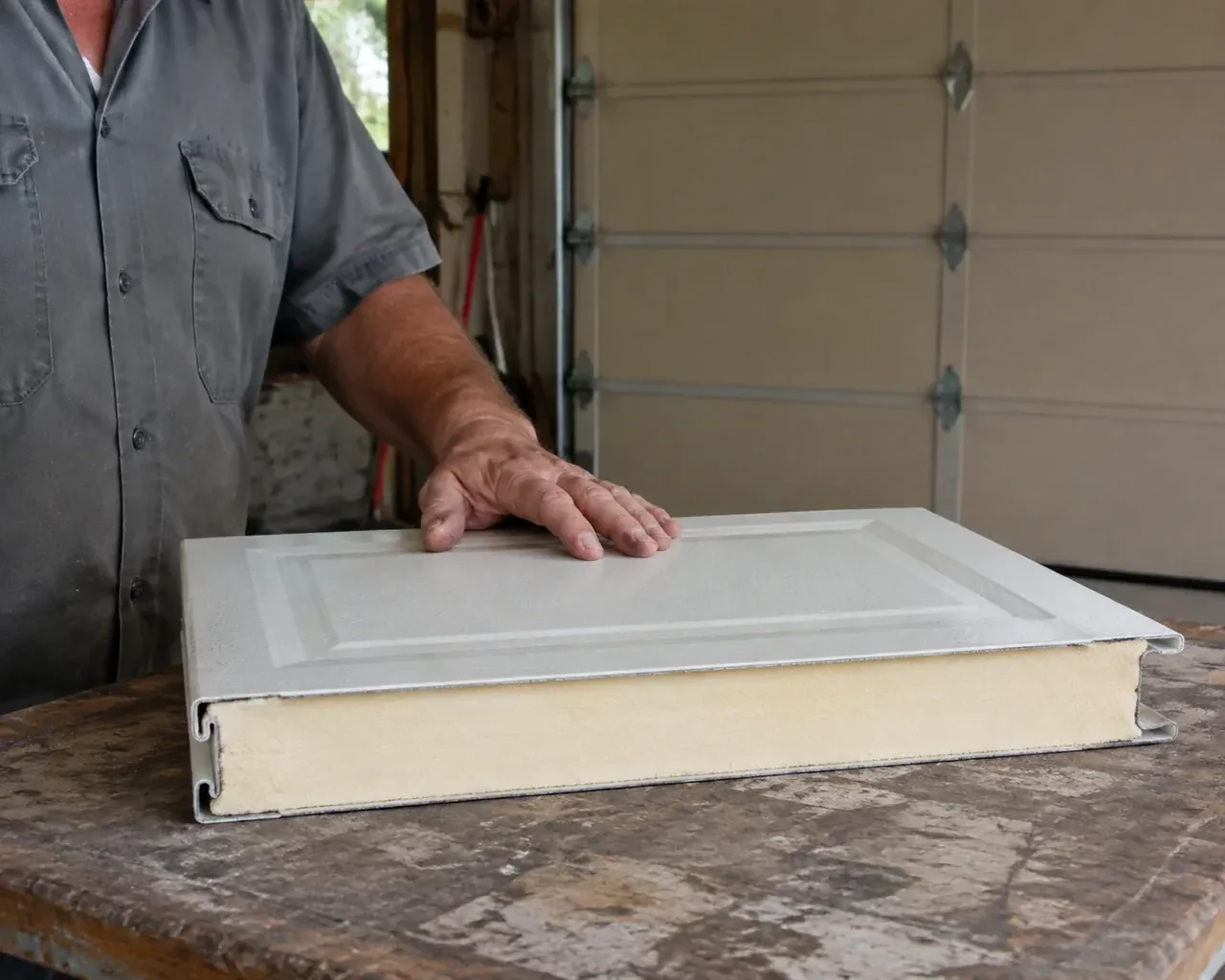
Your garage is becoming a workshop, but the thin single-skin door rattles, sweats and lets outdoor temperatures shape the whole room. You want a stronger sectional assembly suited to the way the space is now used.
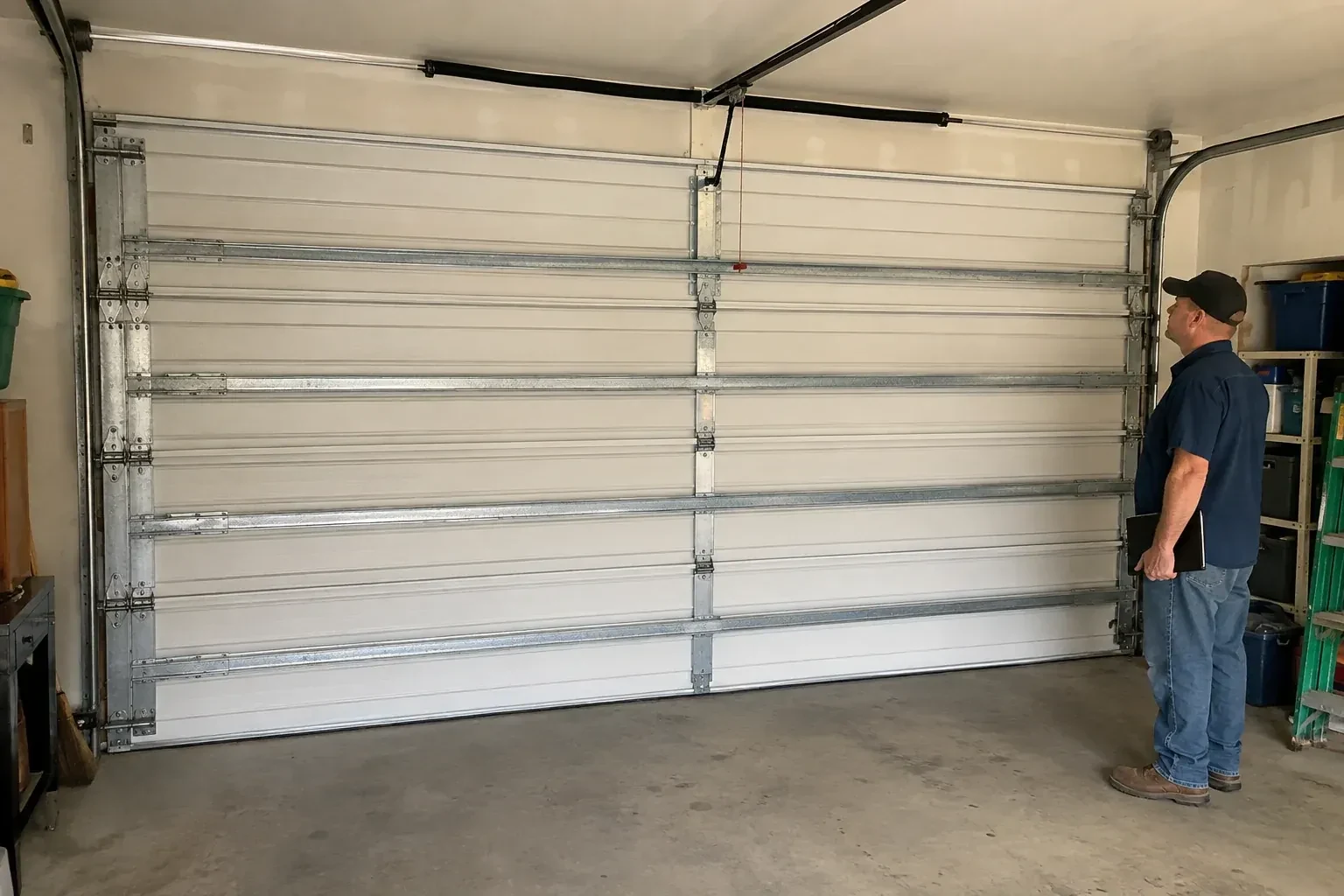
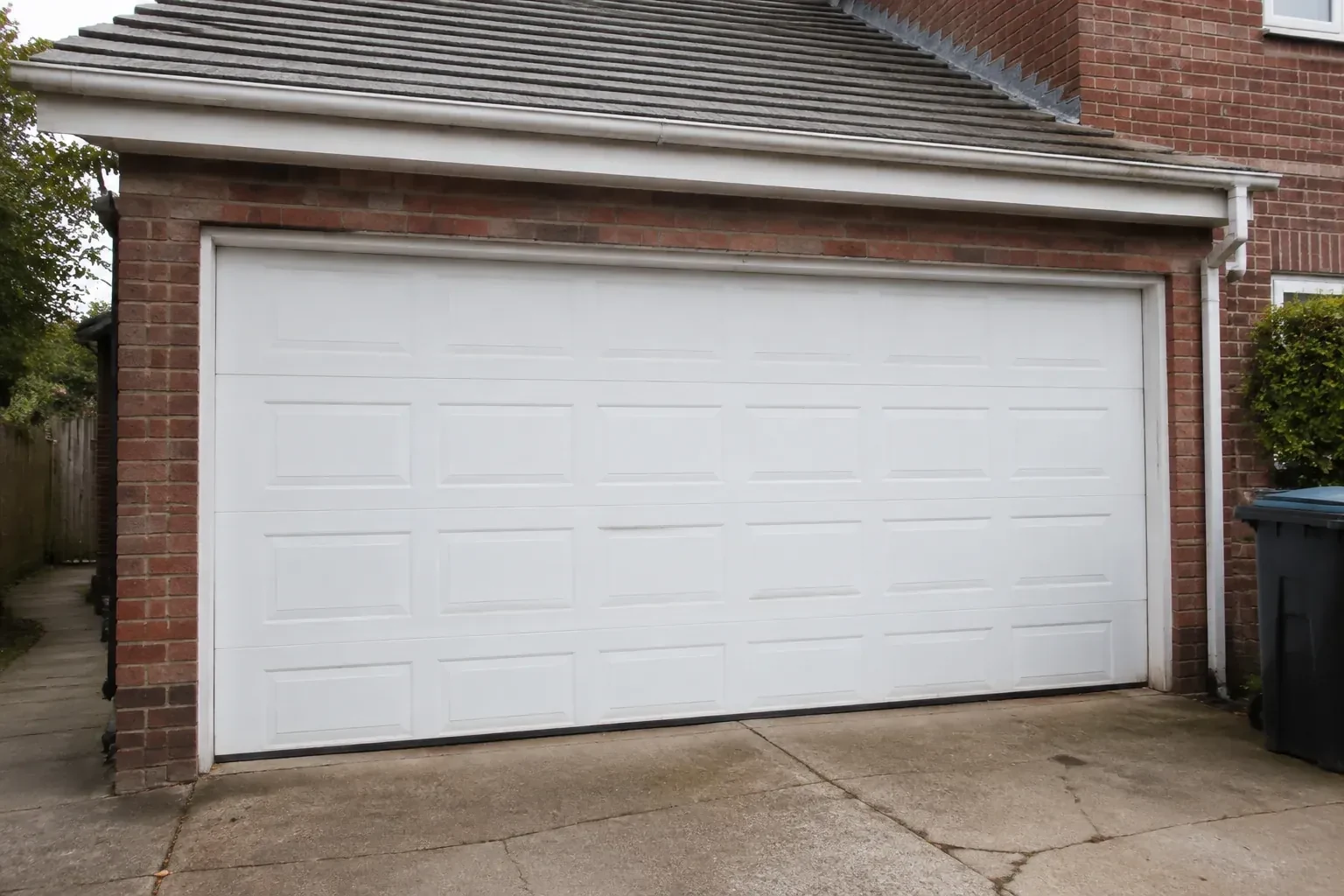
The current double door shudders when pressure changes outside, and daylight appears briefly along one edge. Its tracks are light, the jamb material is aging, and no one knows which reinforcement was originally specified.
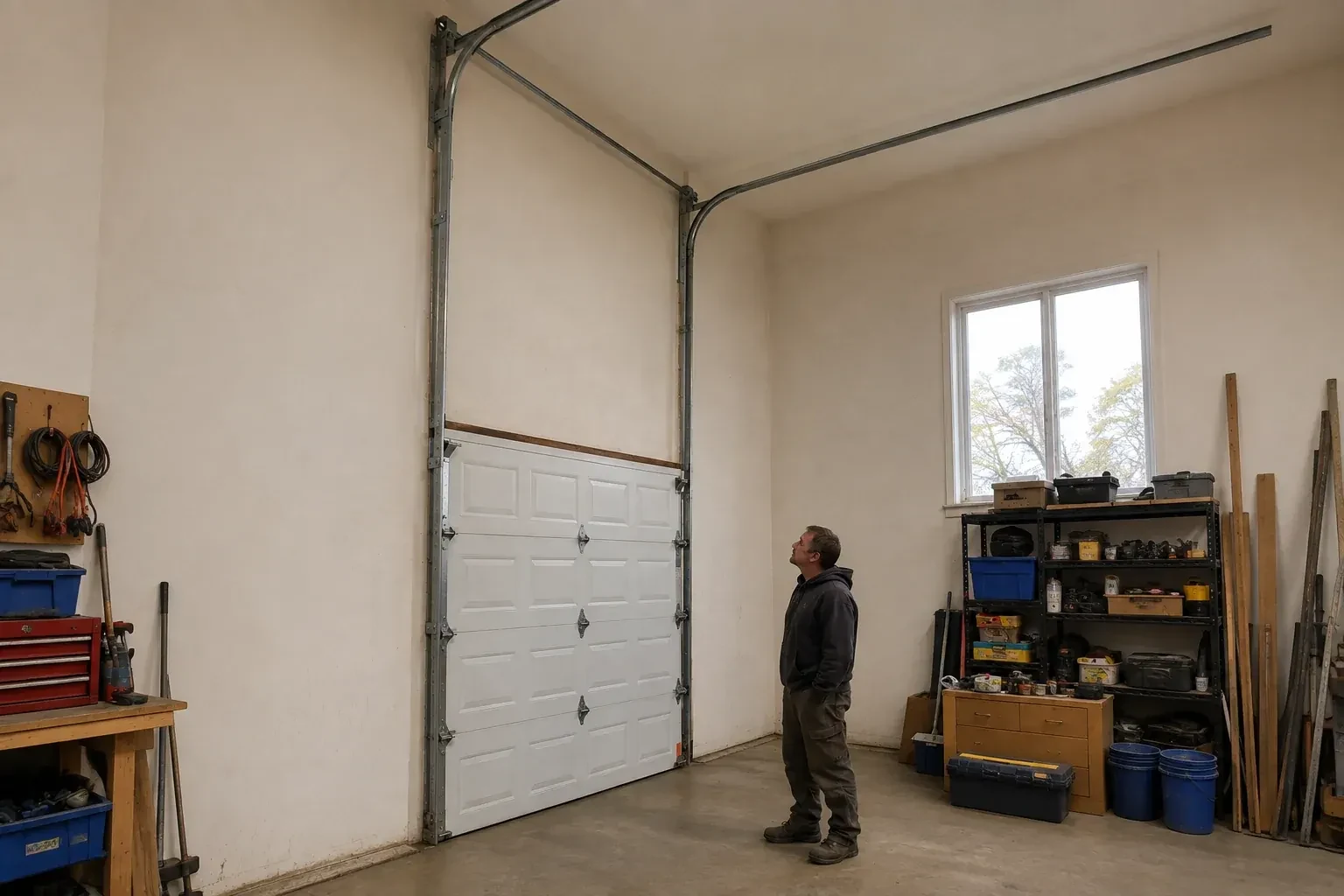
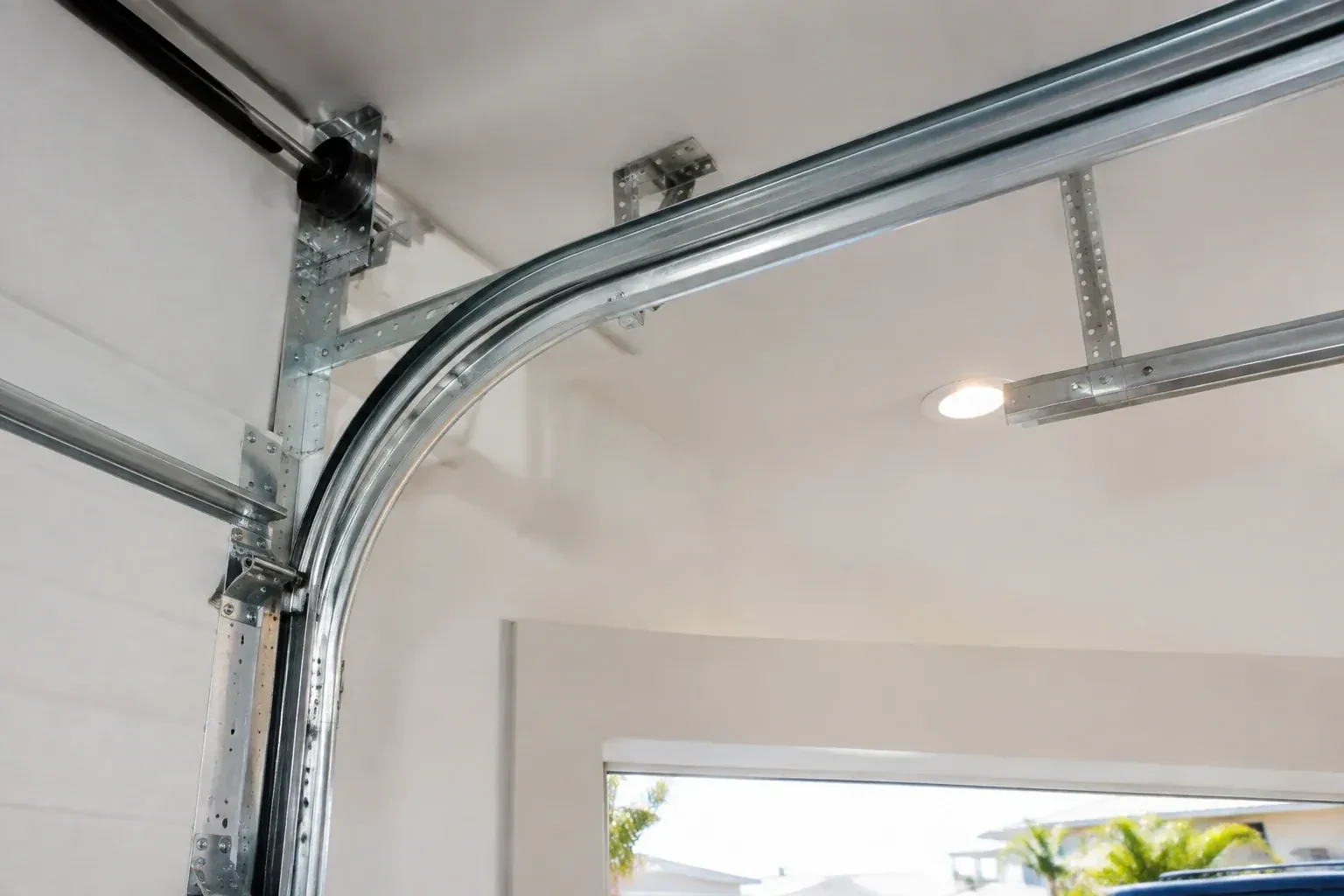
Storage racks were planned near the ceiling, but the existing tracks and centre-mounted opener divide the only practical zone. The wall above the door appears tall enough to move the turning point upward.
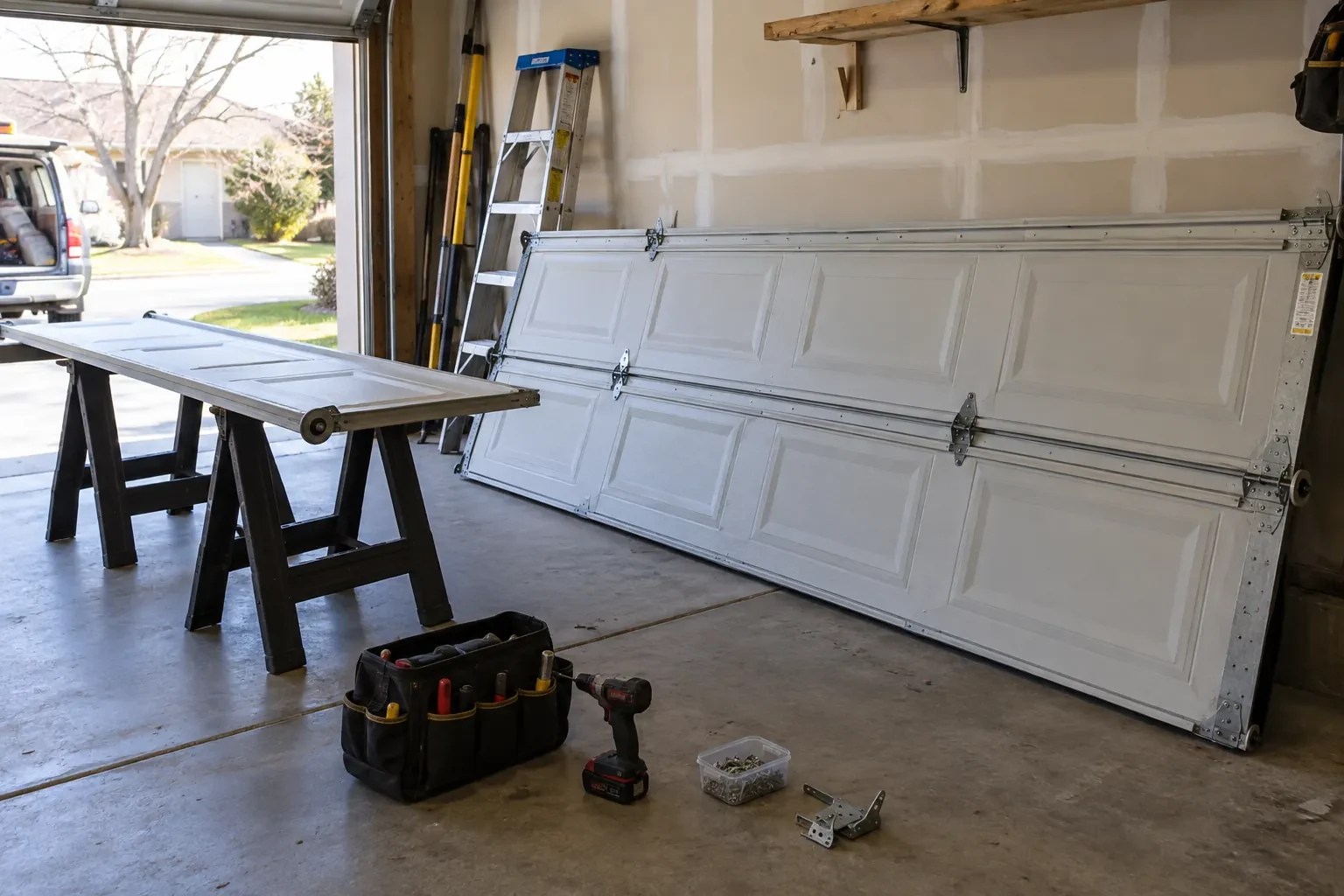
When the old door comes down, everything that carried it goes with it: the tracks, the springs, the cables and the rollers. A new door on old hardware is a compromise, and we do not install that way.
The door used to glide up with a soft hum. Now there is a sharp clack every second or so, and if you stand underneath you can see the belt sagging below the rail and slapping it on the way up.
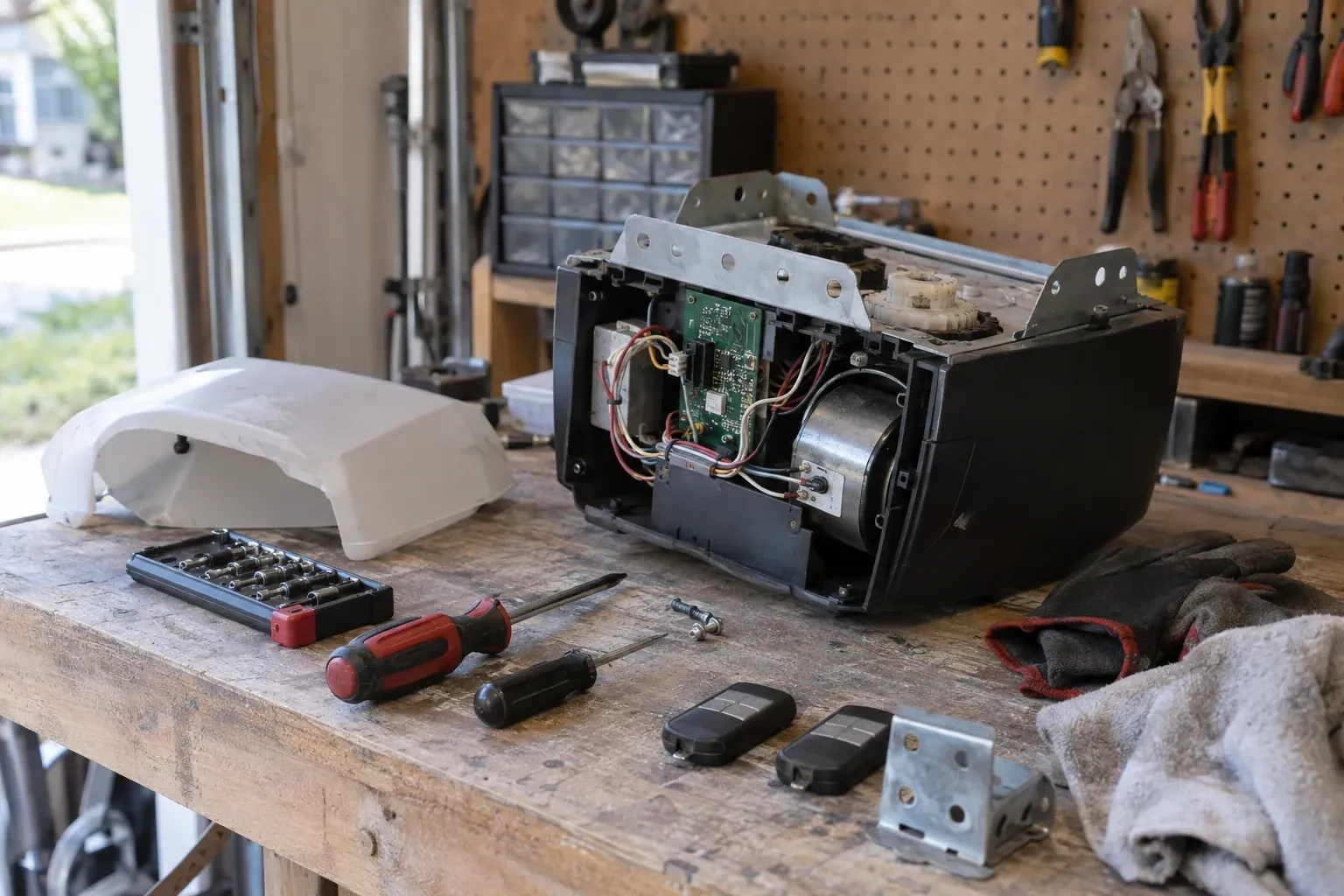
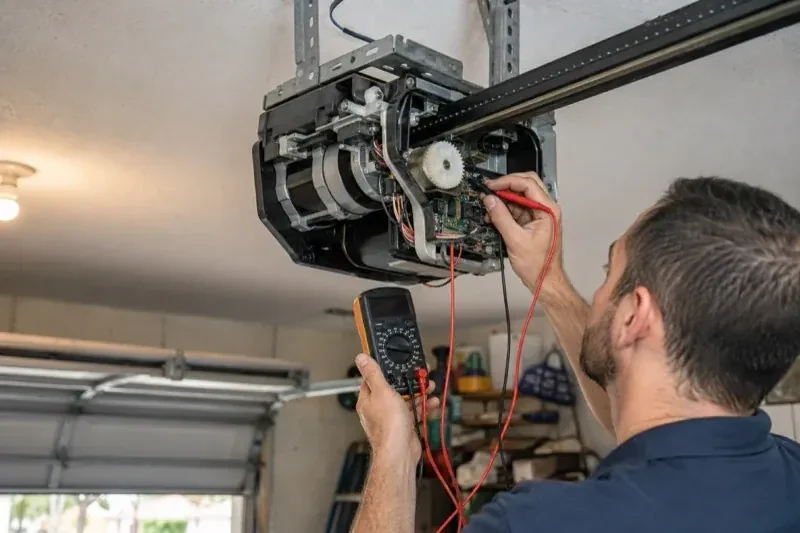
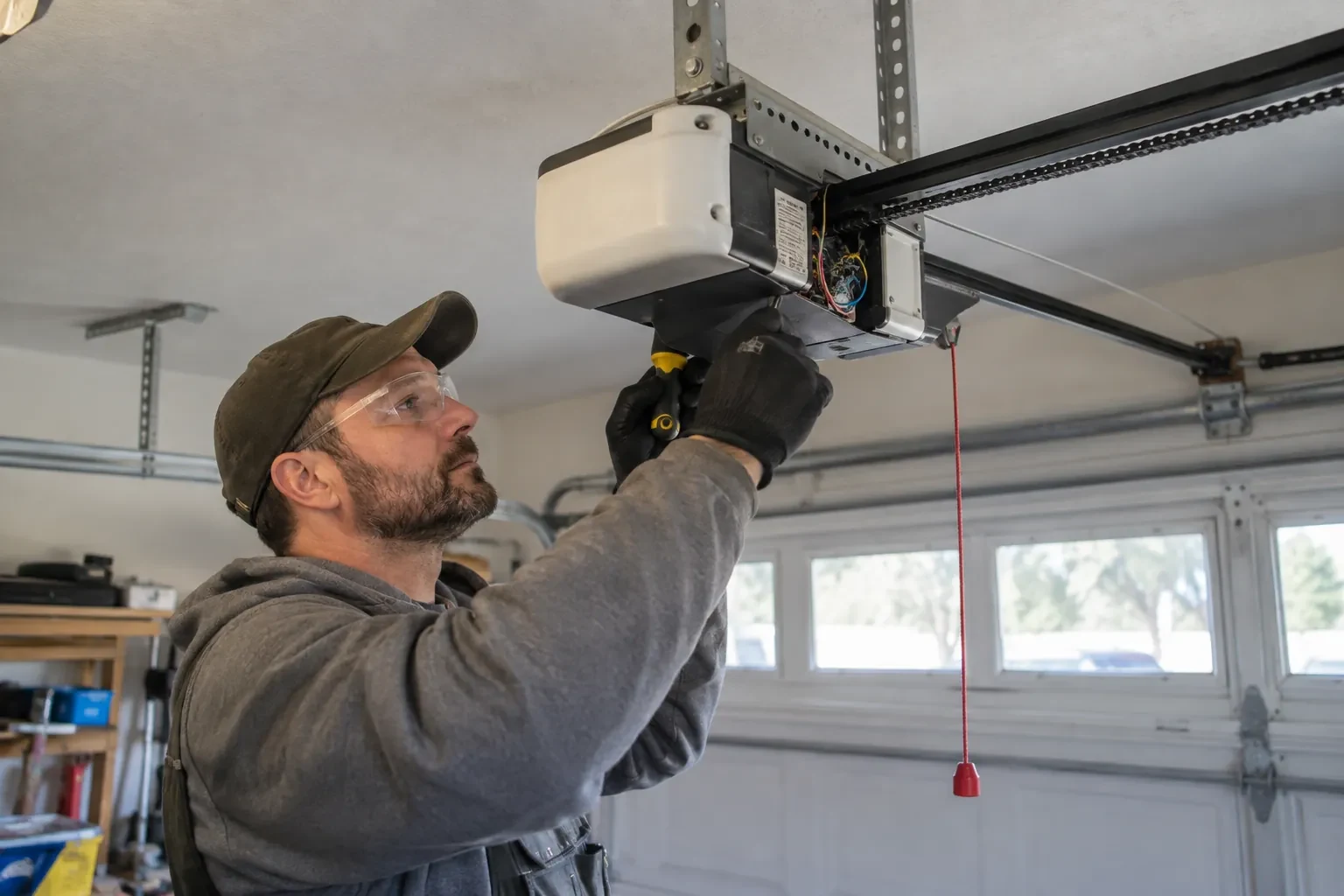
Press the button and the motor hums, but the door stays exactly where it is. Under the housing there is a dusting of white plastic shavings, the sign of a stripped drive gear, and this is the second time it has happened.
On bright mornings the door will not close, then by lunchtime it behaves itself. The garage faces the low sun, and the light reaches straight across the floor to one of the little black sensors.
Someone in the family tried to add a remote, held the button on the ceiling unit a little too long, and now every remote in the house is dead at once. The wall control still moves the door.
It is February. You come down in the morning and the garage door has stood open all night; the car is frosted inside, the furnace has run without a pause, and the pipe in the shared wall is your first worry.
Your garage is detached and has no side door. The remote is dead, the keypad is dead, and the small round lock in the top panel is meant to be your way in.
Which fix fits?
There are mouse droppings along the wall behind the recycling bins, and at one bottom corner of the door the vinyl has a neat chewed notch the width of a thumb.
WhyA low ceiling, storage rack or beam does not automatically rule out an insulated sectional door, but it does make the track plan central to the job.
The current double door shudders when pressure changes outside, and daylight appears briefly along one edge.
Sometimes. Many insulated doors have the seal channel moulded into a plastic cap that wraps the bottom rail, which takes a specific profile rather than a generic one. If that cap is cracked or the channel has opened, a screw-on aluminum retainer can be fitted over the rail so a standard T-style or bulb seal can be used from then on. Identifying the retainer at the first look settles which route applies.
What information helps when I book the visit?
Whether the door is closed, open or stuck; where the noise or the gap appears and roughly how high; whether you can see a cracked, bent or loose hinge and whether it is at the edge or the middle; whether the door is a single or a double, steel or wood, and how many panels it has; and whether anything hit the door lately. A photo of the hinge and its stamped number is useful.
Does the new cable have to match the old one exactly?
It has to match the door, which may not be the same thing if the old cable was wrong. Length is set by the door height, the drum profile and the lift type; diameter and construction by the door's weight. A cable that is a little long overlaps on the drum and wears; one that is short leaves the door out of level. The technician measures the door and the drum rather than trusting the old cable.
Why does the door need to be balanced, and how is that tested?
Balance means the spring is holding almost exactly the door's weight, so the door neither flies up nor slams down and the opener only guides it. It is tested by releasing the opener, lifting the door to about waist height and letting go: a balanced door stays there. The technician fine-tunes in quarter turns of the spring until the door holds at several heights and travels evenly on both sides.
I added insulation panels to my door. Does that affect balance?
Yes, and it is one of the most common reasons a door starts to sink. Springs are matched to the door's weight, and insulation kits, replacement sections, windows or a heavier seal add weight the original springs were not sized for. A technician can weigh the door and either add tension to suit it or, if the added weight is beyond what the springs can carry, specify new ones.
The wall button works but none of my remotes do. What happened?
Three things account for most of these. The wall control has been put into lock mode, sometimes by a child or a visitor, which blocks all remotes until it is released. The opener's memory was cleared, usually by someone pressing the learn button while trying to program a new remote, so every remote needs programming again. Or the receiver in the head unit has failed. The first two are simple settings; the third is a part.
Why won't the new remote I bought pair with my opener?
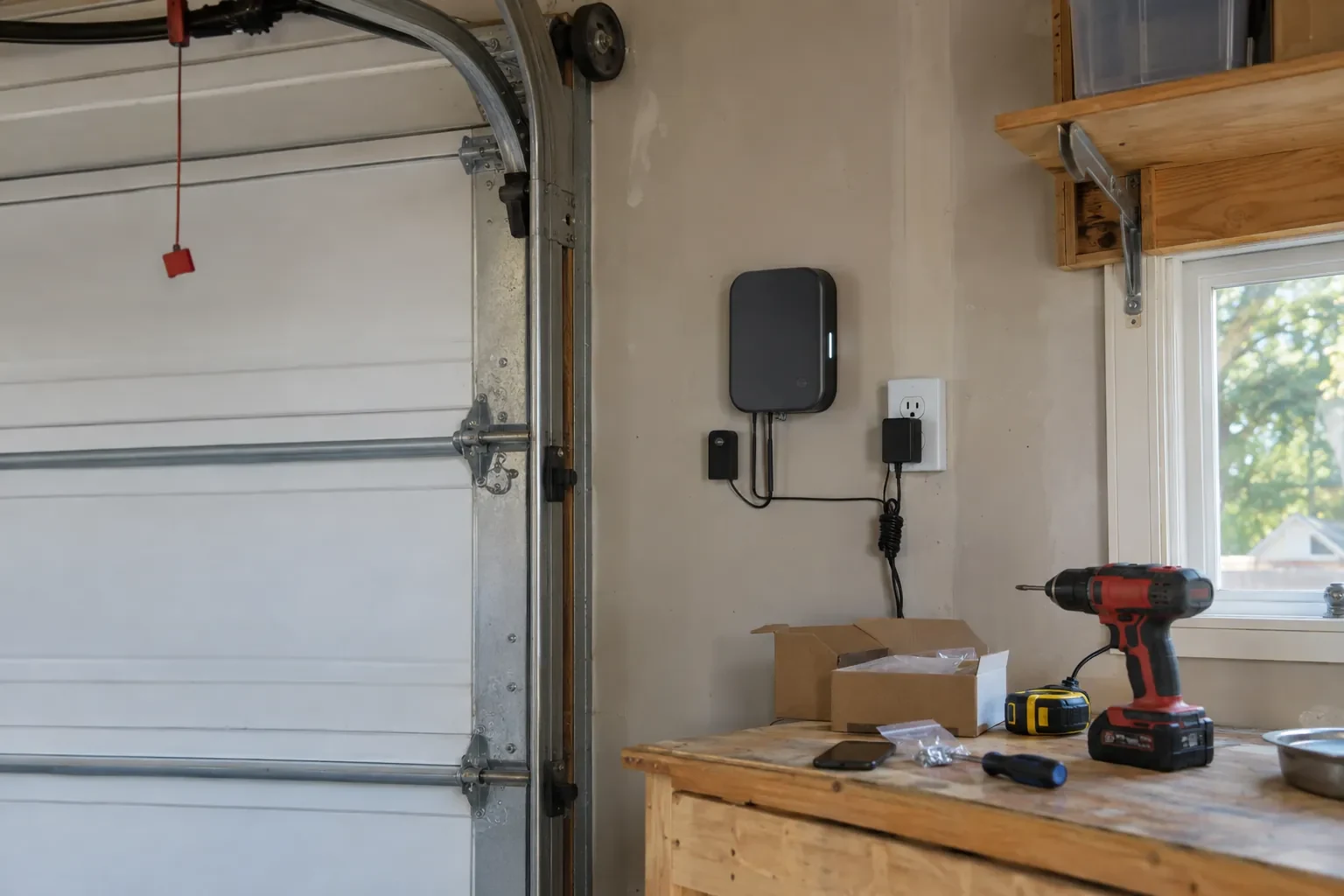
Most often because it belongs to a different radio generation. Openers have changed their radio format several times since the mid-1990s, and a remote built for one format is silent to a receiver from another. On many makes the colour of the learn button, together with the model label, identifies your generation, and the maker's compatibility chart names the remotes that match. A universal remote that covers several generations is another route. Once the two sides share a format, pairing takes moments.
Can decorative handles and hinges be added?
Decorative hardware can often be included when it is approved for the chosen door and installed in the specified locations. The order records finish, pattern and placement so the exterior remains balanced. Functional lifting hardware is a separate matter and must provide a safe gripping point. Added pieces should not obstruct section joints, tracks, seals or the door's path.
Why does the technician inspect the jambs and framing?
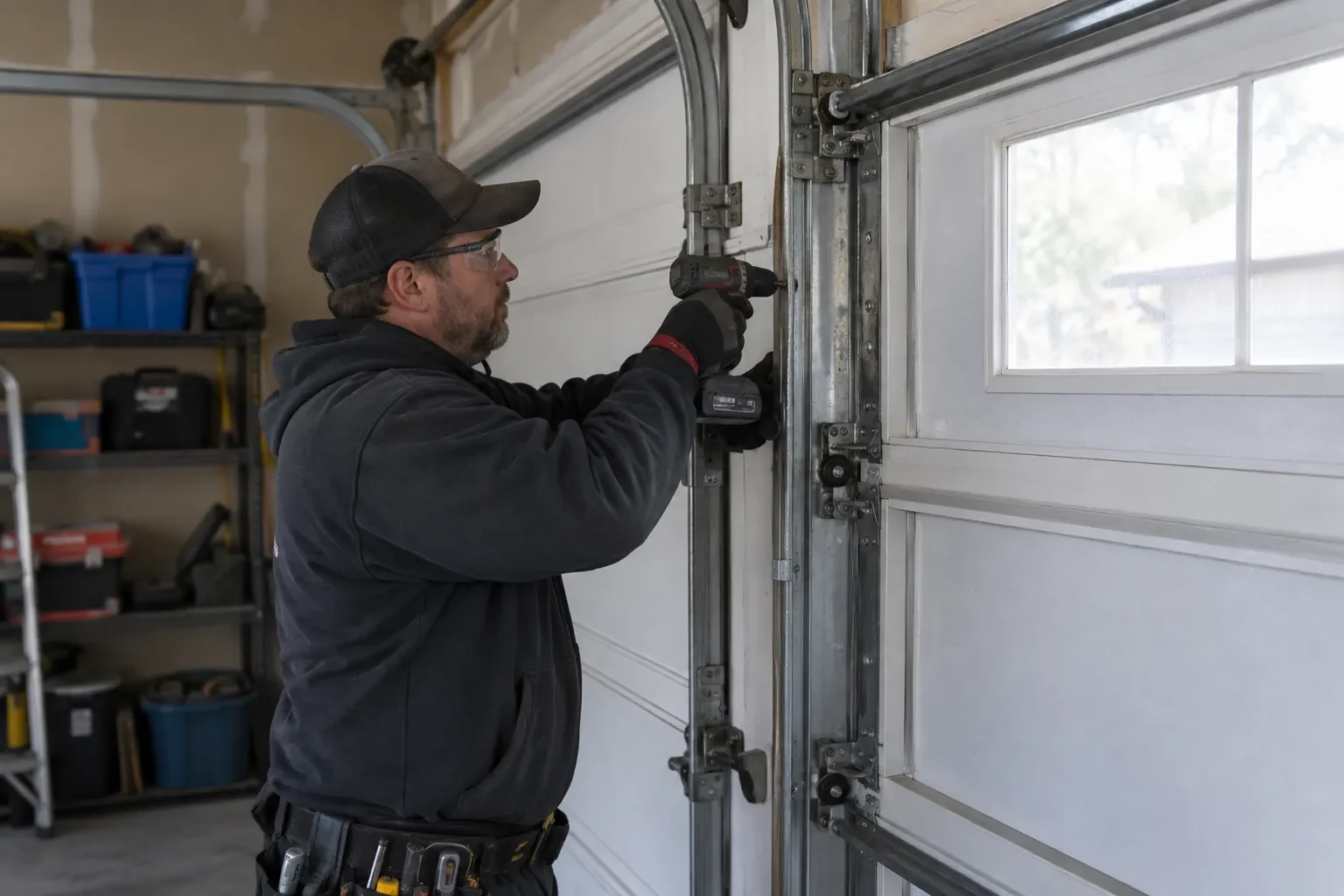
Door loads travel through the tracks and brackets into the jambs, then into the building structure. Soft wood, split material, loose blocking, shallow anchors, or unsupported trim can interrupt that path. Inspecting the mounting surfaces shows whether ordinary preparation is sufficient or whether structural work should be coordinated before the new system is attached.
Which parts are commonly replaced in a conversion?
Typical system changes include vertical and transition track, raised horizontal track supports, high-lift drums, longer lift cables, calculated torsion springs and related shaft or bearing hardware. Top fixtures, rollers, brackets and the operator arrangement may also change according to the design. The final list follows measured compatibility rather than a universal kit applied to every door.
Request a visit
When a garage door in Mulmur has stopped, the household is usually stuck too, so we organise the day around getting the door moving safely. The technician clears the fault, checks the rest of the door so the next part does not follow, and explains what he did before he drives away.