New Doors · Adjala-Tosorontio
New-Construction Garage Door Installation in Adjala-Tosorontio
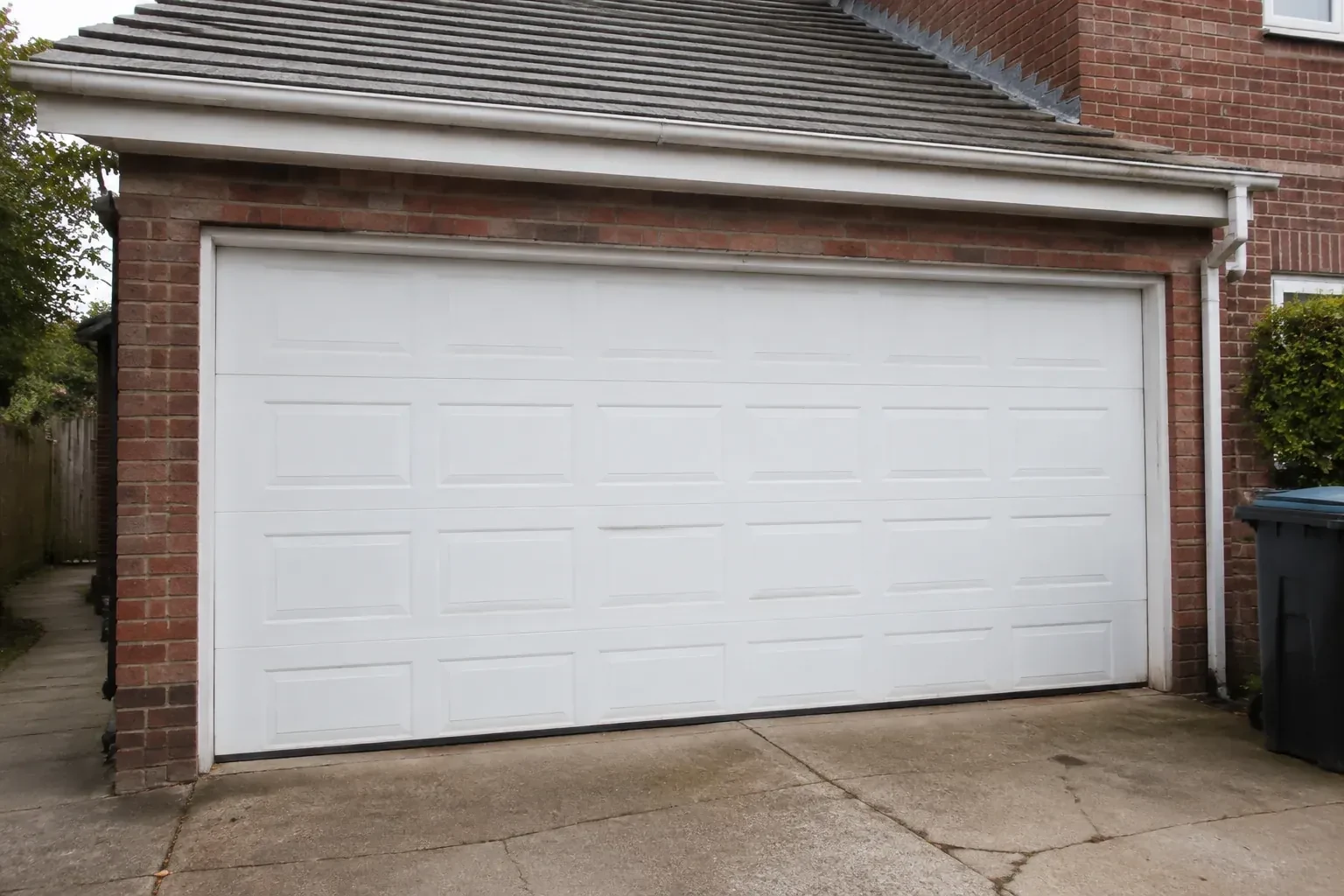
The front elevation calls for a garage door that belongs with the windows, masonry and trim.
In plain words
The practical goal is a garage door that feels manageable even though the assembly is large and heavy. Correct springs counterbalance the section weight, rollers guide the door through aligned tracks and structural bracing holds the system in its intended position. The installer tunes those relationships before connecting any operator. Handover includes a manual balance check, complete travel cycles, control tests, care guidance and the information needed to identify the installed door and operator later.
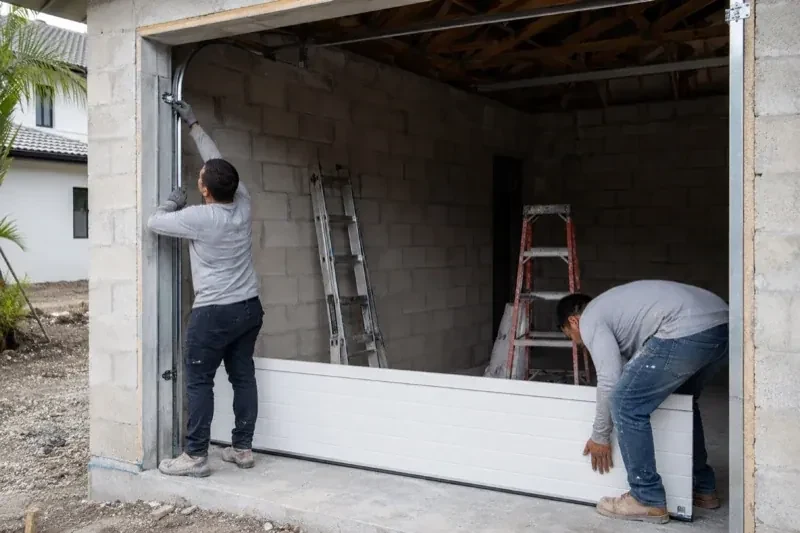
How the visit goesThe garage walls are framed, the roof is on and the opening is taking shape. Now the build needs a complete sectional door system measured to the finished width, height and surrounding clearances.
New-Construction Garage Door Installation
How the visit goes
Matching the selected door to its hardware
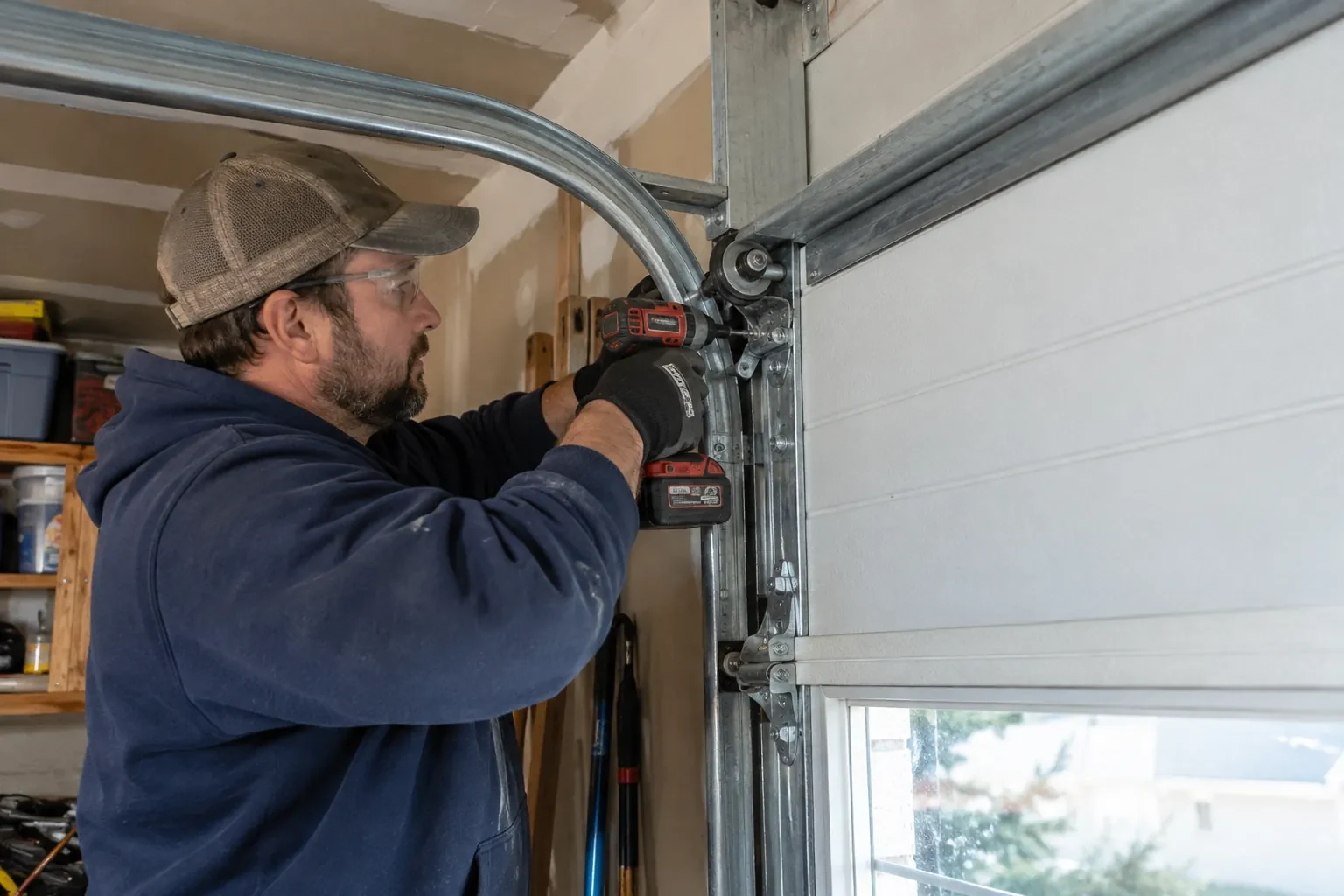
The door schedule is checked against what was ordered and what arrived. Section width, height, construction, glazing, reinforcement and finish are matched with rollers, hinges, track radius, lift cables and the counterbalance package. Door weight is particularly important because the springs and lifting hardware are sized around it. The installer also confirms the intended hand of any lock or control hardware. Treating these pieces as one system creates a reliable basis for assembly and avoids mixing track or spring components intended for a different door configuration.
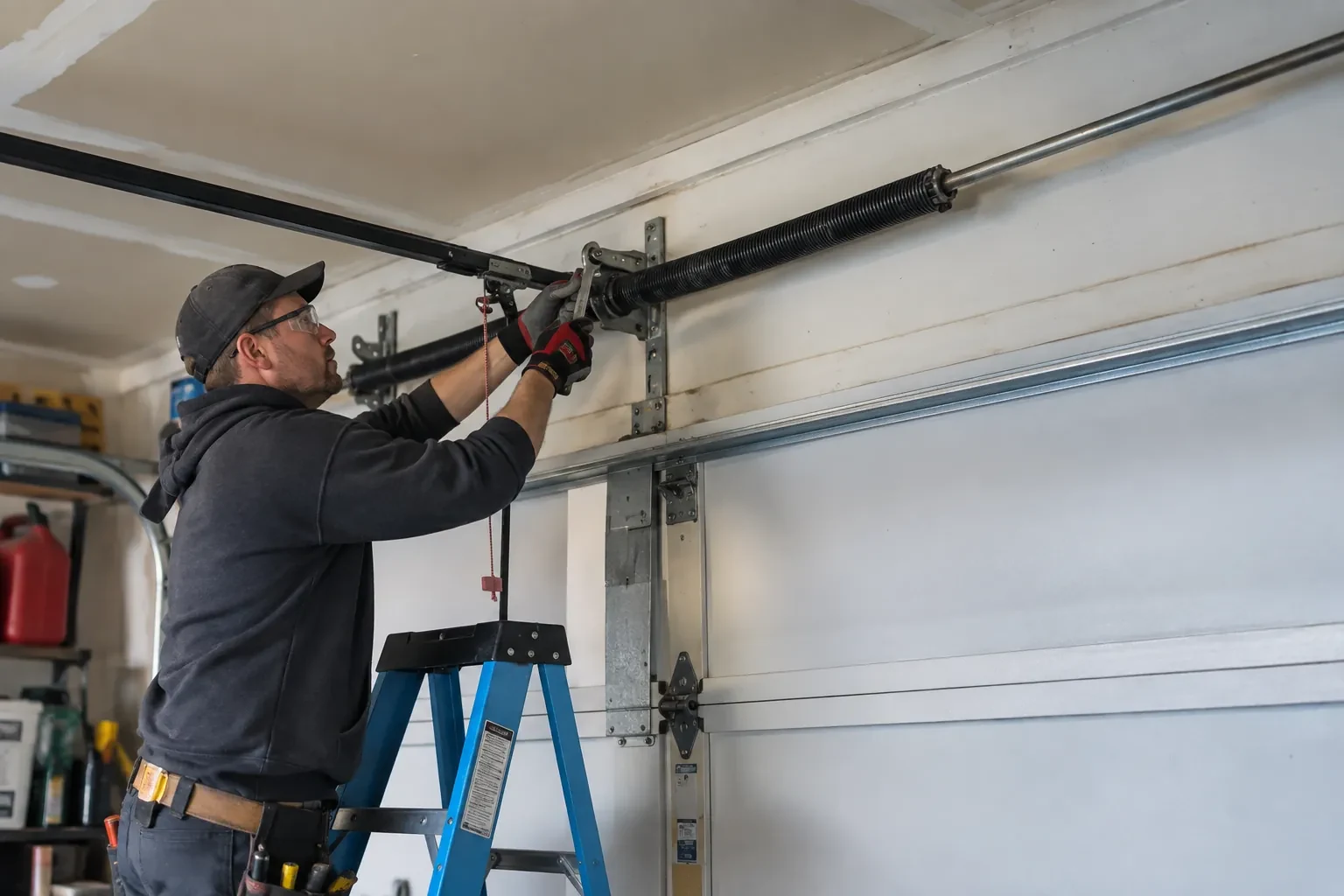
Installing the counterbalance system
Counterbalance work pairs the finished door weight with its specified lifting system. For a torsion arrangement, the shaft, bearings, drums, springs and lift cables are mounted at their designated supports; an extension arrangement uses its corresponding springs, pulleys, cables and containment hardware. Trained installers secure the door and use controlled tools while tension is applied. Cable seating and equal lift are checked on both sides. The springs are then adjusted so the disconnected door can be raised, lowered and held through its travel with manageable, balanced effort.
A door that feels balanced by hand
After installation, the door's weight is managed by its counterbalance system rather than by the user's arms or the electric operator. With the operator disconnected, the door should travel through the tracks with controlled effort and remain level. That balanced behaviour is an important reference for future care: a noticeable change in lift effort, movement or door position deserves assessment. The owner also knows where the manual release is and how to use the designated handle or gripping points while keeping hands away from section joints and moving hardware.
New-Construction Garage Door Installation
In the van
Bottom brackets
Torsion shaft and bearings
Track hangers and bracing
Bottom and perimeter seals
Track rollers
New-Construction Garage Door Installation
What affects the quote
Window design and glazing
The number, placement and type of windows affect manufacturing, section layout and door weight. Privacy, daylight and alignment across several doors can add selection and coordination work.
Perimeter trim and weather sealing
Bottom seal, stop moulding and section seals can be named in the door scope. Exterior caulking, cladding returns or custom trim may remain with another trade.
Operator and drive type
Manual operation and powered operation are different scopes. A selected ceiling-mounted or shaft-mounted operator adds equipment, supports, connection hardware, setup and commissioning to the project.
What to have ready
- Which trade is completing exterior trim, caulking and final electrical work?
- Will the garage include a vehicle lift or unusually tall parking?
- What headroom, sideroom and backroom are available around each opening?
New-Construction Garage Door Installation: questions
QuestionsHow is the perimeter of a new garage door sealed?
A compressible bottom seal meets the finished floor, and flexible stop moulding closes the exterior gaps at the jambs and header. Some door constructions also include seals between sections or around glazing. These materials are positioned after the sections and tracks are aligned so they contact the door without restricting movement. Floor variation, trim details and later caulking by another trade are noted during project closeout.
What electrical preparation does a garage door operator need?
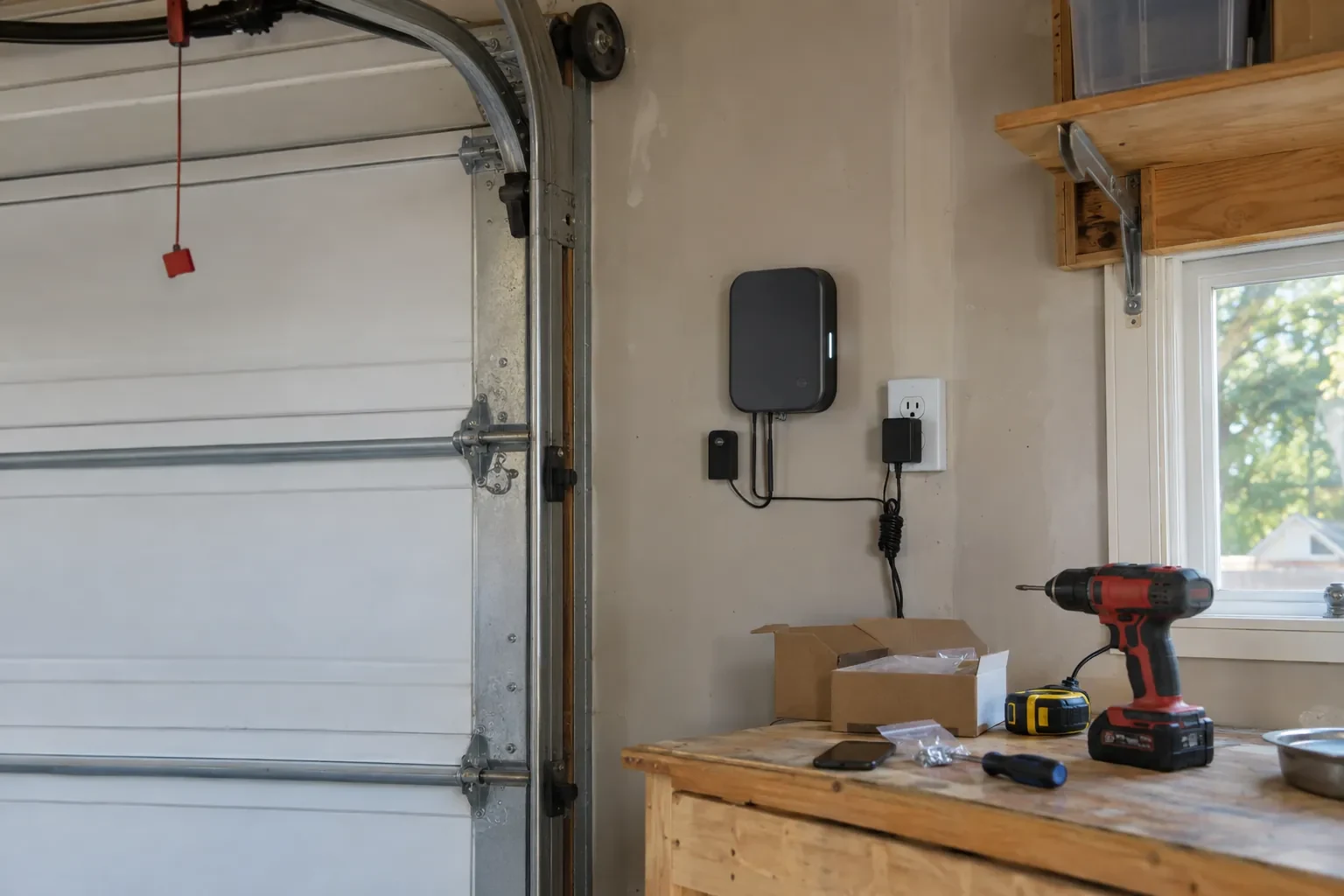
Preparation commonly includes a receptacle near the planned operator, a suitable mounting location and routes for the wall control and photoelectric sensor wiring. Exact electrical requirements follow the chosen equipment and project electrical design. Coordinating locations before drywall helps keep wires clear of tracks, springs and moving sections. The electrical trade and door installer should also agree who completes connections and when power becomes available for commissioning.
What is the difference between a rough opening and a finished opening?
A rough opening is the framed construction opening before its final jamb surfaces, cladding returns or other finishes are applied. The finished opening is the clear width and height the installed door actually closes against. Door sizing and seal position rely on that final geometry. Reviewing both helps the project team place framing correctly while preventing finish thickness from quietly reducing the space reserved for the selected door.
Related services
- Insulated Steel Garage Door InstallationYour garage is becoming a workshop, but the thin single-skin door rattles, sweats and lets outdoor temperatures shape the whole room.
- Wind-Rated Garage Door ReplacementA recent wind event left one section slightly creased, a strut twisted, and several track fasteners loose.
- Carriage-House Garage Door InstallationCold air is noticeable around the current door, especially near the floor and section joints.