New Doors · Adjala-Tosorontio
High-Lift Garage Door Conversion in Adjala-Tosorontio
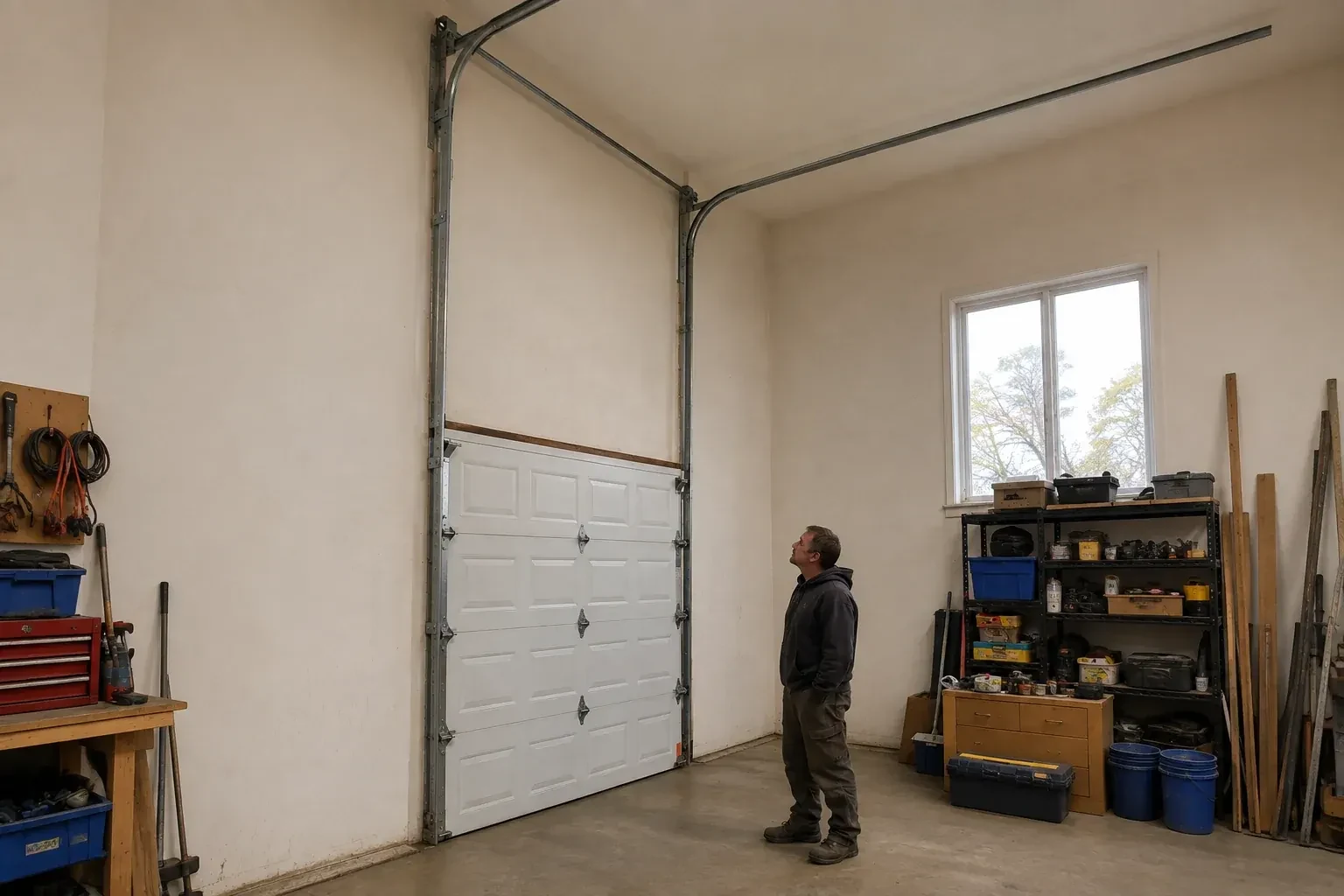
The garage has a tall ceiling, yet the horizontal tracks sit much lower than the lights and joists.
In plain words
This conversion is a measured redesign of an existing sectional-door system. It begins by identifying the door, weighing or confirming its weight, inspecting the sections and locating sound support points. A layout is then developed for the extra vertical rise, shaft position and horizontal track. Components are selected for that geometry and installed as a matched set. Manual balance, cable tracking, roller movement and powered safety functions are checked before handover, leaving a documented arrangement that future service can understand.
How the visit goesYour new vehicle lift fits the floor plan, but the open garage door crosses the space above it. The ceiling is high enough; the standard track simply turns too soon and leaves the panels hanging over the raised vehicle.
High-Lift Garage Door Conversion
How the visit goes
Check the walls and support points
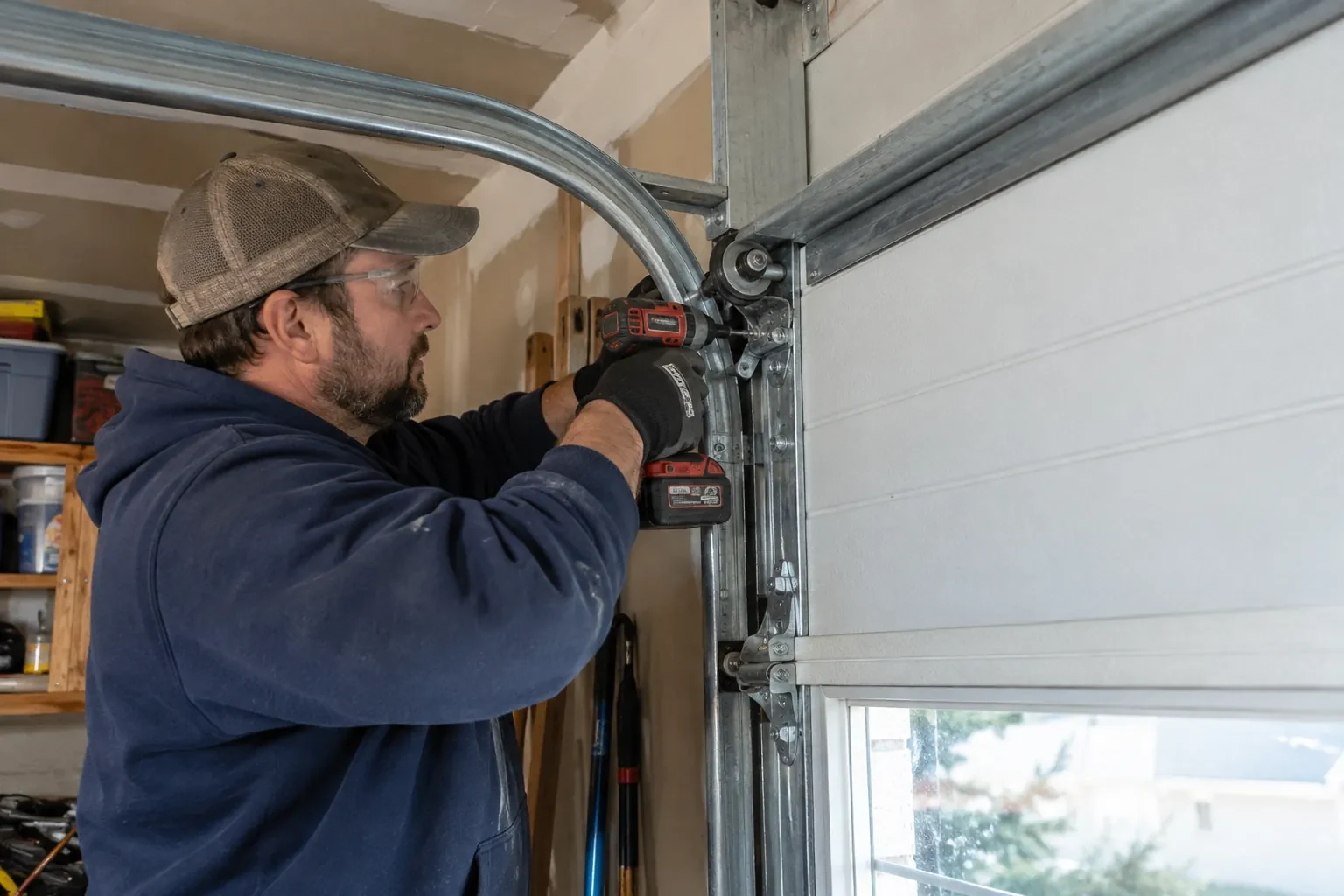
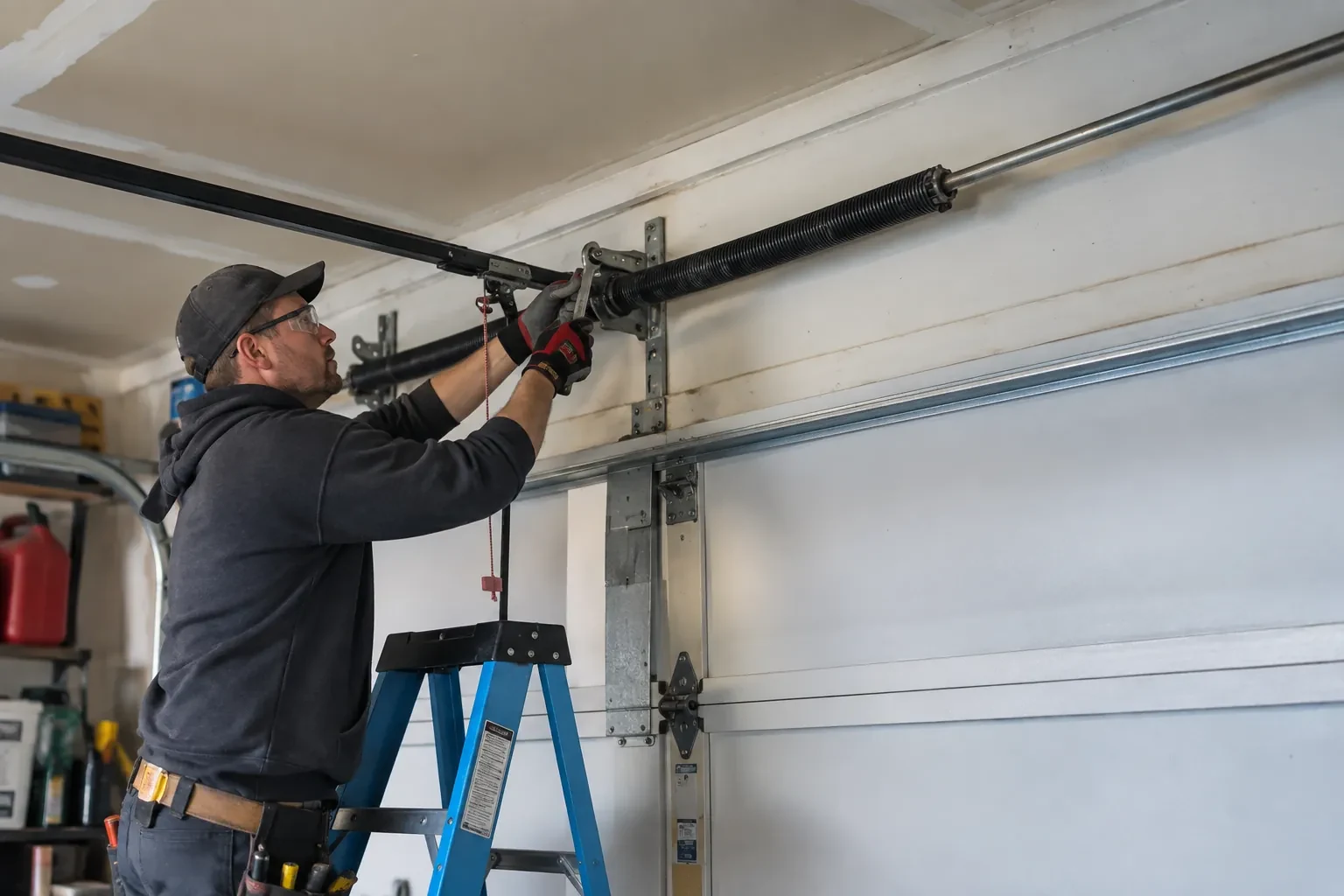
High-lift hardware moves track, shaft and spring loads to planned attachment locations, so the inspection looks beyond surface finishes. The technician notes jamb material, header construction, blocking, ceiling support and the proposed back-hang positions. Accessible framing information is recorded, and any uncertain structural condition is identified for the responsible building professional before the layout is finalized. Clear support details allow brackets and hangers to be placed deliberately and help separate the door conversion from framing work that may need advance coordination.
Build the extended vertical path
New vertical track is positioned plumb on both sides of the opening and spaced for smooth roller travel. The track rises to the calculated high-lift point, where matched transition sections guide the top panel toward the ceiling. Jamb brackets, flag brackets and reinforcing angles are placed according to the layout and suitable attachment points. Technicians compare both sides as they work so elevations, spacing and curves remain symmetrical. Accurate track geometry gives the sections a clean route and provides the foundation for cable and spring setup.
A balanced door you can understand
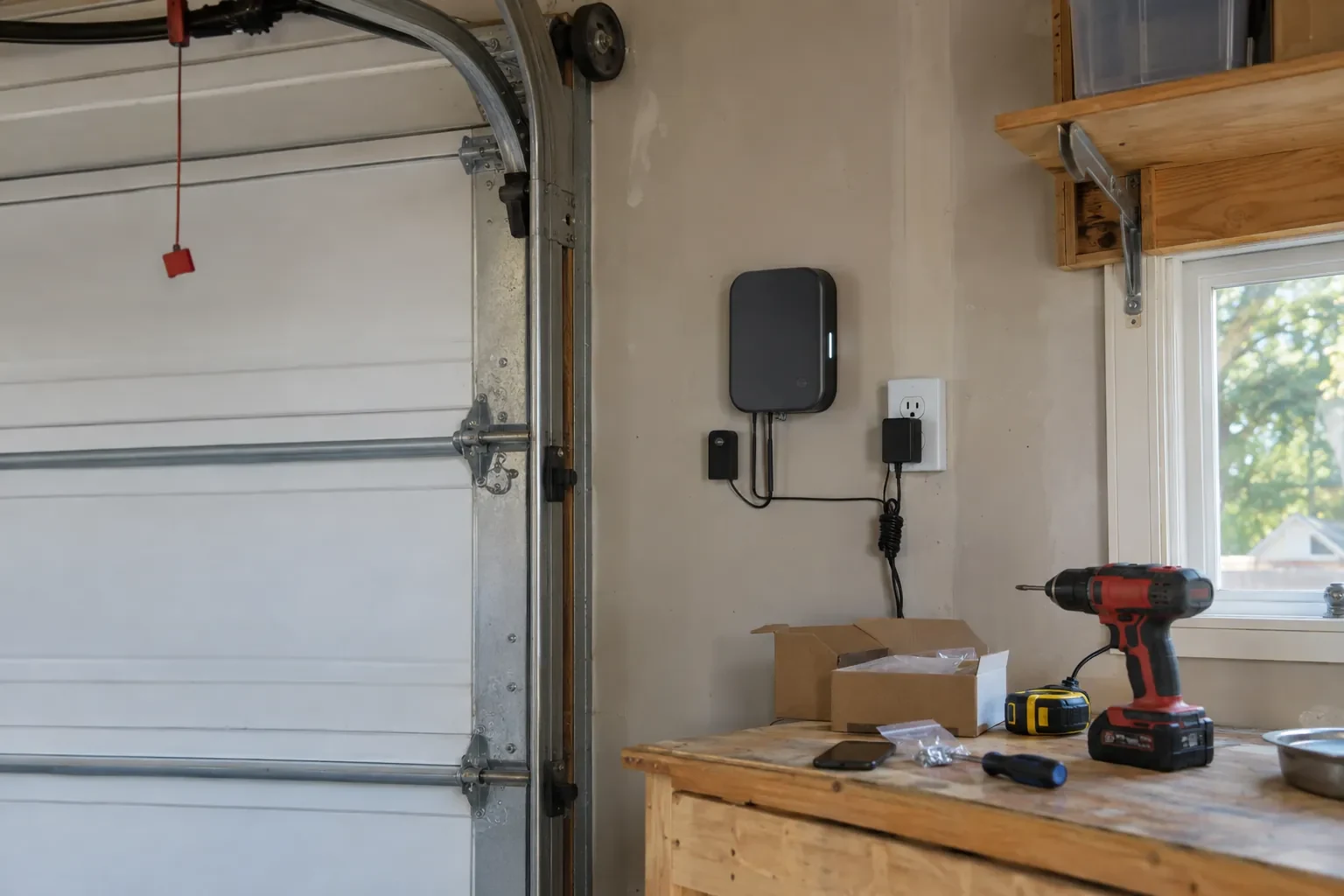
You receive a demonstration of powered operation and the intended manual-release function. With the operator disengaged under the proper conditions, the converted door should feel controlled rather than depending on the motor to overcome its weight. The technician explains what normal movement sounds and looks like, including even cables and a level bottom edge. Knowing that baseline makes future changes easier to notice. The opener is then re-engaged, and its limits and applicable protective functions are shown during a complete closing and opening cycle.
High-Lift Garage Door Conversion
In the van
Centre bearing support
Transition track sections
Horizontal track assemblies
End bearing plates
Braced back hangs
High-Lift Garage Door Conversion
What affects the quote
Framing and attachment readiness
Clear, suitable support points simplify installation; missing blocking, concealed conditions or structural questions create preparatory work and coordination outside the basic hardware change.
Opener compatibility and placement
Keeping an approved existing arrangement, repositioning compatible equipment or fitting another operator setup changes the parts, controls, mounting and commissioning included.
Electrical coordination
A relocated operator may need a suitable power location or revised control wiring, which is identified separately from the mechanical door scope.
What to have ready
- What clear height do you need beneath the fully open door?
- Which spring, drum and opener labels can you photograph safely?
- How much wall height is available above the door header?
High-Lift Garage Door Conversion: questions
QuestionsWhy are new cable drums usually part of the project?
A high-lift door changes how cable must wind as the panels move vertically and then turn. High-lift drums use a contoured groove profile to manage that changing leverage and help balance the door through its travel. Drum selection is coordinated with door weight, lift dimension, cable length, shaft and spring design rather than chosen as an isolated hardware swap.
Which parts are commonly replaced in a conversion?
Typical system changes include vertical and transition track, raised horizontal track supports, high-lift drums, longer lift cables, calculated torsion springs and related shaft or bearing hardware. Top fixtures, rollers, brackets and the operator arrangement may also change according to the design. The final list follows measured compatibility rather than a universal kit applied to every door.
When is high-lift conversion a practical choice?
It is practical when an existing sectional opening has meaningful wall height above it, enough ceiling depth for the horizontal run, suitable support conditions and a clear reason for gaining overhead room. The door, counterbalance and operator must be designed together. A measured feasibility plan confirms the usable clearance before installation becomes the next step.
Related services
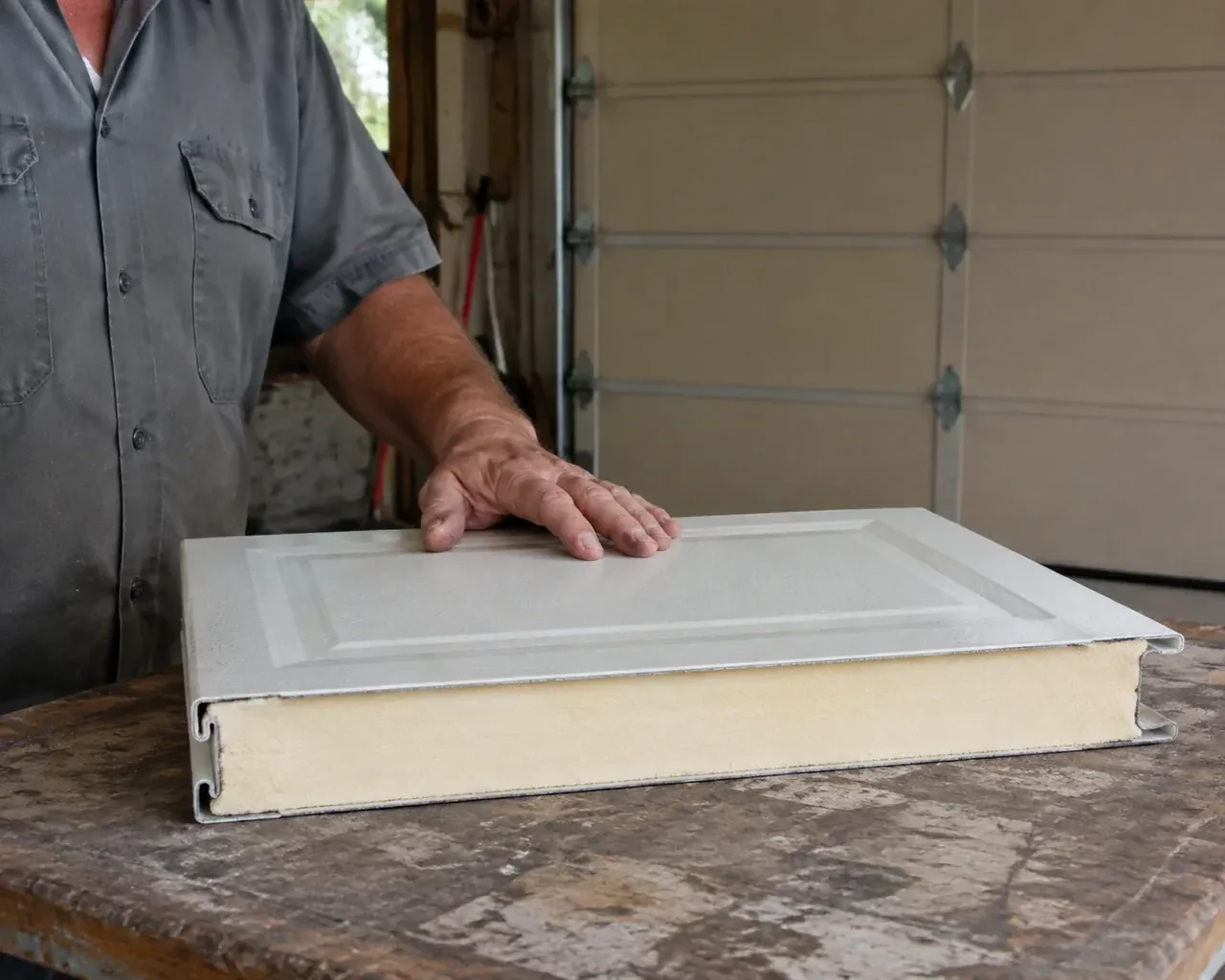
- Insulated Steel Garage Door InstallationYour garage is becoming a workshop, but the thin single-skin door rattles, sweats and lets outdoor temperatures shape the whole room.
- Wind-Rated Garage Door ReplacementA recent wind event left one section slightly creased, a strut twisted, and several track fasteners loose.
- Carriage-House Garage Door InstallationCold air is noticeable around the current door, especially near the floor and section joints.