Springs · New Tecumseth
Torsion Spring Replacement
One side of the door sits higher than the other in the tracks, and a lift cable is hanging slack or has jumped off its drum.
In plain words
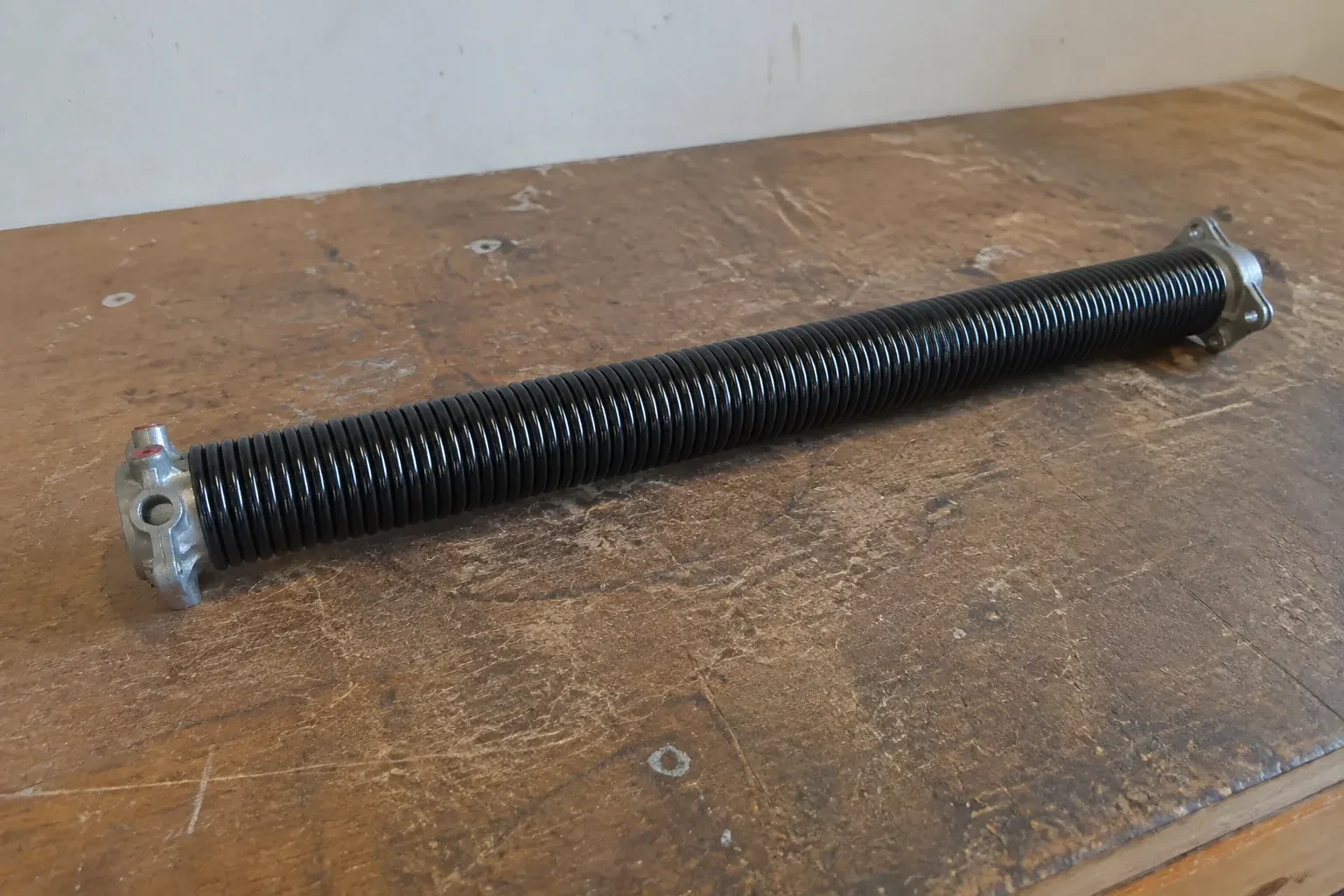
A spring that breaks with the car inside puts the whole morning on hold, and this service is designed to get that door working again in a single visit. The technician arrives with a range of spring sizes, secures the door so it cannot move, identifies exactly which spring the door needs, and installs and winds the replacement. Once the door balances by hand, the opener is reconnected and tested. Until then the safe approach is simple: leave the door where it is, keep clear of it, and share a photo of the spring area so the right parts arrive on the truck.
How the visit goesAfter pulling the red release cord, you tried lifting the door yourself and it would barely leave the floor. A door that used to glide up with one hand now takes real effort, which points to the counterbalance rather than the opener.
Torsion Spring Replacement
How the visit goes
Checking what the spring anchors to
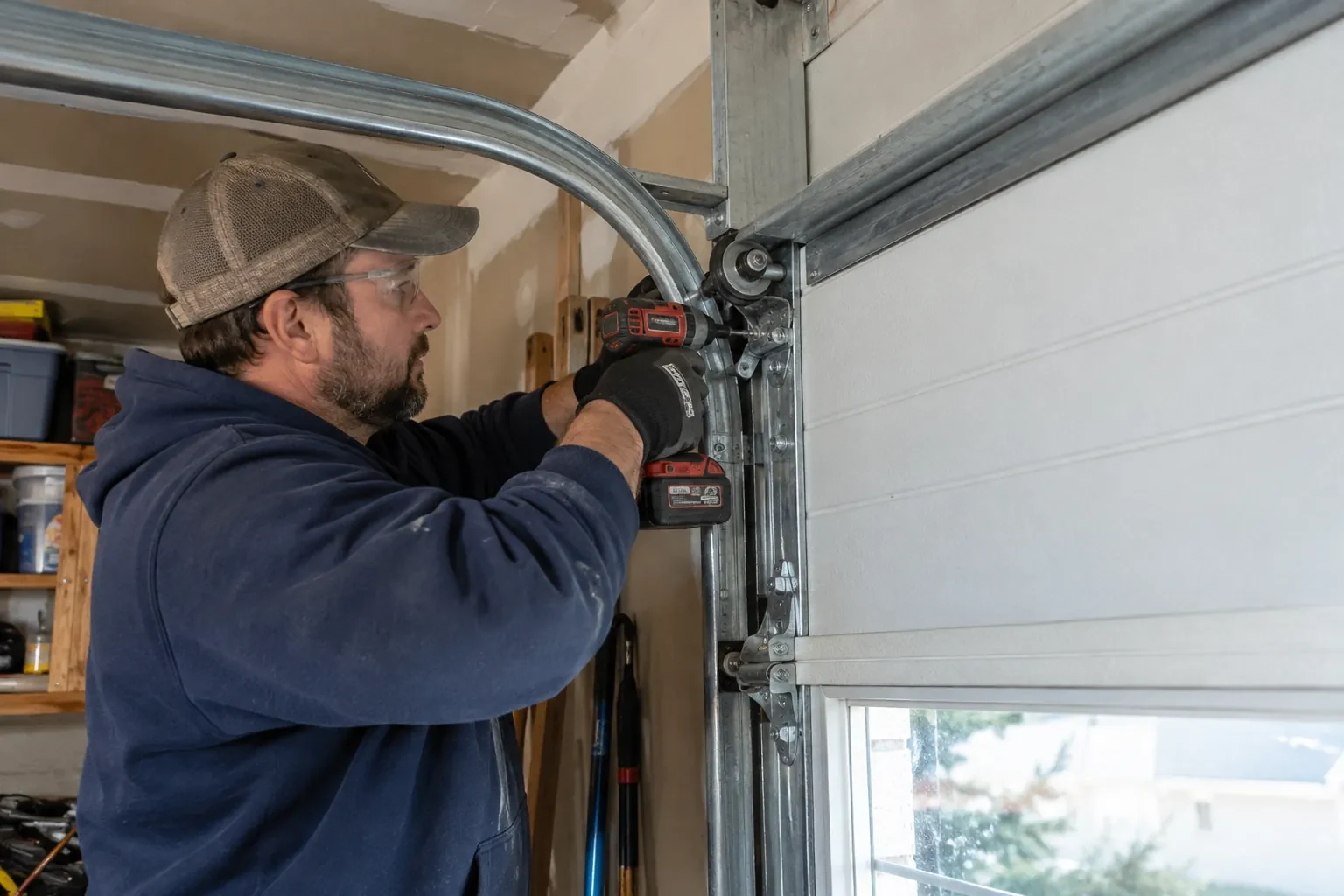
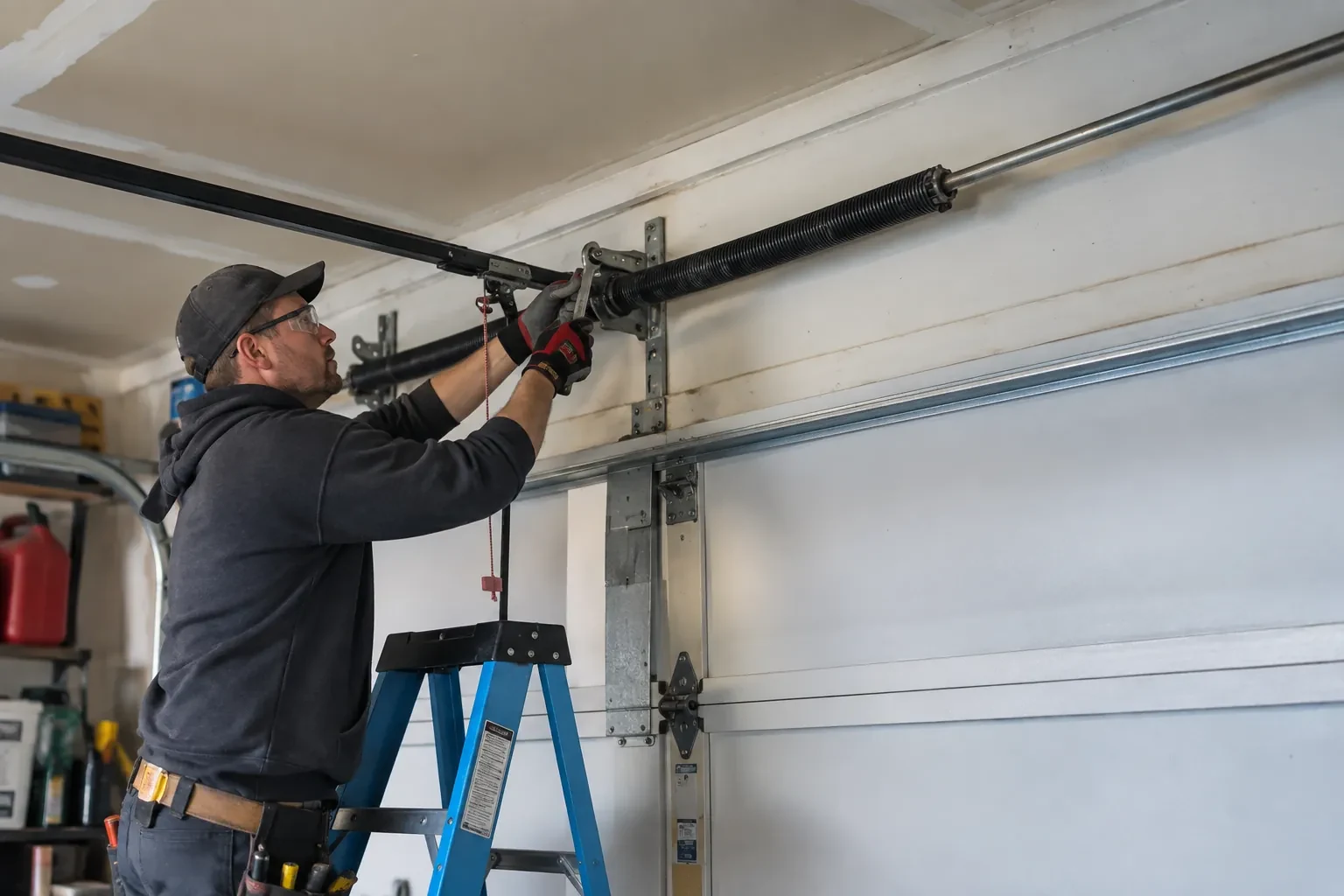
A torsion spring pushes against a centre bracket bolted to the header above the door, and that anchor takes the full reaction force every cycle. The technician checks that the bracket is fastened into solid framing with proper lag bolts, that the header wood has not split or softened with moisture, and that the end bearing plates on each side are square and tight to the jamb. Loose or corroded fasteners are noted for replacement. A sound anchor keeps the shaft level and the spring pulling straight, which protects both the new spring and the bearings that carry it.
Fitting a matched pair
On a two-spring door the springs are installed as a set: one left-wound and one right-wound, mirrored on either side of the centre bracket, with matching wire size, diameter and length so each carries half the load. Both stationary cones bolt to the centre bracket and both winding cones face outward. The technician winds each spring the same number of quarter turns, alternating between them, so the shaft is never loaded unevenly. Once both are set, the door is balanced and tested as one system. Equal springs mean equal wear, so the pair reaches the end of its life together rather than one after the other.
A door that carries its own weight
The clearest change is in your hands: with the opener released, the door lifts with light, even effort and holds its position at mid-height instead of sliding down. That is what a balanced counterweight feels like. The door closes softly at the floor and rises without hesitation, and the opener runs with a calmer sound because it is guiding the door rather than hauling it. You can test this yourself any time by pulling the release cord with the door closed and lifting to waist height; a door that stays put is a door in balance.
Torsion Spring Replacement
In the van
Stationary cone bolts and nuts
Centre bearing bracket and bearing
Locking pliers for the track
End bearing plates
Torsion shaft and coupler
Torsion Spring Replacement
What affects the quote
Damage from the break
If the opener was run against a broken spring, the top section may be bowed, the trolley bent or a hinge strained. Correcting these so the balanced door runs on straight hardware adds to the scope.
Door size and weight
A double-width door, a solid wood door or a thick insulated door weighs far more than a single-width steel panel, calling for heavier wire, longer coils or more springs to balance it.
Cycle rating chosen
A standard-cycle spring and a high-cycle spring balance the door the same way but differ in wire and length. Choosing a longer-life spring is an option the household can weigh against how often the door is used.
What to have ready
- Can you send a photo of the spring area and the opener?
- Can you see a gap in the spring above the door?
- How many springs are mounted above the door, one or two?
Torsion Spring Replacement: questions
QuestionsWhat does a cycle rating mean?
One cycle is a full open and close. Springs are built for a set number of cycles, and a standard residential spring is commonly rated around ten thousand. A household that uses the door six times a day reaches that in roughly four to five years, while a door used twice a day stretches the same rating much further. Higher-cycle springs use heavier wire and a longer coil to produce the same force with less stress, so they last proportionally longer.
Why does the door need to be balanced, and how is that tested?
Balance means the spring is holding almost exactly the door's weight, so the door neither flies up nor slams down and the opener only guides it. It is tested by releasing the opener, lifting the door to about waist height and letting go: a balanced door stays there. The technician fine-tunes in quarter turns of the spring until the door holds at several heights and travels evenly on both sides.
Can I keep using the opener until the technician arrives?
The kindest thing for the door is to leave it where it is and use another entrance. An opener is designed to move a door the springs have already made light; asking it to lift a full-weight door strains the trolley and gear drive and can crease the top section. Keeping the door still and clear of people until the spring is replaced protects the rest of the system from extra repairs.
Related services
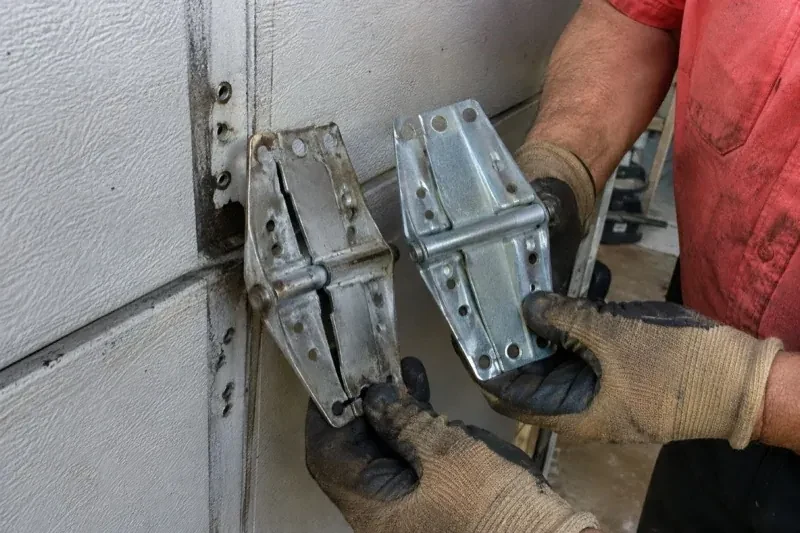
- Garage Door Hinge ReplacementPressing a hand against one of the middle hinges makes it rock on the panel.
- Garage Door Track Repair or ReplacementBacking out this morning, the mirror caught the track beside the door.
- Garage Door Cable ReplacementYour older door has springs along the tracks, and one cable has slipped off its pulley and dangles slack.