Openers · New Tecumseth
Garage Door Opener Replacement
Press the button and the motor hums, but the door stays exactly where it is.
In plain words
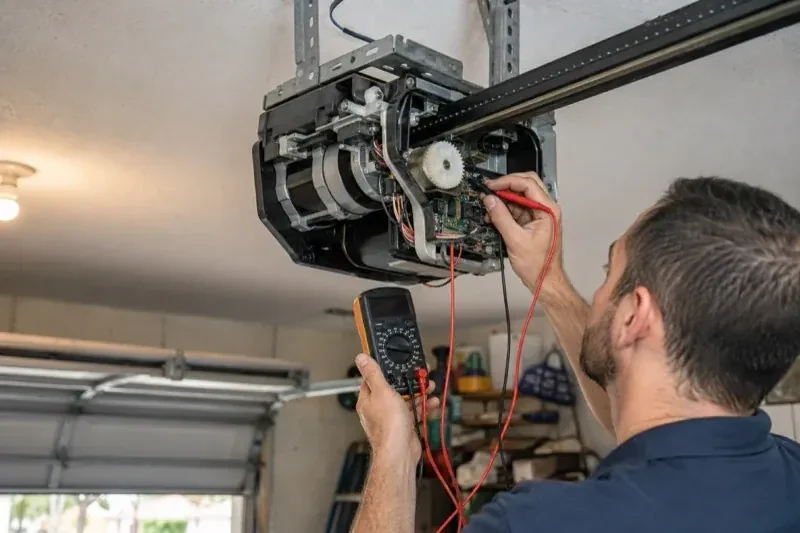
Garage door opener replacement takes the tired operator out of your ceiling and installs a new one matched to the door below. It begins with the door: the technician disconnects the old opener and raises the door by hand to confirm the springs carry its weight, because an opener guides a balanced door rather than hauling a heavy one. The old head, rail and sensors come down, the new rail is hung from the framing, the door arm and any reinforcement are fitted, and fresh photo eyes and a wall console are wired in. Travel and force are set, the reversal is tested, and your remotes and keypad are programmed.
How the visit goesDuring the ice storm the power was off for two days. You came home in the dark, found the door dead, and had to climb out of the car to pull the red cord in the cold. A door that keeps working through an outage is now on the list.
Garage Door Opener Replacement
How the visit goes
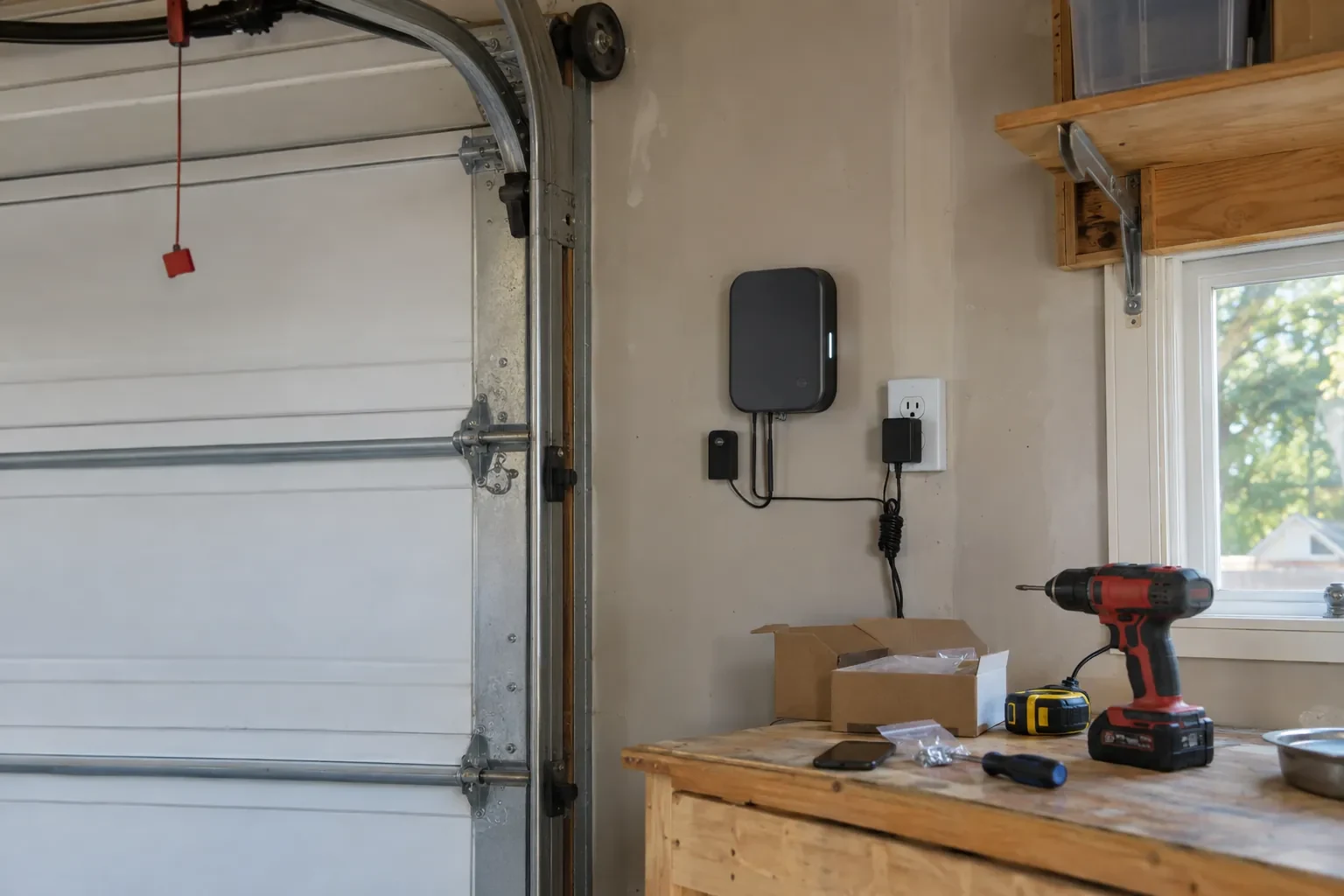
Headroom, framing and where the rail will hang
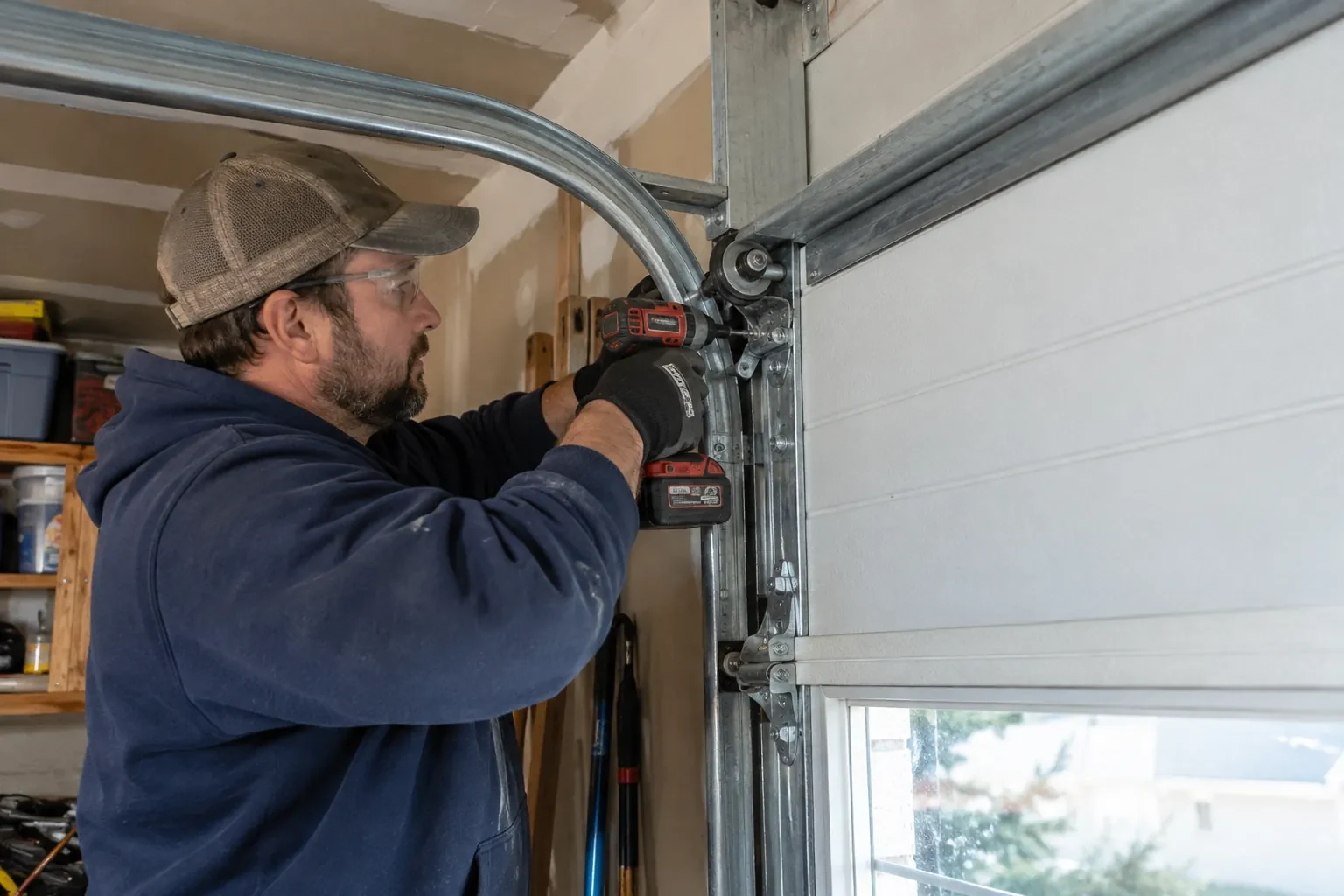
Looking up tells the technician how the new opener will fit. The gap between the top of the open door and the ceiling decides whether a standard rail has room or a low-headroom arrangement or a wall-mount operator is the better fit. The wall above the door is checked for solid framing to take the header bracket, and the ceiling for joists or trusses to carry the angle iron that hangs the head. Door height matters too: a 7 ft door takes a standard rail while an 8 ft door needs an extension. Storage racks, lights and ducts in the path of the rail are noted so nothing gets in the way on the day.
Building and hanging the new rail
The rail sections are joined on the floor, the trolley is threaded on and the chain or belt is fitted and tensioned to the maker's setting before the assembly is bolted to the head. The header bracket is fastened with lag screws into solid framing centred above the door, high enough to clear the top section at the highest point of its travel. The head is then raised, hung from the ceiling joists with perforated angle iron cut to length, and adjusted until the rail runs level and in line with the door's centre. A rail that is true to the door keeps the trolley from binding and keeps the drive quiet for its whole life.
Ready for the next outage
If you chose battery backup, the door keeps opening and closing on stored power when the lights go out, and the operator tells you with a beep or a light when the battery is low or due for renewal every few years. Whether or not you have a battery, you now know where the red handle hangs and what it does: a pull detaches the door from the trolley so it can be lifted by hand, and reconnecting is either a second pull or simply running the operator, depending on the model. Practise it once with the door closed so that the first time you need it in the dark is not the first time you try it.
Garage Door Opener Replacement
In the van
Low-voltage bell wire and staples
Rail sections and trolley
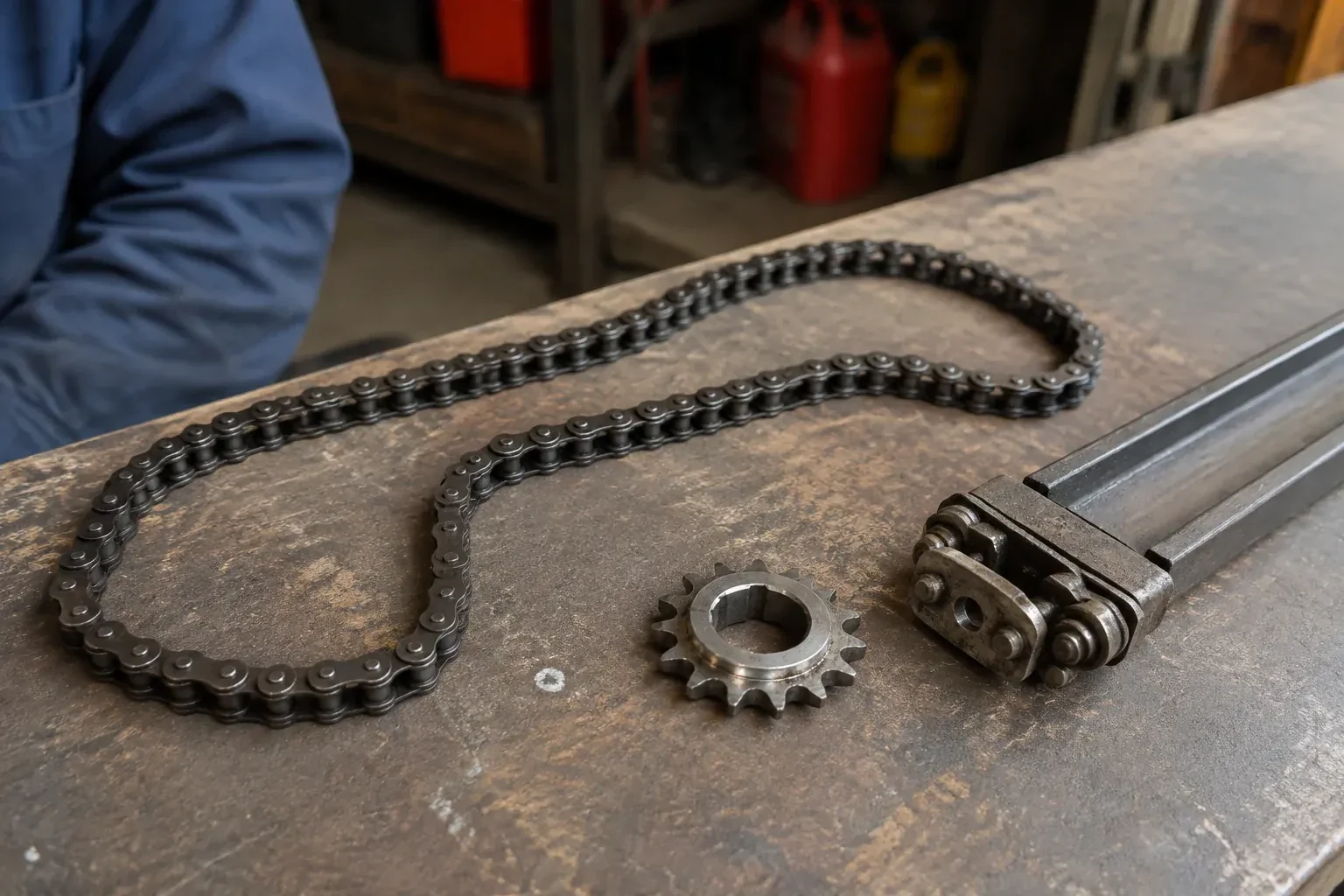
Chain or reinforced belt
Wall control console
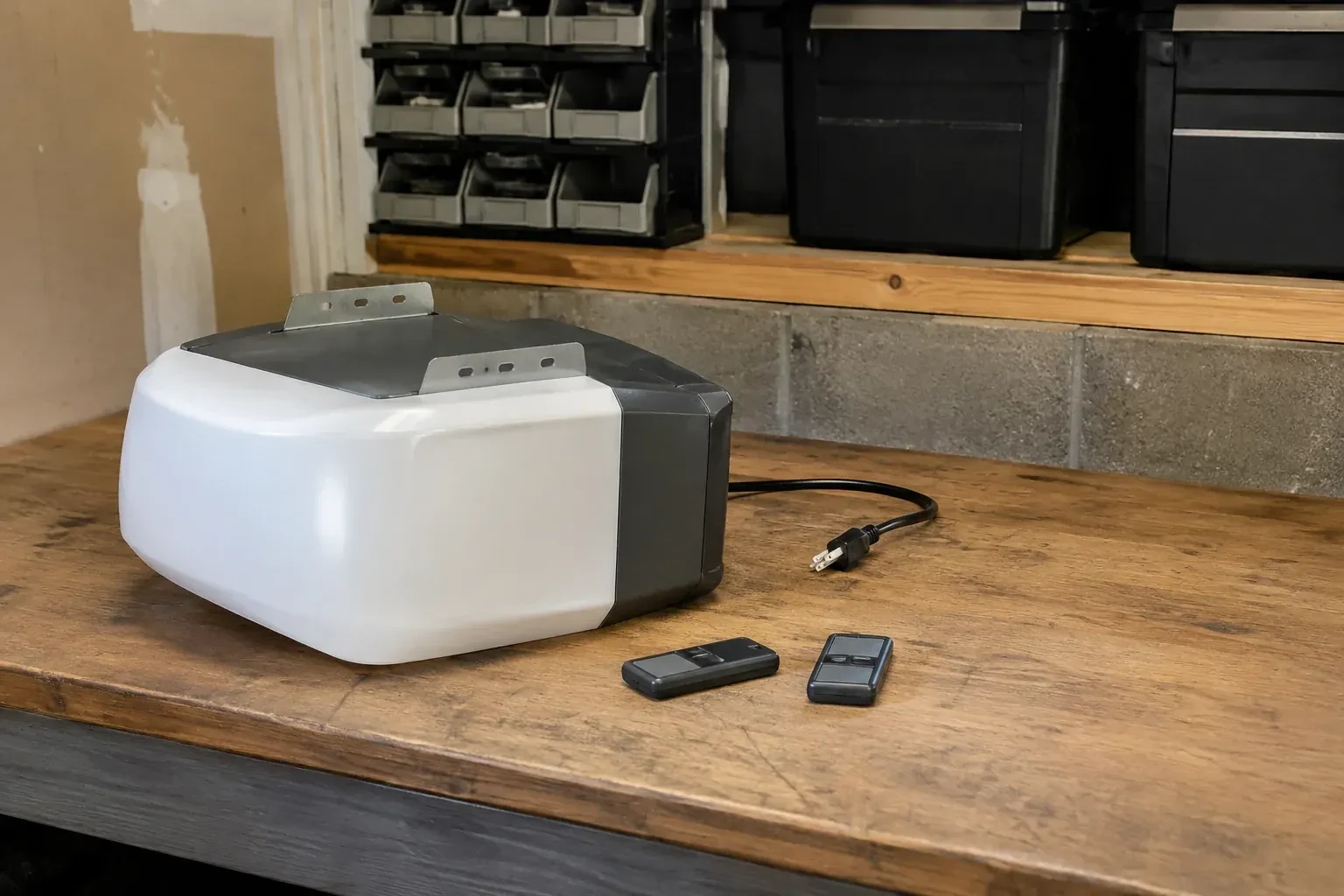
Opener head unit
Garage Door Opener Replacement
What affects the quote
Connectivity and camera
Wi-Fi control from a phone, a built-in camera and a range extender for a detached garage with a weak signal are each optional items that the quote names individually.
Door height and rail length
A standard rail suits a 7 ft door. An 8 ft door or a taller custom door needs a rail extension, and a very low ceiling may call for a low-headroom arrangement, each an item on its own.
Top-section reinforcement
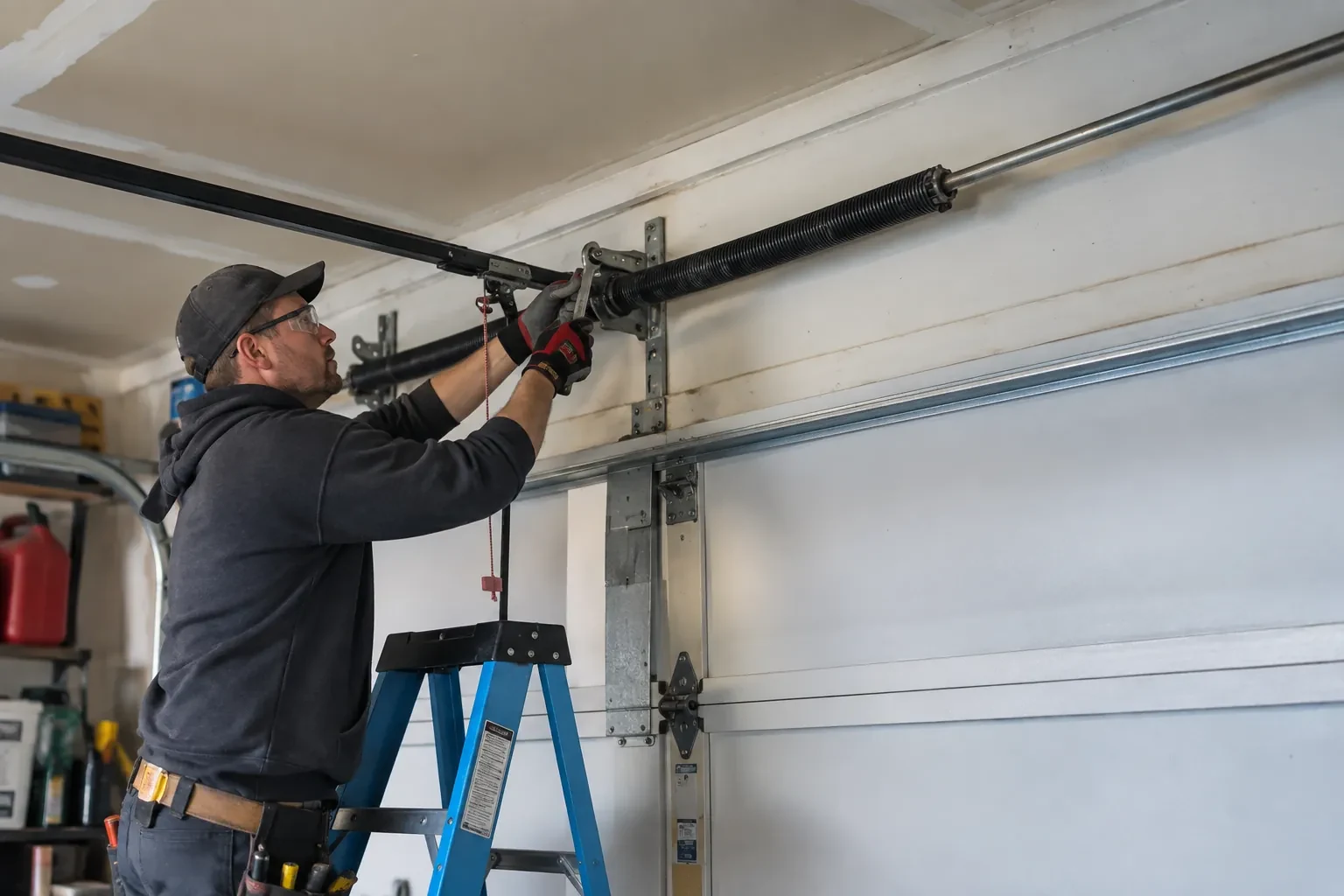
Lightweight steel, glazed and wide doors need a strut or operator bracket across the top section before the arm is attached, so the pull is spread across the door rather than concentrated at one point.
What to have ready
- How many remotes do you need, and do any vehicles have built-in opener buttons?
- What make and model is printed on the old opener's label, and roughly how old is it?
- How much room is there between the top of the open door and the ceiling?
Garage Door Opener Replacement: questions
QuestionsHow long does an opener replacement take?
Plan on about half a day for a straightforward swap on a balanced door: removal, hanging the new rail and head, wiring the sensors and console, setting travel and force, running the safety tests and programming remotes. If the door balance check turns up spring or roller work, or a receptacle needs adding by an electrical contractor, allow extra time or a second visit for that part.
The door is frozen to the floor. Why does the opener reverse?
Because the operator is protecting the door. Its force setting is tuned to the small effort a balanced door needs, so a seal glued to the concrete by ice registers as an obstruction and the door heads back up rather than ripping the rubber or bowing the top panel. Loosen the seal with a plastic scraper or a hair dryer along the sill, then try again; a shovelled threshold before a cold night keeps it from recurring.
Can the new opener use my old rail?
The rail, trolley and drive are designed as one system with the head unit, so a new operator comes with its own rail matched to its motor and drive type. Reusing an old rail would mix parts that were never meant to run together. The old rail, head and hangers come down and are recycled, and a fresh rail is assembled to suit your door's height.