New Doors · New Tecumseth
Commercial Sectional Door Repair
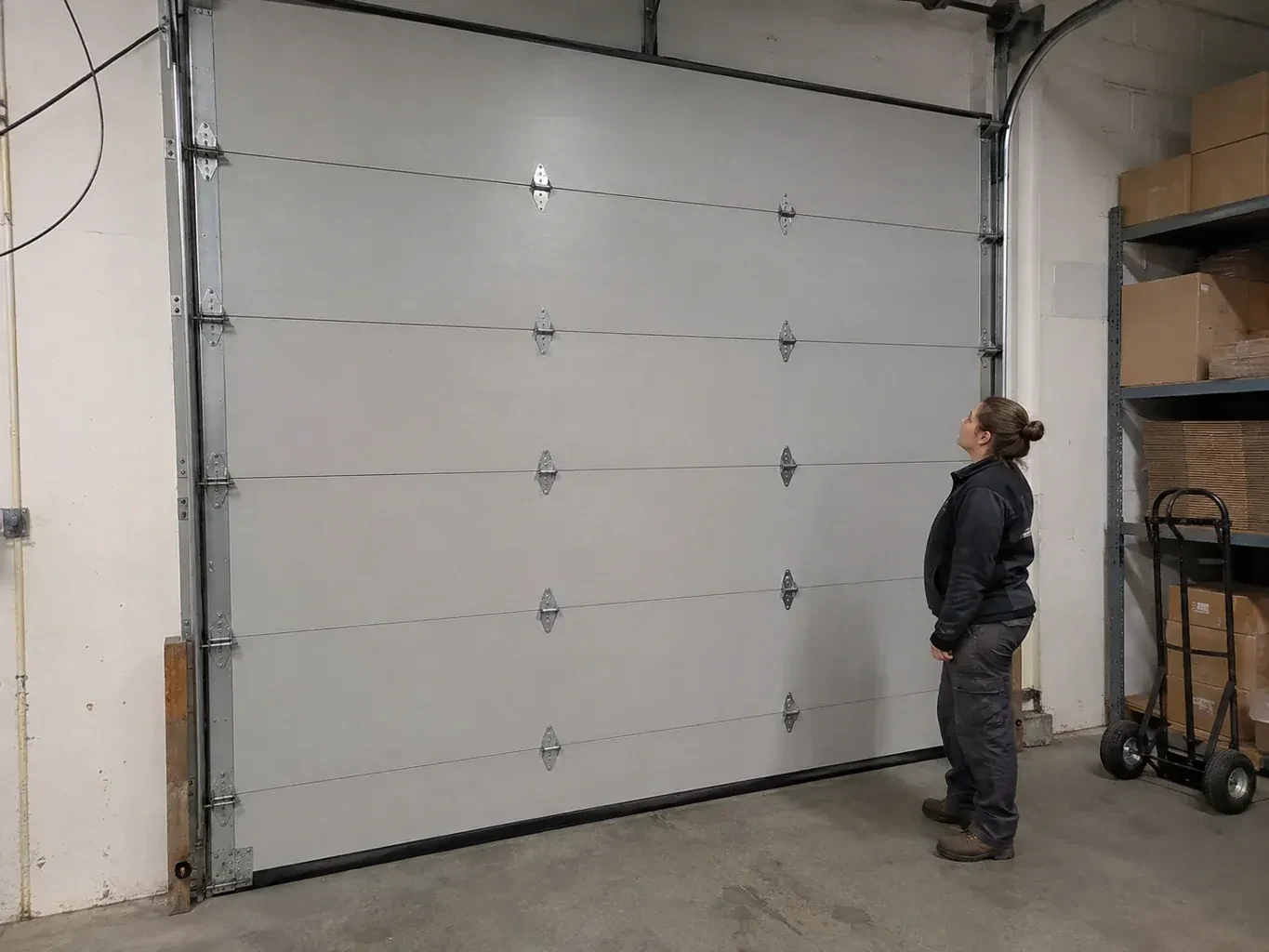
The operator runs and the drive chain moves, yet the sectional door hesitates near the floor.
In plain words
Unusual sound is useful diagnostic information on a commercial sectional door. A knock at the track curve suggests different issues from a steady bearing growl, a scraping section or operator-chain chatter. The technician listens during a controlled cycle, then inspects the hardware at the point where the sound appears. Worn rollers, loose hinges, dry bearings, displaced track and drive components can each be dealt with directly. The completed repair finishes with lubrication where specified and repeated observation of the previously noisy part of travel.
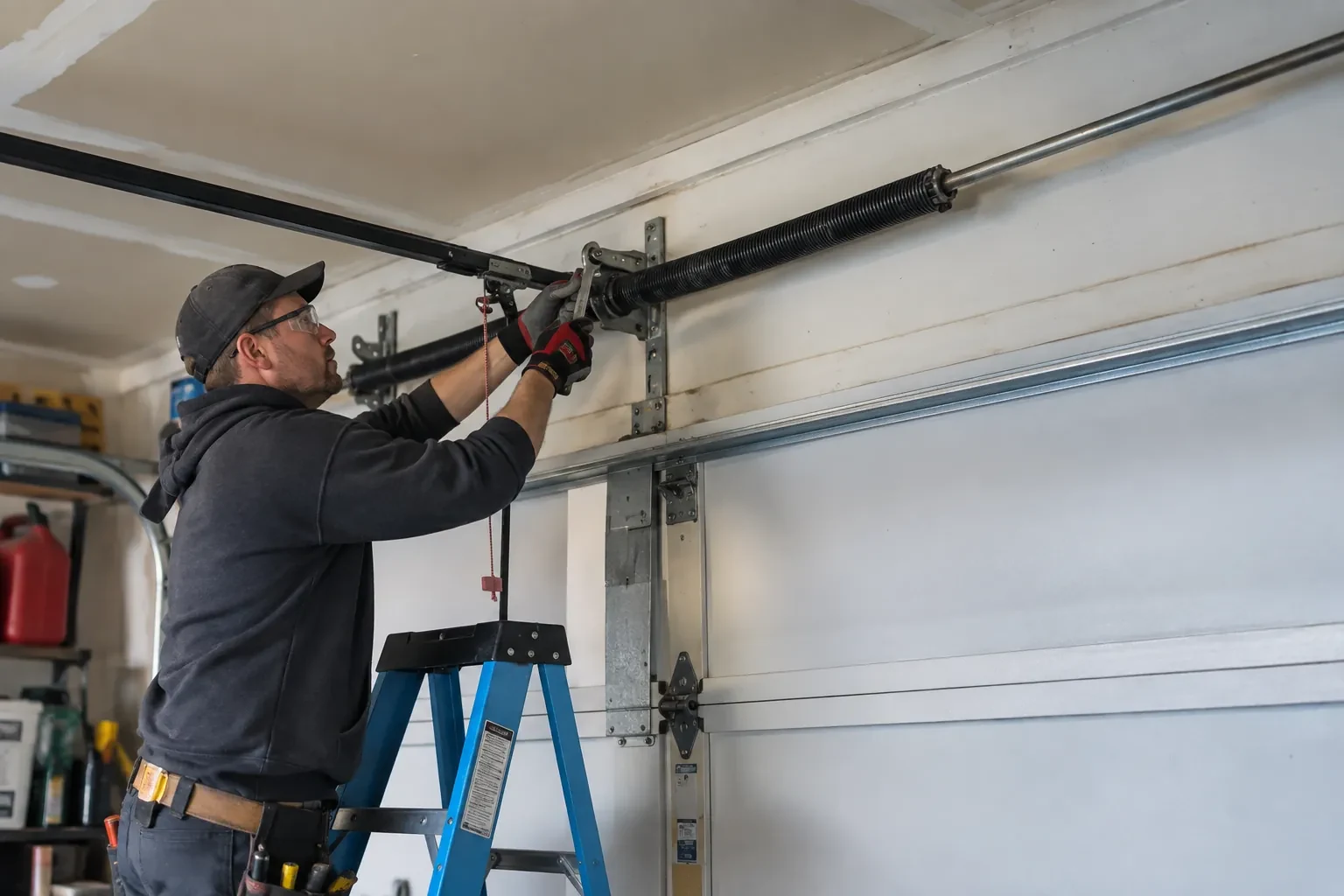
How the visit goesThe operator runs and the drive chain moves, yet the sectional door hesitates near the floor. It feels unusually heavy during manual operation, pointing to a counterbalance problem rather than a simple control-station fault.
Commercial Sectional Door Repair
How the visit goes
Using the door record
Model and serial information, opening size, section construction and prior service notes narrow the inspection before anything is removed. The technician also asks about daily traffic, recent collisions, changes in sound and the position where symptoms occur. Comparing this history with spring markings, cable dimensions, roller stems and operator data helps identify compatible components. On multi-door properties, neighbouring openings may provide useful context when they share an installation date or configuration. Good records turn a broad complaint into a precise repair plan and leave a stronger baseline for later maintenance.
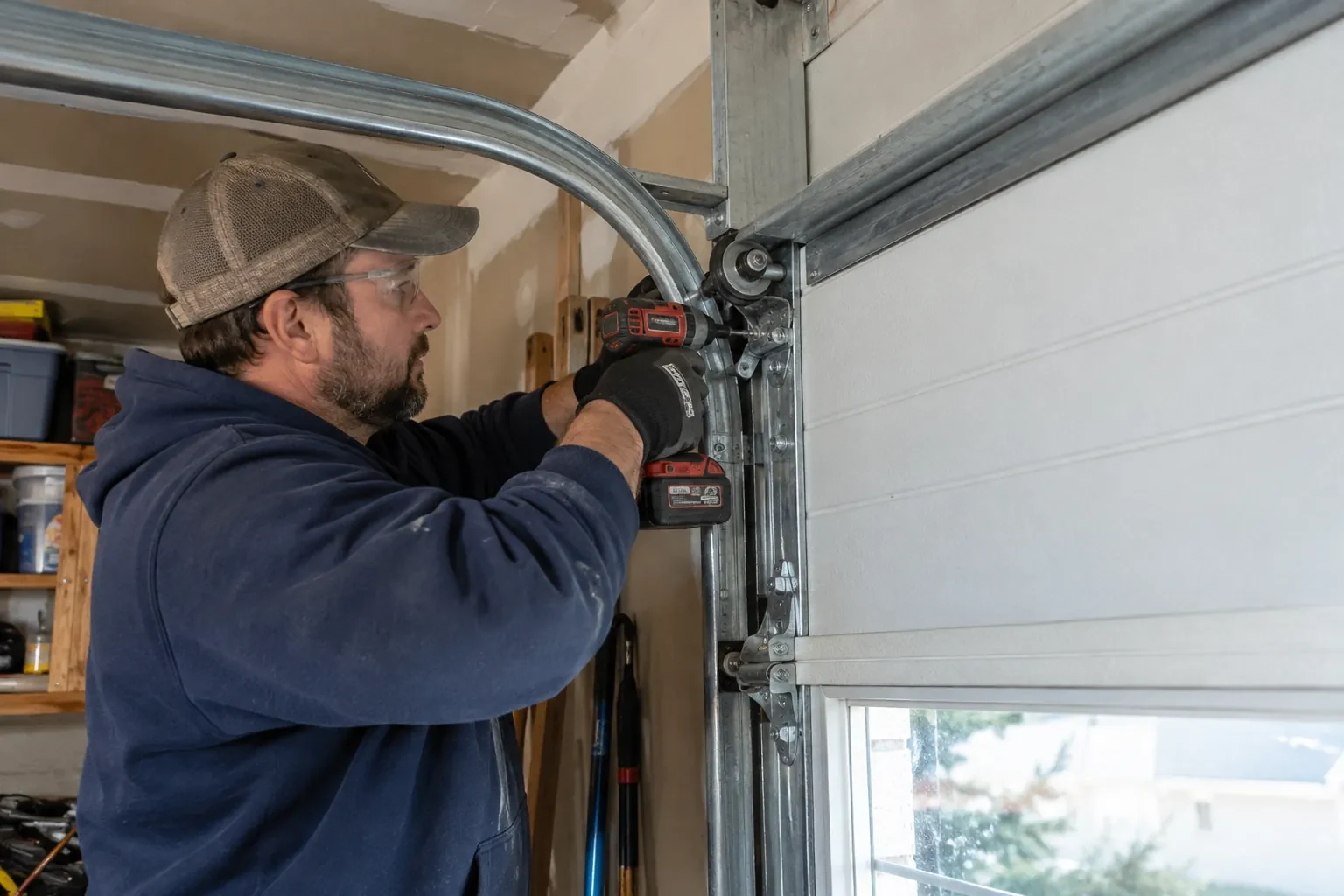
Renewing hinges and rollers
Worn running hardware is replaced in its correct sequence rather than mixed between positions. Numbered end hinges maintain the changing roller offset that guides stacked sections around the track curve, while centre hinges keep adjoining panels connected across the width. Roller stem length, diameter and bearing type are matched to the track and door duty. Each mounting area is checked for enlarged holes or cracked stile material before new fasteners are installed. With side play reduced and alignment restored, the sections articulate smoothly instead of knocking or twisting through the bend.
A repaired section that works with its neighbours
A replacement panel leaves the door with continuous joints, secure hinges and reinforcement suited to the opening. Colour and surface texture may show normal differences between new and weathered material, while the functional check focuses on articulation, roller clearance and even contact at the seals. Washing the exterior with products allowed by the door manufacturer helps protect the finish. Future impact marks near an end stile or bottom fixture deserve early attention because these areas connect the panel to the guidance and lifting systems.
Commercial Sectional Door Repair
In the van
Lift cables and drums
Torsion springs
Vertical and horizontal track
Reinforcement struts
Shafts and bearings
Commercial Sectional Door Repair
What affects the quote
Position of the stopped door
A door resting closed, hanging partly open or displaced from its tracks requires a different stabilization plan before repair work and component removal can begin.
Parts identification and compatibility
Clear model data and current component markings simplify matching; altered assemblies or unavailable profiles may require additional measurement and an engineered compatible approach.
Corrosion and seized fasteners
Moisture and salt can affect cables, brackets, retainers, rollers and connections, broadening the repair when hardware cannot be removed or reused cleanly.
What to have ready
- Are any cables visibly loose, crossed or frayed?
- Can traffic use another opening during the work?
- Is the door operated electrically, by hoist or by hand?
Commercial Sectional Door Repair: questions
QuestionsHow are replacement rollers chosen for a commercial door?
Roller diameter, stem length, bearing construction, track size and expected door use all shape the choice. The hinge position also matters because numbered end hinges place rollers at different offsets as the panels stack. The technician checks track condition and the mounting areas before fitting new rollers, so renewed hardware runs in a stable and correctly aligned guide.
Why are the hinges numbered along the sides?
Numbered end hinges position each roller progressively farther from the panel as the sections rise. That changing offset lets the stacked door follow the track curve while maintaining its shape. Installing a hinge in the wrong position can alter alignment and clearance. Centre hinges have a different role: they connect sections across the width without carrying track rollers.
What causes a commercial sectional door to become noisy?
Common sources include roller-bearing wear, loose hinges, dry pivots, a rubbing panel, track movement, shaft-bearing wear and operator-chain vibration. The point in the cycle where the sound occurs helps isolate it. A technician watches and listens during controlled travel, looks for play or contact marks, and services the component creating the repeatable noise.
Related services
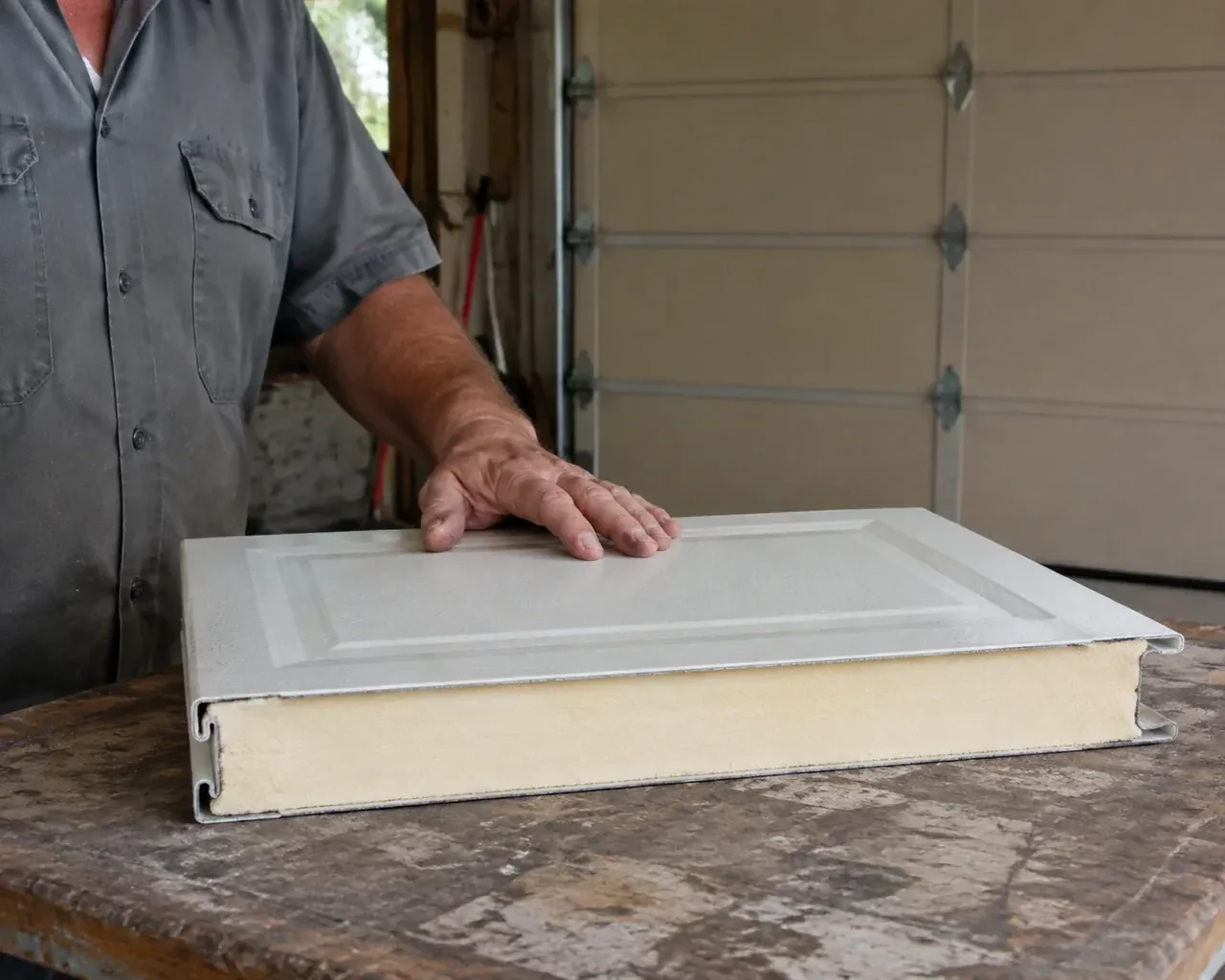
- Insulated Steel Garage Door InstallationYour garage is becoming a workshop, but the thin single-skin door rattles, sweats and lets outdoor temperatures shape the whole room.
- Wind-Rated Garage Door ReplacementA recent wind event left one section slightly creased, a strut twisted, and several track fasteners loose.
- Carriage-House Garage Door InstallationCold air is noticeable around the current door, especially near the floor and section joints.