Alliston Door & Opener Co. · New Tecumseth
Garage Door Perimeter Weatherstrip: step by step
Garage Doors · New Tecumseth, Ontario
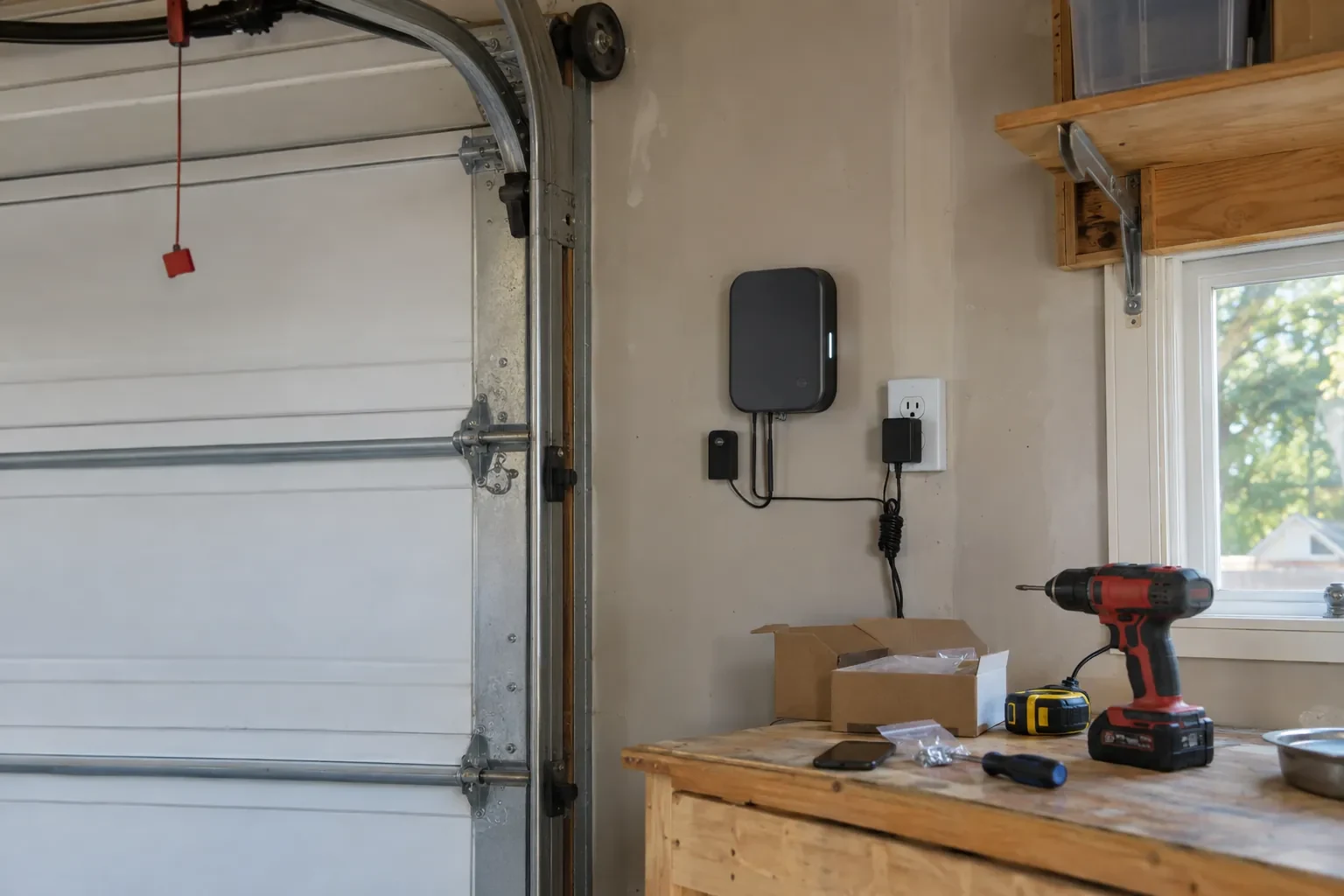
Winter is what wears a perimeter seal out here. Sun and cold cycles harden the vinyl until it cracks, freezing rain glues the fin to the door so the opener tears it, and salty slush sits against the bottom of the jambs and rots the wood the strip is nailed to. One visit deals with all of that: soft wood at the base of the jamb is cut out and replaced, fresh seal is fitted in continuous lengths with the corners overlapped, and the fin is wiped with silicone so ice does not bond to it. The garage stays drier and calmer through the next freeze-thaw season.
Probing the jambs and header
The strip is only as secure as the wood behind it, so the jambs are probed with an awl along their length and especially the lowest part, where slush and salt sit all winter. Soft, dark or crumbling wood is marked for repair. The header is checked for sag and for gaps opening between it and the top section. Where the jambs are clad in aluminum or vinyl, the technician looks for what the cladding hides and for where the seal can be fastened through to solid material. This step often adds a splice of new lumber or PVC trim to the job, and it is what makes the new seal stay put.
Setting the fin against the door
Getting the fin's contact right is the heart of the work. The technician holds each length against the closed door and adjusts it until the fin bends toward the door just enough to seal without pushing back. A fin set too far off leaves a standing gap that shows as daylight; one set too hard drags the door, folds under on the way down and wears through well before its time. Contact is checked at several points along each side, since a jamb is rarely dead straight, and the fastener positions follow the door face rather than the wood behind it.
Slush, salt and the bottom of the jambs
The lowest part of each jamb is where the weather does its work, so a little attention there protects the whole seal. Push slush away from the jambs when clearing the driveway rather than piling it against them, and rinse the salt off the bottom of the stop on a mild day. Keep the joint between the jamb and the sill caulked so meltwater runs off the face instead of behind it. If a section of jamb was replaced, keep its paint or PVC surface intact. A dry jamb base holds its fasteners, and fasteners that hold keep the seal tight.